
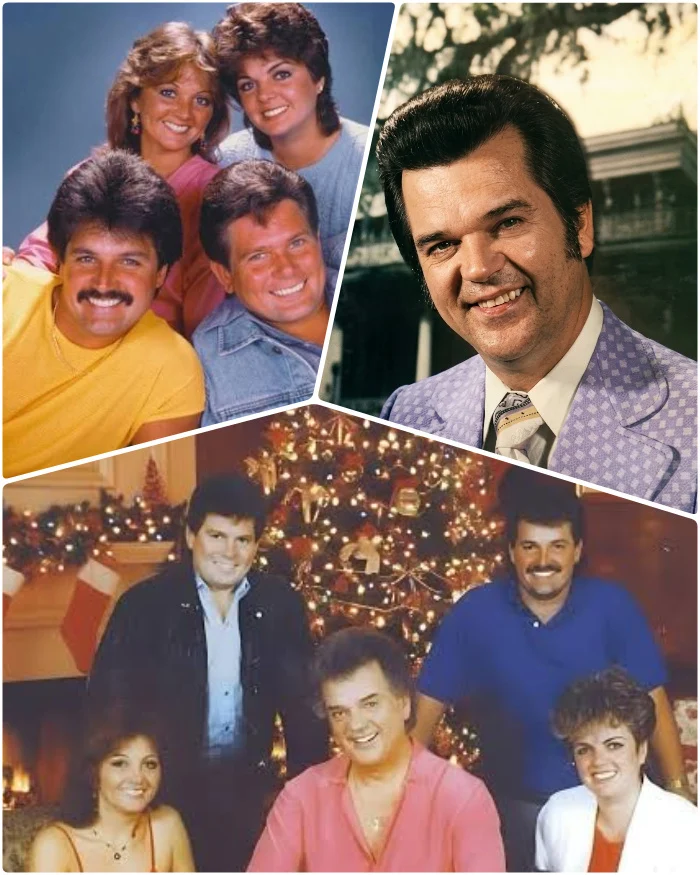
In the quiet darkness of a Hendersonville night in 1987, a country music legend stood on his son’s porch in pajamas and slippers, clutching a cassette tape that would carry a confession he couldn’t speak aloud. Conway Twitty, the man who sold out arenas and topped charts for four decades, had built a fortune but lost something far more precious along the way.
“Boy, I’m about to let you in on one of life’s great secrets,” he told his son Michael, his voice heavy with regret.
For years, Twitty had crisscrossed America, playing 200 to 300 shows annually, a relentless schedule that amassed millions but cost him the childhoods of his four children. His marriage to Mickey Medley, which had weathered a brief divorce in 1970, finally collapsed in 1984 after 28 years. By the time he married his fourth wife, Dee Henry, in 1987, the weight of his omissions had become unbearable.
That night, he handed Michael a cassette containing a Gary Burr song called “That’s My Job” — a tune about a father’s eternal promise. As they sat together on the living room couch, the song’s lyrics about a boy waking from nightmares and a father vowing to protect him beyond death struck a chord Michael had never felt before.
“I don’t care for it,” Michael confessed, his voice trembling. “It’s the first time I’ve thought about life without you.”
Conway looked down at his slippers, then spoke words that would echo for decades. The song, he explained, was not just a recording — it was a promise that fathers never truly leave their children)Skip. For six hours, until sunrise, father and son talked, cried, and hugged, bridging years of distance in a single night.
Released as a single later that year, “That’s My Job” soared to the top ten on Billboard’s country charts, but its true power remained private. When Conway died in 1993 at age 59 from a ruptured aortic aneurysm, the world mourned a star, but his children mourned a man who had finally found his voice.
In 1994, the estate auction scattered more than 2,000 relics — stage suits, gold records, furniture — to strangers under a tent. The nine-acre Twitty City compound was sold. But Michael kept the cassette, a silent keeper of the night his father crossed the lawn in his pajamas to say what mattered most.
“He promised he’d still be there whenever the tape played,” Michael remembered years later.
Today, the story of that midnight exchange remains a testament to the quiet love of a father who, though he could not say the words in daylight, found the courage to record them in the dark.