
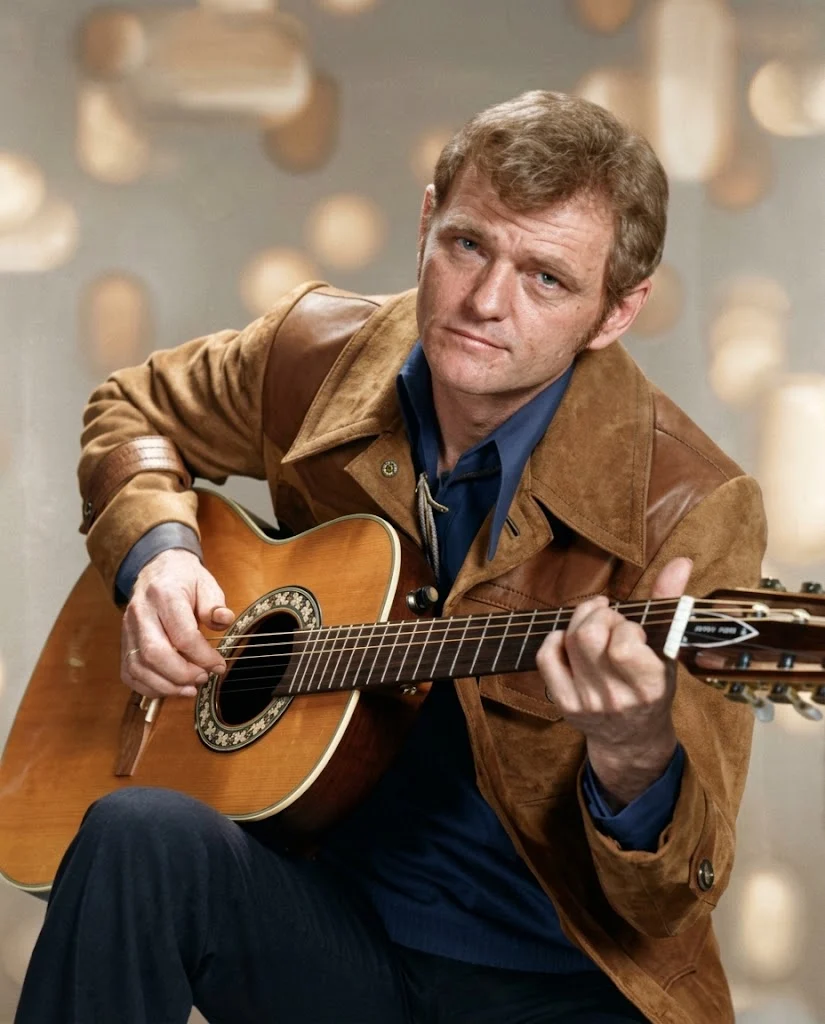
In the quiet hours of a military barracks, a young soldier named Jerry Reed Hubbard was secretly building a musical empire. Drafted into the U.S. Army from 1959 to 1961, he traded the neon lights of Nashville for the discipline of drill sergeants—but his creative fire refused to be extinguished.
While other soldiers polished boots, Reed sharpened his pencil. With an acoustic guitar as his only companion, he crafted melodies that would soon echo across American airwaves. One of those tunes, “That’s All You Gotta Do”, would become a Top 10 pop smash—recorded by the powerhouse vocalist Brenda Lee—even as Reed stood in formation, answering to commands.
But how did a soldier’s rough demo tapes travel from a distant base to a legendary studio? The answer lay in a trusted partnership with Atlanta music executive Bill Lowery. Before shipping out, Reed had forged a bond with Lowery, who became his lifeline to the music world. Reed mailed handwritten sheet music and acoustic work tapes in simple envelopes, and Lowery carried those raw concepts straight to Nashville’s Music Row.
There, Decca Records producer Owen Bradley recognized the undeniable spark. He paired Reed’s song as the B-side to Brenda Lee’s ballad “I’m Sorry,” creating a monumental double-sided hit that cemented Lee’s global stardom and gave Reed his first taste of chart-topping success.
For Reed, however, the victory was never about fame. The royalties from his distant songwriting became a financial lifeline for his wife, Priscilla, and their young daughter, Seidina. While a private’s meager pay offered little security, those checks mailed home transformed a soldier’s quiet dedication into a family’s salvation.
“He was a provider long before he was a household name.”
Today, fans remember Jerry Reed as the larger-than-life “Snowman” from the 1970s—the charismatic movie star and fingerpicking guitar slinger. But the true foundation of his legacy was laid in those two years of service, where a young husband used nothing more than a pencil and an acoustic guitar to shield his family from hardship.
His story reveals a fascinating chapter of Nashville’s history, where creativity and duty intertwined, proving that even in the most restrictive circumstances, a determined spirit can find a way to conquer the charts—and care for those he loves.