
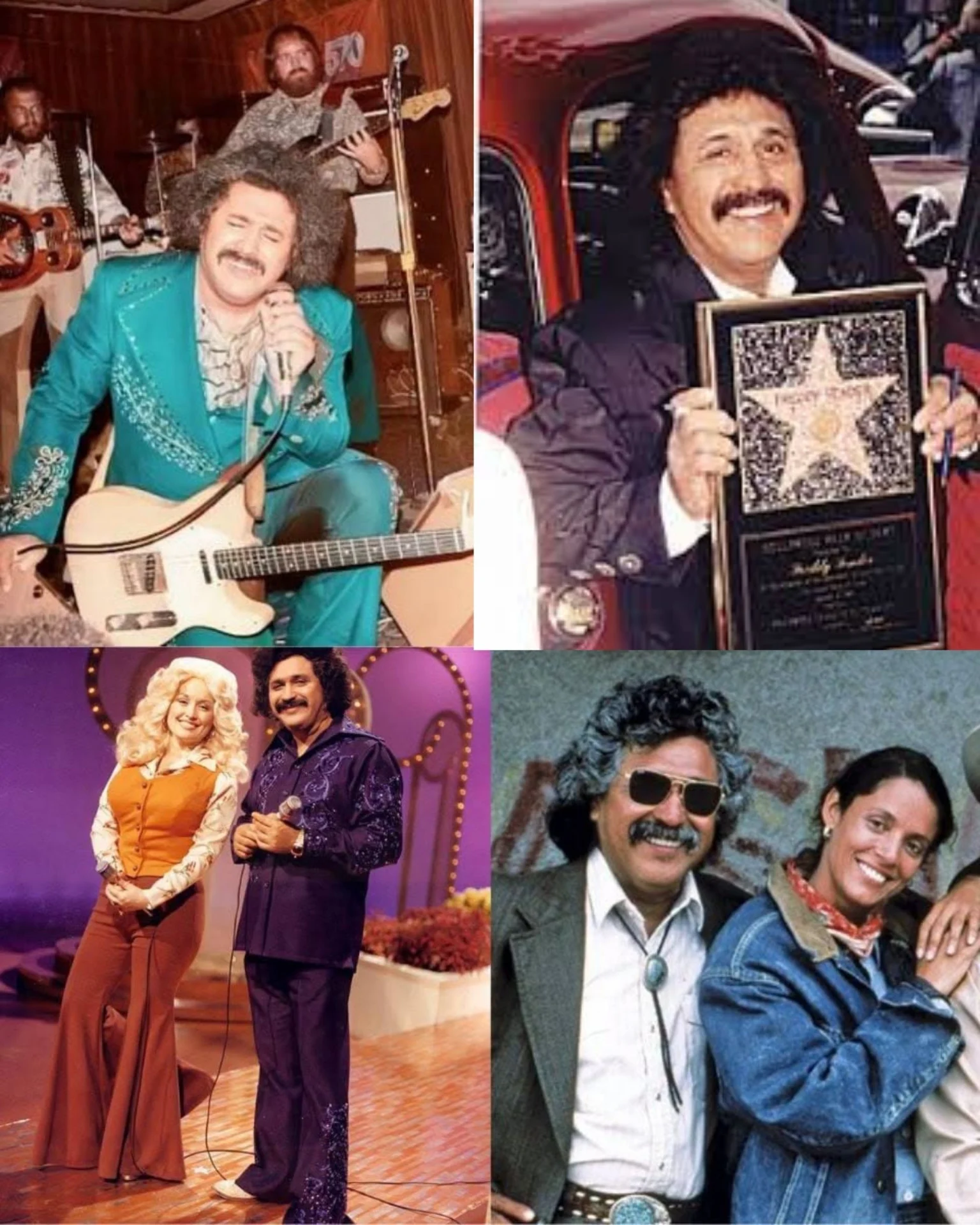
In 1959, a young Texas singer named Baldemar Huerta placed his new stage name—Freddy Fender—on a record called “Wasted Days and Wasted Nights.” The name had been designed for jukeboxes. His first manager, Wayne Duncan, worried that Baldemar Huerta would be difficult to market beyond the Mexican-American clubs where the singer was already known as El Bebop Kid. Huerta chose “Fender” from the name on his guitar and added “Freddy” because the two words sat neatly together on a record label. The song carried the border country he had grown up inside: blues phrasing, rock-and-roll guitar, Mexican melodic feeling and a voice that seemed to bend around its English words. It became a regional hit in Texas and Louisiana.
Fender arrived at performances in a Cadillac, dressed sharply enough that a young Doug Sahm later remembered the effect he had on the crowd. At twenty-two, he appeared to be moving toward a national career. Then, in May 1960, police entered the Baton Rouge apartment where Fender was staying and found several marijuana cigarettes. Louisiana imposed a severe sentence. He was sent to the state penitentiary at Angola and remained there for roughly two and a half years.
A familiar version of the story says Fender was released only after promising to abandon music. Fender later corrected it. His restrictions prohibited him from entering places that served alcohol or presented live music. For a singer whose work existed almost entirely in bars and nightclubs, the distinction offered little practical freedom.
After prison, he worked outside the industry—as a busboy, a mechanic and in other ordinary jobs—while the record that had begun his rise disappeared with him. By the time he returned to San Benito, music had been pushed into weekends and whatever rooms remained available.
The song survived elsewhere. In 1971, Doug Sahm’s Sir Douglas Quintet recorded it and dedicated the performance to Fender, keeping his name attached to a Texas sound that had moved forward without him. Four years later, “Before the Next Teardrop Falls” unexpectedly made Freddy Fender a national star. Producer Huey P. Meaux then returned him to the unfinished business of 1959.
Fender recorded “Wasted Days and Wasted Nights” again—not as the young man posing beside a regional jukebox, but as someone who had lived through prison, day labor and more than a decade of professional silence. The remake reached No. 1 on Billboard’s country chart, climbed to No. 8 on the pop chart and sold more than a million copies. A parole restriction had once kept Freddy Fender away from rooms where liquor was sold and music was played. By the summer of 1975, jukeboxes in those same rooms were carrying his voice across America.