
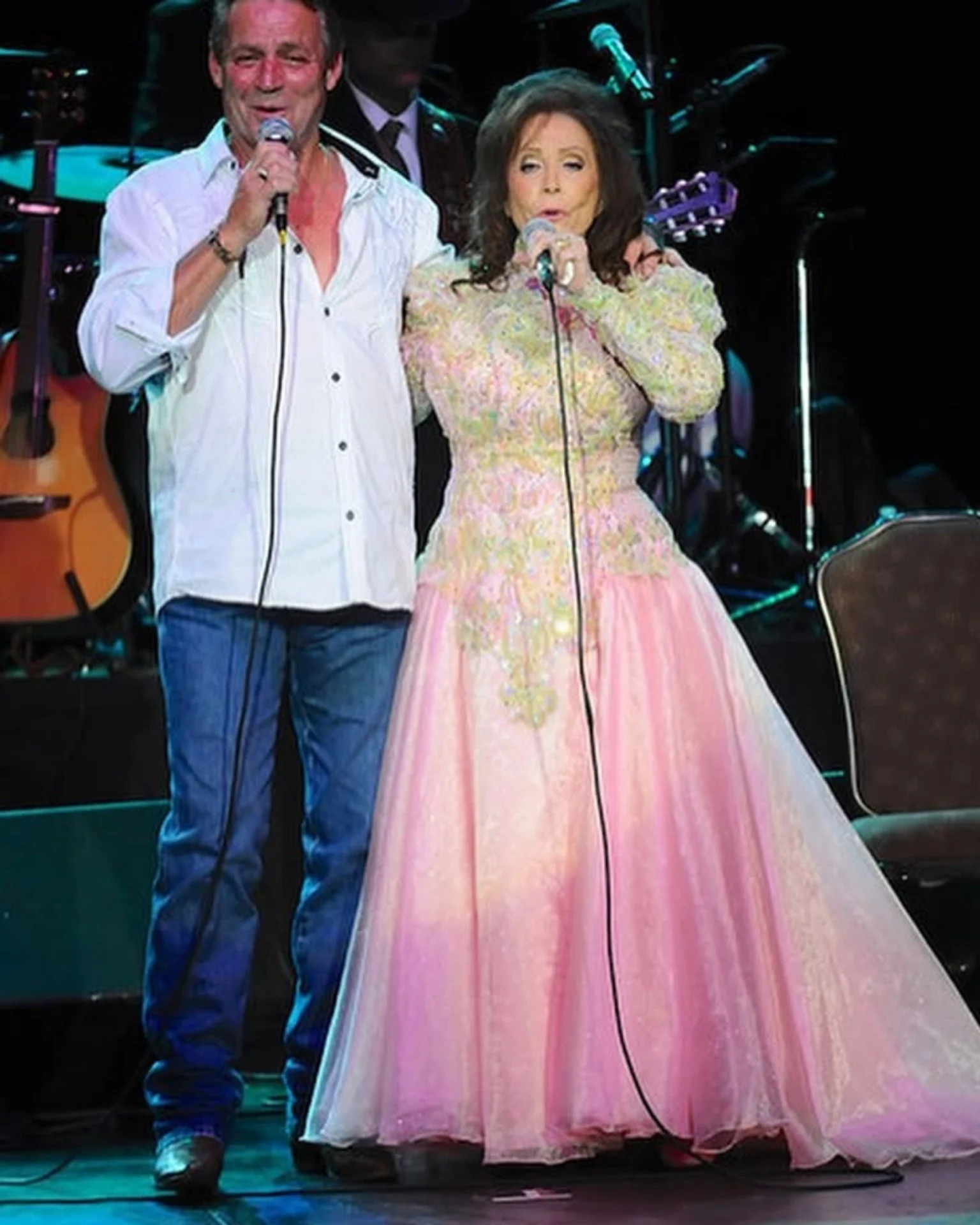
At eight years old, Ernest Ray Lynn didn’t just watch his mother’s career take off—he climbed aboard the bus that carried her away from home. While the world knew Loretta Lynn as the coal miner’s daughter, her youngest son knew her as the woman who turned logging wages, laundry, and four young children into a country music empire.
Born in 1951, Ernest was the third of Loretta’s four children before she turned twenty. Their Washington State home revolved around Doo’s logging work and Loretta’s tireless care of the household. Then came the seventeen-dollar guitar, and everything changed.
When ‘I’m a Honky Tonk Girl’ hit radio stations in 1960, Loretta and Doo hit the road to promote it. Ernest, barely eight, went with them. “I started on the road with Mama when I was 8,” he recalled decades later. While his siblings waited at home for their mother’s return, Ernest became part of the machinery—learning the late nights, roadside meals, and endless miles that defined a traveling show.
A Family Business Forged on Highways
By the 1970s, Ernest had grown into his mother’s world. A reporter traveling with Loretta captured a cold night near Waverly, Tennessee, where the tour bus stopped at a truck stop. Ernest joined the group for cheeseburgers, ready to open his mother’s shows. That scene—a star mother, a grown son, and sleepy twins in a blanket-wrapped Volkswagen—told the story of a family living inside fame’s strange machinery.
In 1976, Ernest sang lead on two tracks of On the Road with Loretta and the Coal Miners. He later played guitar and bass in her band, managed her career, and stayed on stage long after becoming a father and grandfather himself.
The Cost of the Road
Loretta never hid what touring cost her family.
“The worst part of going on the road,”
she called it. Ernest remembered stretches of 300 days a year on the road. After ‘Coal Miner’s Daughter’ became a hit, he said they seemed gone for years at a time. But the road also gave them a shared language—a way to stay connected even when home was a phone line away.
A Song That Belonged to Them Both
In October 2014, Ernest walked onto the Ryman Auditorium stage before his mother and sang Merle Haggard’s ‘Mama Tried.’ The song, about a son accepting responsibility for his pain, took on new meaning that night. Loretta had tried to provide through her work. Ernest had responded by moving toward that work, turning the road that separated them into the place he could stay beside her.
Loretta Lynn’s legacy is measured in records and awards. Ernest’s story preserves a simpler measurement: the age of a child when the bus first carried him into his mother’s world. He was eight at the start—and he never really left.