
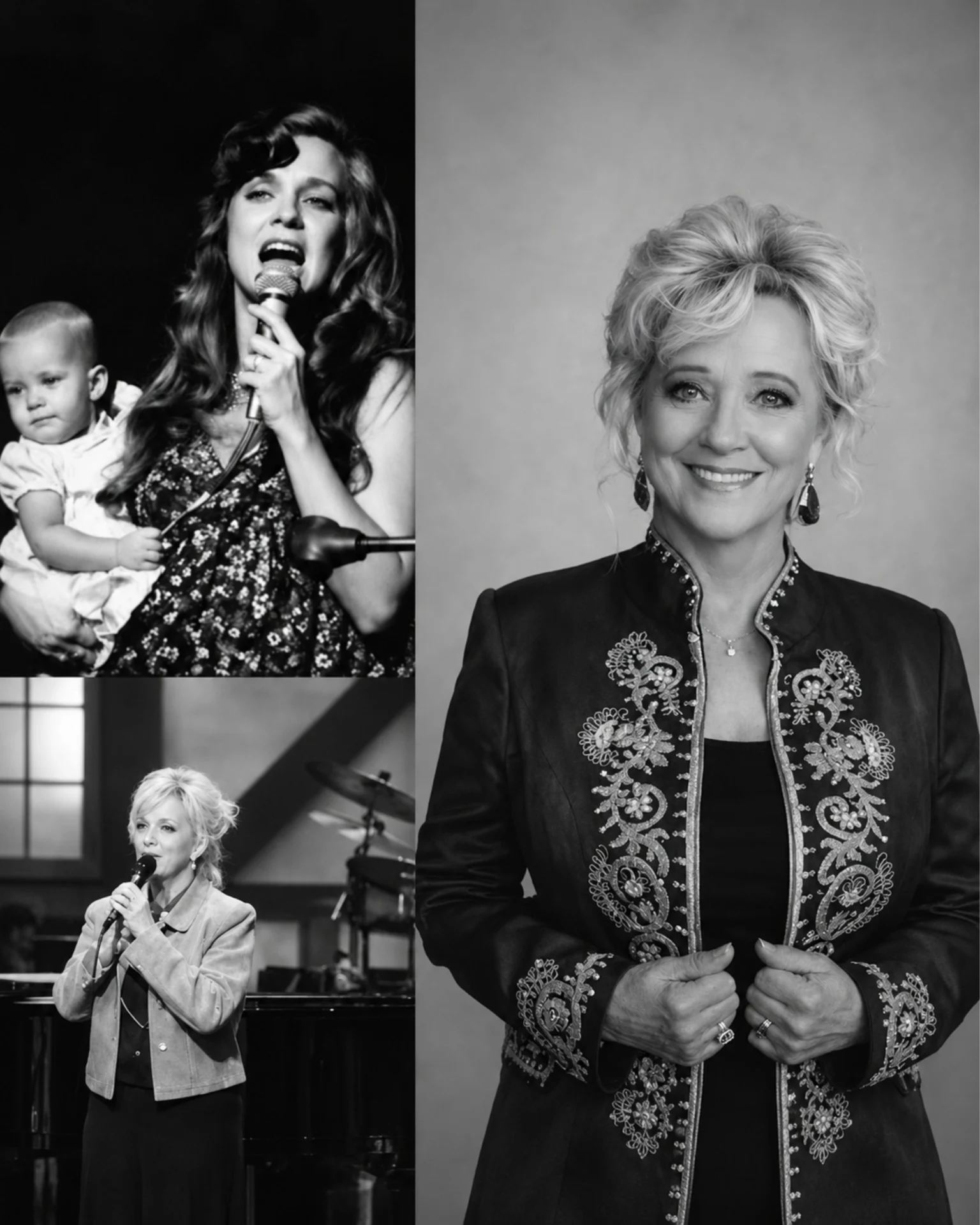
In the late 1970s, Connie Smith sometimes found herself walking out the door for another show with her children crying around her ankles. Nashville knew exactly what her voice could do—it had topped the charts for eight straight weeks with “Once a Day” in 1964—but the woman behind that voice was reaching a breaking point.
“The only thing I could let go of was my career,” she later said.
Connie raised five children, including three daughters born within three years. They didn’t understand release schedules or why a full auditorium needed their mother more urgently than they did. They only knew that a suitcase near the door meant she was leaving again.
The Rise Before the Retreat
Connie arrived in Nashville in 1963 after winning a talent contest in Ohio that earned her five silver dollars and a chance to appear beside Grand Ole Opry singer Bill Anderson. Chet Atkins signed her to RCA, and at her first recording session in July 1964, she cut Anderson’s “Once a Day.” The record shot to No. 1 and stayed there for eight weeks—an unprecedented debut for a female country singer.
Through 1973, she placed nineteen singles in the country Top Ten. The industry kept supplying songs, sessions, and release dates, and Connie went along with it—though stardom had never been the main ambition. She loved to sing. The machinery that followed the singing was something else.
Three Daughters in Three Years
Success did not arrive in an empty household. In the early 1970s, Connie gave birth to three daughters in three years while simultaneously recording albums, appearing in country films, and touring. Nashville could schedule around a recording session, but children didn’t operate by a session clock. They changed while she was gone. They needed correction, meals, comfort, and daily direction that couldn’t be supplied from a dressing room.
That was the point at which a successful career stopped feeling like proof that the arrangement worked. She could complete the show, but the family still paid for the hours required to reach it.
The Three Things She Carried
Connie described her decision without pretending every part of her life could be balanced if she simply worked harder. She had her family, her faith, and her music. The family couldn’t be discarded. Her Christian faith had become central to how she understood her life. That left the country career—the only part she believed she could put down without becoming someone she no longer recognized.
A Contract With Room for Gospel
Connie’s retreat began before she stopped recording regularly. When she moved to Columbia Records in 1973, she required room in the contract for one gospel album each year. She also reduced her time on the road and placed more spiritual music inside her stage shows. The decision didn’t always please executives trying to maintain a commercial rhythm, but Connie understood that allowing faith to shape her work might damage the career. She proceeded anyway.
After Columbia, she recorded briefly for Monument. Her 1978 album New Horizons became her final studio collection of new material for twenty years.
The Kitchen Sink and the Opry
Connie later made an important distinction about those years. She stopped working constantly. She did not stop singing. The Grand Ole Opry remained the exception—it was the childhood dream she had carried long before RCA—and she continued appearing there. She also accepted occasional performances and recorded spiritual material.
At home, she sang at the kitchen sink.
She moved the voice into a different room.
At RCA Studio B, musicians had once adjusted amplifiers so her high notes would cut through a single radio speaker. At home, no producer was waiting for a usable take. A song could accompany dishes, children, and an ordinary afternoon without having to become a product.
Twenty Years Between New Records
As Connie’s children grew, the separation between home and music began to loosen. She returned more regularly to the Opry. By the 1990s, she was writing and working with Marty Stuart—a partnership that eventually became a marriage, but more importantly allowed Connie to recover her musical voice.
In 1998, Warner Bros. released Connie Smith, her first studio album of new material since New Horizons in 1978. Twenty years had passed. Country radio had changed, and the women who dominated the charts belonged to another generation. Connie didn’t attempt to erase the missing decades or pretend she was resuming the release schedule she had left behind. She simply recorded again when her life had room for it.
The Career That Returned on Her Terms
Later albums arrived slowly: Long Line of Heartaches in 2011 and The Cry of the Heart in 2021. The pace itself told the story. Early Connie Smith might make three albums in one year. Older Connie could allow ten years to pass between them.
She was inducted into the Country Music Hall of Fame in 2012, recognized not for the amount of time she had surrendered to the business, but for what she had placed on record when she chose to be there. Asked in 2021 whether she regretted stepping away, Connie was clear: she wished she had made some choices differently in life, but not the decision to remain with her children and family.
Nashville had lost years of possible Connie Smith records. Connie had gained years that could not have been recorded later.
What Connie Smith’s Choice Really Leaves Behind
The common language of a music career treats every absence as a loss. An album not made becomes a gap. A tour declined becomes a missed opportunity. Twenty years between collections looks like silence when viewed from a discography.
Inside Connie’s house, those years contained five children growing older. Her choice didn’t produce one dramatic final performance or a clean retirement date. It appeared in smaller acts: remaining home, reducing the road, keeping gospel music in her contracts, returning to the Opry without rebuilding the full machinery around herself.
The radio had once carried Connie Smith’s voice into millions of homes. During the years Nashville heard less of it, her own children knew exactly where it had gone. It was in the house with them.