
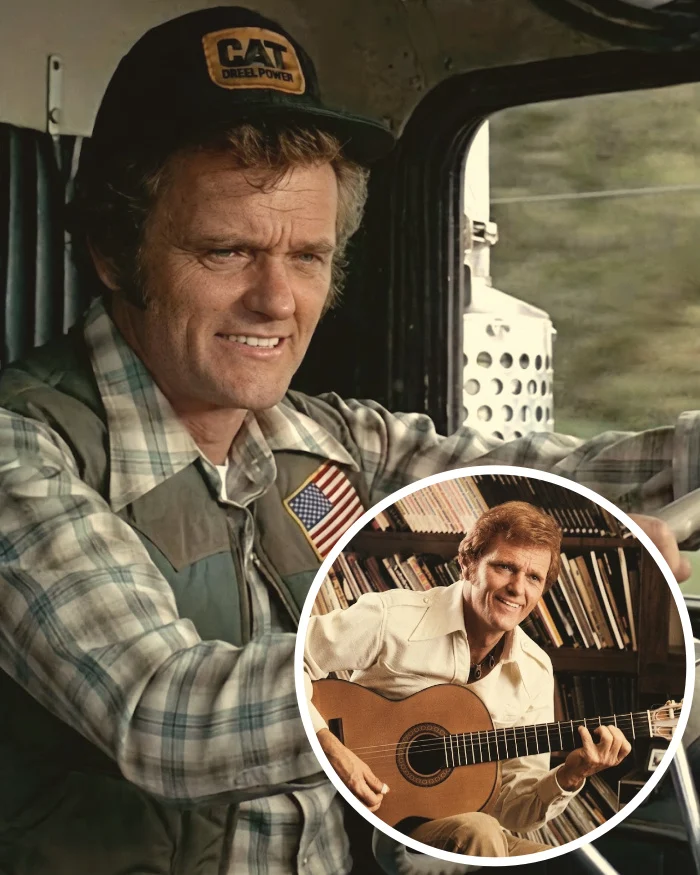
In the dim light of a military barracks in 1959, a young soldier named Jerry Reed faced a choice that would define his life. He could let the rigid routines of Army life crush his musical dreams, or he could fight for them with every spare moment he had. But Reed’s battle wasn’t just for himself—it was for the wife and newborn daughter he’d left behind in Nashville.
Just months after marrying Priscilla Mitchell and welcoming their baby girl, Seidina, the 22-year-old musician traded his recording studio sessions for military duty. The separation was brutal, both emotionally and financially. Yet, instead of waiting for his two-year service to end, Reed turned his barracks into a makeshift songwriting studio. With a guitar by his side, he meticulously composed new music and mailed the handwritten sheet music back to Tennessee, determined to keep his family afloat from hundreds of miles away.
“I wasn’t just chasing a dream. I was writing to feed my family,” Reed later reflected, his words echoing the urgency of those early days.
His relentless effort paid off sooner than anyone expected. In 1960, while still in uniform, Reed received word that a rising star named Brenda Lee had recorded one of his mailed-in songs. “That’s All You Gotta Do” soared up the pop charts, becoming a career-defining hit for Lee and a financial lifeline for the Reed family. The royalty checks that followed became their primary income, keeping Priscilla and little Seidina housed and fed until Jerry’s honorable discharge in 1961.
Returning to Nashville, Reed wasn’t content to rest on his songwriting laurels. He threw himself into session work, determined to prove himself as a guitarist. His unique, frantic fingerpicking style caught the ear of legendary producer Chet Atkins, who saw genius in Reed’s unorthodox approach. Atkins championed him, eventually granting Reed the prestigious title of Certified Guitar Player—an honor reserved for only a select few.
The validation reached new heights when Elvis Presley himself insisted on bringing Reed into the studio to play the iconic acoustic parts for “Guitar Man.” The King’s studio musicians couldn’t replicate the driving sound, and Presley knew exactly who could. That moment solidified Reed’s reputation as one of the most innovative instrumentalists of his generation.
By the 1970s, Reed’s unique blend of intricate picking and fast-talking charisma produced a string of massive hits, including “Amos Moses” and “When You’re Hot, You’re Hot.” But his talents didn’t stop at the recording booth. His natural, unpolished authenticity translated perfectly to the big screen, leading to memorable roles alongside Burt Reynolds in the Smokey and the Bandit films. The man who once worried about paying rent from an Army barracks had become an international cultural icon.
Throughout his meteoric rise, Reed’s marriage to Priscilla remained rock-solid. She built her own successful country music career, and their partnership—forged in the lean, uncertain years of his deployment—lasted an incredible 49 years until his passing in 2008.
Jerry Reed’s story is a testament to the power of quiet determination. Long before the platinum records and blockbuster movies, his legendary career was built by a young soldier sitting alone in a barracks, penning songs that would carry his family through the darkest days. His music didn’t just entertain the world—it protected the people who mattered most.