
In the summer of 1993, Nashville was buzzing with anticipation for the annual Fan Fair, a week-long celebration of country music that drew thousands of devoted fans. But the festivities would be overshadowed by a tragedy that turned the event into a massive, impromptu memorial.
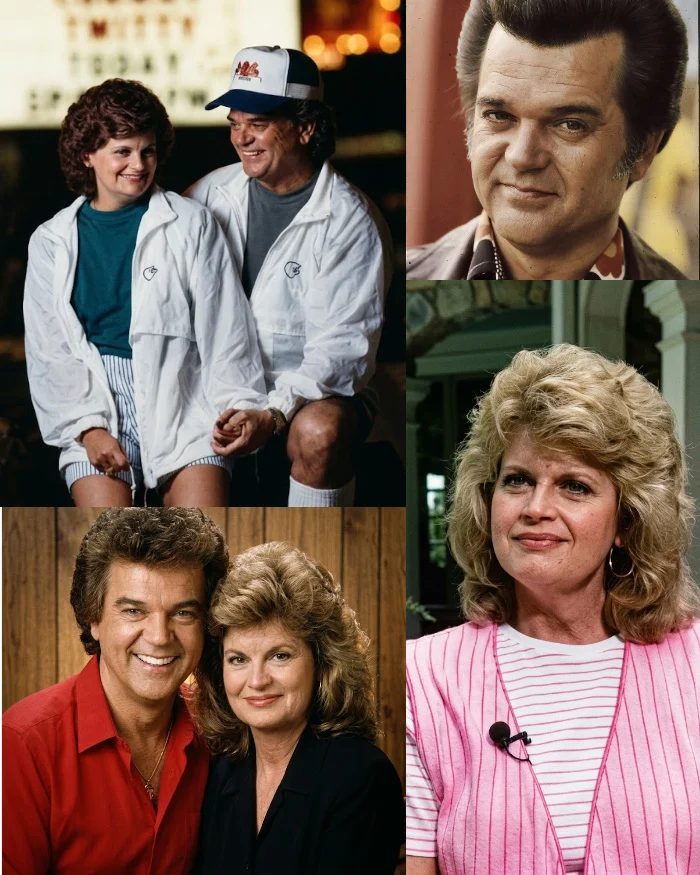
On the evening of Thursday, June 3, Conway Twitty did what he always did best: he showed up for a friend. Instead of taking the stage or seeking the spotlight, the 59-year-old legend quietly slipped into the Jim Stafford Theatre in Branson, Missouri. Accompanied by his wife, Dee Henry, he sat in the audience to watch his close friend Mel Tillis perform.
It was a rare moment of peace for a man who had spent four decades on the road, charting forty number-one Billboard country hits and winning the hearts of millions. But that peaceful evening was not to last. After the show, as Twitty and Dee began their drive back to Tennessee, the singer collapsed. He had suffered a ruptured abdominal aortic aneurysm.
“He didn’t say much. He always let his music do the talking.” — Mel Tillis
Rushed to Cox South Hospital in Springfield, Twitty’s life hung in the balance as doctors fought to save him. The news of his condition spread quietly among his peers, but their actions spoke volumes.
When Twitty’s family realized the severity of the situation, they needed a way to get to Missouri quickly. His son reached out to Reba McEntire, who didn’t hesitate for a moment. She offered her private plane and pilot, insisting the family keep the aircraft as long as needed. When they later tried to pay her for the charter, McEntire refused the money entirely, revealing that Twitty had taken her on tour years earlier and paid her $5,000 a night when she thought she wasn’t even worth $500.
Inside the hospital, another emotional scene was unfolding. By a tragic coincidence, Loretta Lynn—Twitty’s duet partner for over two decades—was already there, her own husband recovering from major heart surgery. When she learned Twitty was in the emergency room, she left her family’s vigil, found Dee Henry, and held her hand as they walked together into Twitty’s room so Lynn could speak to him one last time.
Twitty passed away in the early hours of June 5. When the news reached Nashville, Fan Fair ground to a halt. Black wreaths and ribbons adorned the fairgrounds, and artists across the city altered their setlists, turning the festival into a multi-day tribute to a man known as “The Best Friend a Song Ever Had.”
Twitty was an anomaly in an industry built on self-promotion. He avoided industry parties, rarely gave interviews, and never relied on flashy stage antics. He had transitioned from a 1950s rock-and-roll teen idol into a country music pillar by operating with a striking lack of ego. He championed the careers of independent women like Lynn and McEntire, anchored his family in a residential compound he built for them in Hendersonville, and preferred the quiet consistency of the work itself.
That unassuming nature is what stayed with the artists who knew him best. Looking back on that final Thursday night in Branson, Mel Tillis recognized that Twitty’s decision to sit quietly in the crowd wasn’t an exception to his character. It was the rule.
He didn’t need to announce his presence or demand the room’s attention. He just wanted to sit beside his wife and let the music play.