
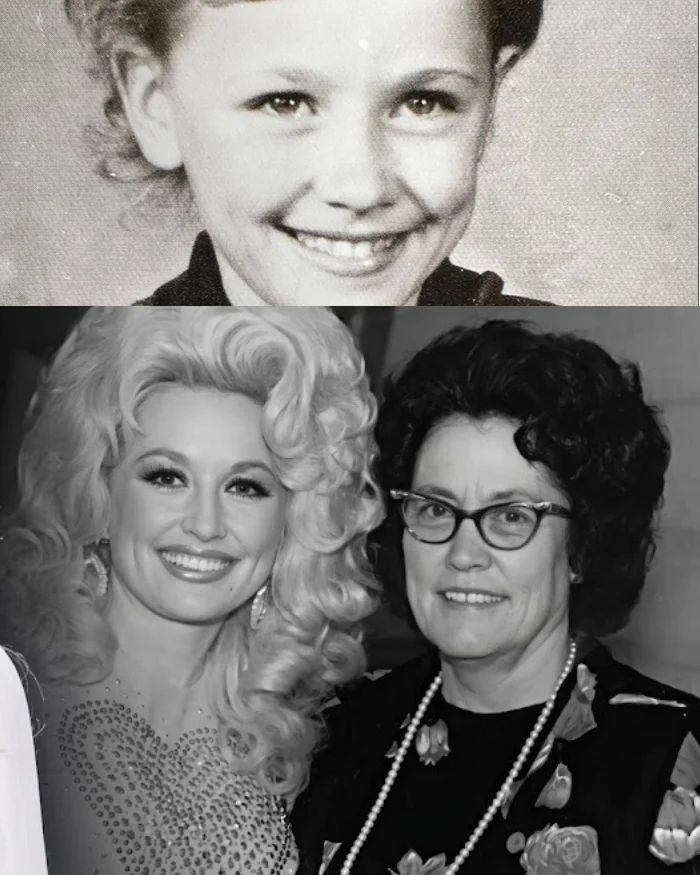
In the misty hills of Locust Ridge, Tennessee, a young girl clutched her first earnings from a radio appearance and made a decision that would echo through history. That child was Dolly Parton, and the few dollars she carried home weren’t for candy or toys—they were for her family’s survival.
To grasp the significance of that moment, you must understand the world she lived in. Dolly was the fourth of twelve children in a one-room cabin without electricity or indoor plumbing. The wind whistled through the cracks of the walls, and the family survived on the edge of poverty)Skip. Her father, Robert Lee, worked as a sharecropper and laborer, and when Dolly was born, he paid the doctor with a sack of cornmeal.
But the cabin wasn’t silent. Music was woven into the fabric of their daily life. Her mother, Avie Lee, filled the home with old Appalachian ballads, and her uncle, Bill Owens, recognized the extraordinary talent in his niece. He bought her a small guitar and began taking her to radio stations. When she was ten, she secured a spot on the *Cas Walker Farm and Home Hour* in Knoxville, a show that brought her into a bustling city and a new world of opportunity.
The station paid her a small amount for her performance—money that could have been spent on treats. Instead, she took it straight to her mother. Those dollars went toward food and necessities for her younger siblings. That moment changed everything. Her voice was no longer just a way to escape; it was a way to contribute. She realized that singing wasn’t just art—it was work, and it could put food on the table.
That understanding shaped her entire career. She never saw performing as an indulgence; it was a job with responsibilities. She applied the same fierce work ethic to every contract and every recording. The little girl who handed her earnings to her mother grew into a woman who funds literacy programs, disaster relief, and pediatric research. Her voice built an empire, but it all started with a simple lesson learned in the mountains of Tennessee.