
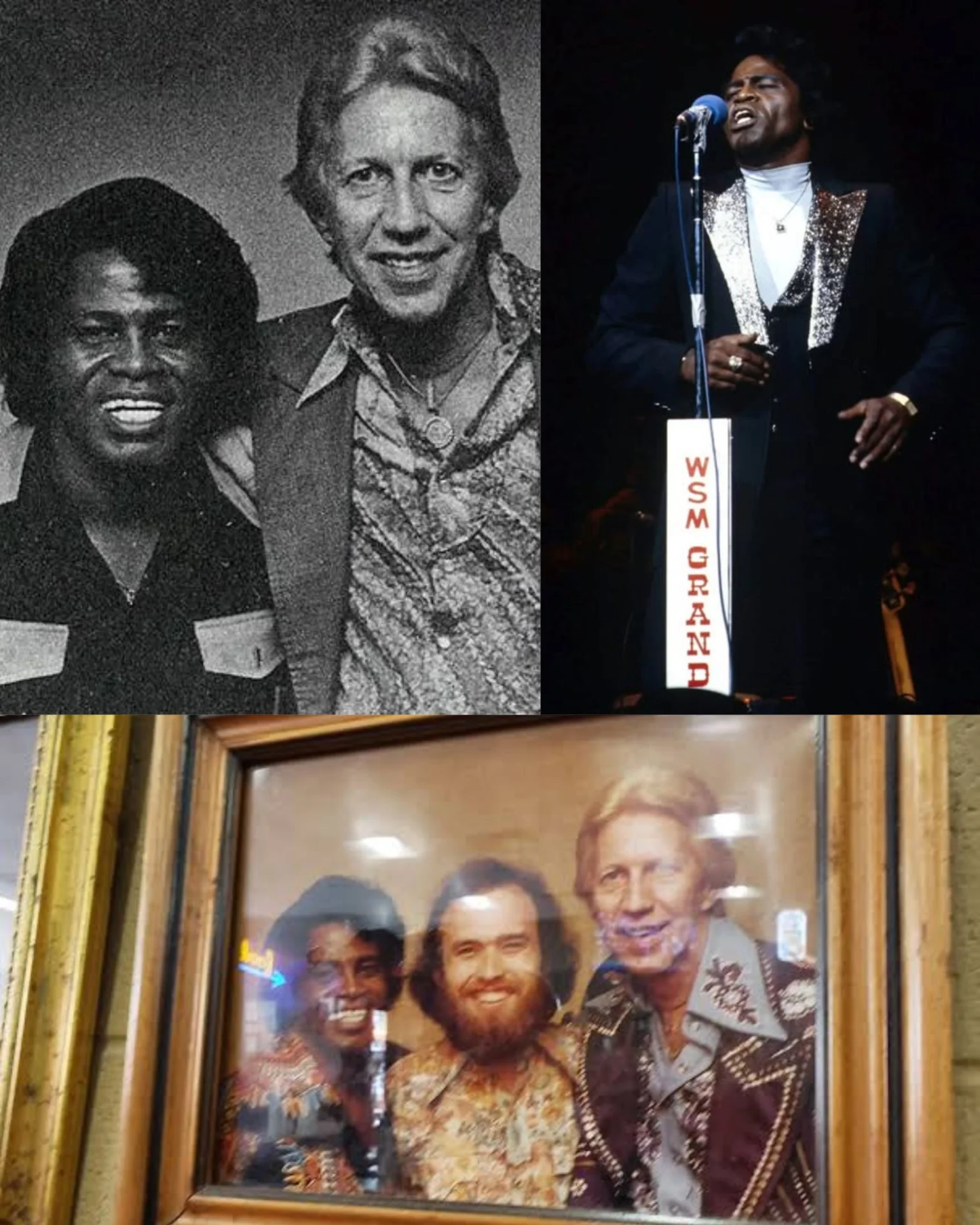
In a moment that defied expectations and ignited controversy, James Brown—the Godfather of Soul—stepped onto the hallowed stage of the Grand Ole Opry on March 10, 1979. The invitation came from country legend Porter Wagoner, a man who saw beyond the boundaries of genre and prejudice. But before Brown could even reach Nashville, the mere announcement of his appearance had become a flashpoint, with some Opry members publicly declaring they wanted no part of it.
“I had loved country music since I heard it on the radio as a child,” Brown later recalled. “That night at the Opry was a high point for me.”
The story began years earlier, when Brown and Wagoner first crossed paths, connected by a keyboard player who had worked with both. Wagoner, a devoted champion of the Opry, believed Brown would bring an electric excitement to the Saturday broadcast. He took the proposal to WSM executive Bud Wendell and Opry manager Hal Durham, who gave their approval. But when the news leaked, the backlash was swift and public.
By March 5, pianist Del Wood and singer Jean Shepard had voiced their objections, with Shepard vowing to stay away from the show that night. Their concerns centered on who truly belonged on the Opry stage—a question that took on deeper resonance with a Black performer at the center of the debate. Yet not everyone opposed the booking. Skeeter Davis publicly backed Wagoner’s decision, offering a counterpoint to the discord.
Despite the storm, Brown arrived. On that Saturday evening, Wagoner hosted the seven o’clock segment. Davis sang first, warming the crowd. Then, with Wagoner’s band behind him, Brown launched into a seventeen-minute set that blended country standards like “Your Cheatin’ Heart” and “Tennessee Waltz” with his own soul classics. The performance was electric, a fusion of worlds that seemed impossible just days earlier.
After Brown’s set, the Opry schedule rolled on—Wagoner sang again, Roy Acuff took over the next segment. The show did not stop; it simply absorbed this historic moment into its flow. A surviving photograph and the show rundown both capture Brown’s place in that evening, a testament to a night that was remarkable without rewriting the entire program.
The controversy did not resolve the question of who the Opry would welcome in the future. But for those seventeen minutes, the people who disagreed about Brown’s presence were forced to hear the same performance—a shared experience that transcended their divisions. Wagoner’s invitation was more than a booking; it was a door opened by a friend, and Brown walked through it with grace, leaving an indelible mark on country music history.