
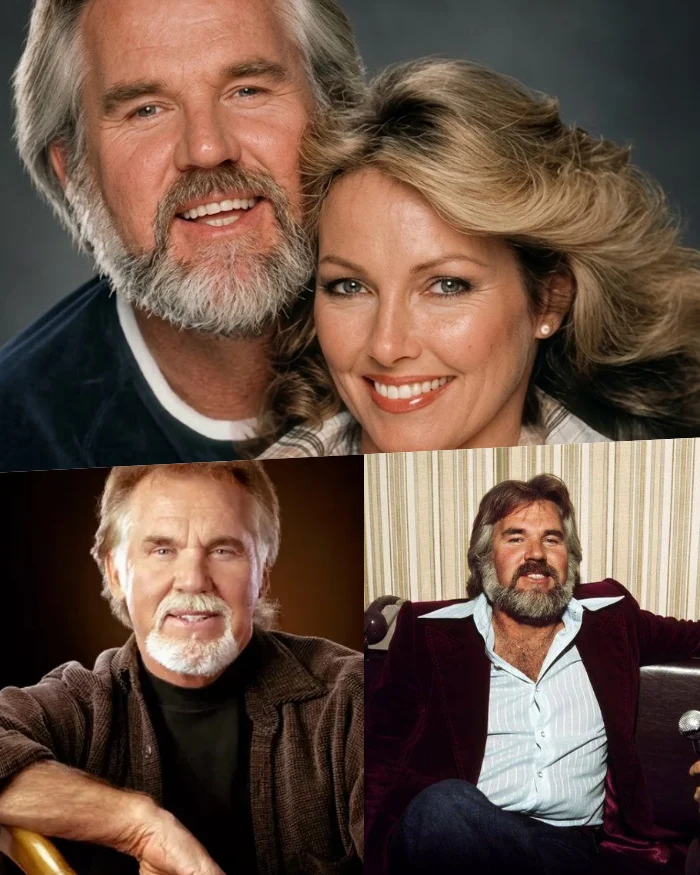
The headlines screamed financial ruin. The tabloids painted Kenny Rogers as a man who lost it all when his sixteen-year marriage to Marianne Gordon ended in 1993 with a sixty-million-dollar settlement. But the country legend spent the rest of his life insisting she earned every single dime.
In 1976, Rogers was a thirty-eight-year-old artist drowning in sixty thousand dollars of debt, his band the First Edition fractured and disbanded, and his career seemingly over. Record labels had written him off. The industry saw a washed-up singer running out of road.
Marianne Gordon saw something else. She was already a familiar face on Hee Haw with steady television work and film appearances. When they met on a Los Angeles set in the mid-1970s, she did not see a fading star. She saw a man worth betting on.
She gave him his life back when nobody else cared.
They married on October 1, 1977, and Gordon made a choice that would define both their futures. She put her own Hollywood schedule on hold to ride tour buses across America, enduring the brutal grind of interstate travel while Rogers rebuilt his sound and his image.
The gamble paid off beyond imagination. Between 1977 and the early 1980s, Rogers signed with United Artists Records and unleashed a string of storytelling anthems — Lucille, The Gambler, Coward of the County — that turned him into a global touring juggernaut. He routinely booked more than two hundred live dates a year, leveraging sophisticated multi-tiered arena contracts and early corporate sponsorships to capture unprecedented shares of ticket grosses, merchandising, and television specials.
The relentless hustle built a private empire, but it also took an inevitable toll. By the time their son Christopher Cody was growing up in the late 1980s, the constant separation and shifting rhythms of life on the road had created an irreversible distance between husband and wife.
When the marriage ended in 1993, the court approved a sixty-million-dollar settlement for Gordon. The media seized on the staggering figure, framing it as a devastating loss for the superstar. Rogers refused to play the bitter ex-husband. He never hired lawyers to tear down her character in the press. Instead, he stated clearly that Gordon had stood beside him when his career was essentially worthless, providing the emotional stability that made his second chance possible.
In his 2012 memoir, Luck or Something Like It, Rogers revisited the divorce with remarkable candor and gratitude. He wrote that Gordon deserved every dime because she had believed in him during his darkest professional hours and had given him the confidence to rebuild his life from scratch.
Gordon maintained that same quiet loyalty throughout the remainder of his life. Following Rogers’s passing in March 2020 at age eighty-one, she publicly spoke of him not as a courtroom adversary, but as an exceptionally kind man and an attentive, devoted father to their son.
The public remembered the headline number, but the enduring truth rested in the character of two people who refused to let money dismantle their mutual respect.
The stage lights and recording contracts created the historic estate, but the grace they protected after the curtain fell showed who Kenny Rogers really was.