
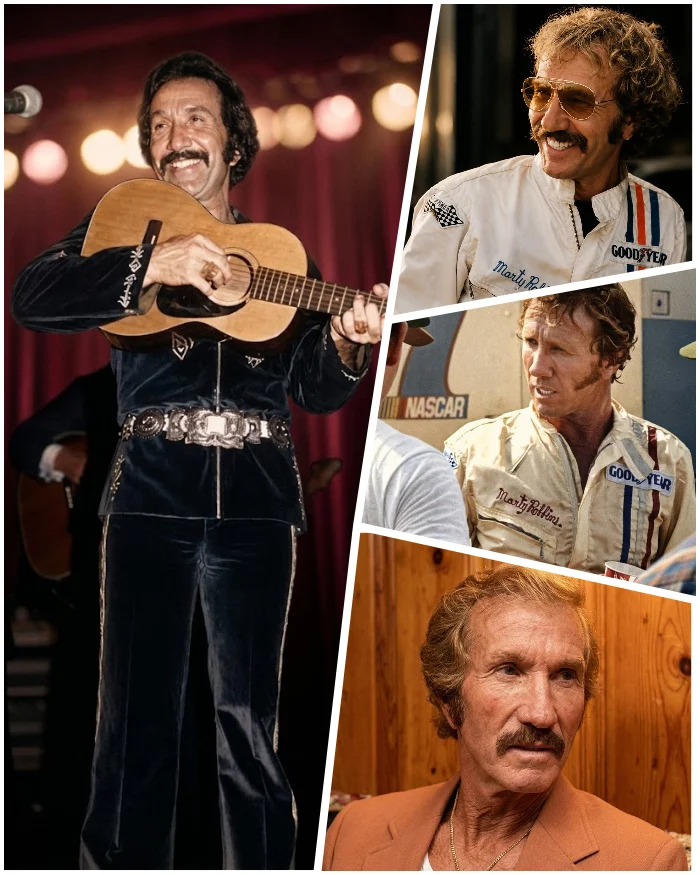
While other stars fought for prime-time slots, Marty Robbins demanded the last spot on the Opry lineup—so he could burn rubber on the track before burning up the stage.
In the mid-1960s, a peculiar ritual unfolded every Saturday night in Nashville. While his peers at the Grand Ole Opry jockeyed for early-evening radio segments, Marty Robbins made an unusual request: he wanted the closing 11:30 p.m. slot on WSM. His reason? A passion for stock car racing at the Nashville Fairgrounds Speedway, just a few miles from downtown.
Robbins, who had joined the Opry cast on January 19, 1953, was no casual dabbler in motorsports. He started with micro-midgets and modified stock cars on rough local circuits before advancing to the Late Model Sportsman division at the historic half-mile oval south of Nashville. On Saturday nights, qualifying began at 7:00 p.m. and features at 8:00 p.m.—overlapping directly with the Opry broadcast. Robbins solved the conflict by securing the final half-hour segment, allowing him to finish his races and still make his musical commitment.
Backstage at the Ryman Auditorium, a fascinating scene unfolded. Vito Pellettieri, the longtime stage manager, and Robbins’s band—including harmony vocalist Don Winters and guitarist Bobby Sykes—tuned their instruments while listening to the race broadcast on a radio. Every lap was a nail-biter; a spin or multi-car tangle could delay their boss, or worse, send him to the hospital. The band members held their breath, hoping to hear the checkered flag drop in time.
The moment the race ended, Robbins would climb out of his hot cockpit, drenched in sweat and reeking of gasoline. When caution flags or red-flag delays pushed the feature past 10:30 p.m., he would bolt from the speedway and race through downtown streets to the Ryman’s stage door, often with only minutes to spare. More than once, he arrived in his actual race car, pulling a tailored stage jacket over dusty trousers, his hands still smudged with black motor oil and grease.
His band could read the outcome of the race in his stride. If he had run near the front, he’d stride onto the stage with a wide grin, sit at the upright piano, and joke with the crowd between Western ballads and chart hits like “El Paso” and “Devil Woman”. The adrenaline from the track carried directly into his voice and storytelling.
Being the final act of the night had another perk: no host waiting in the wings to cut him off at midnight. Robbins deeply appreciated the fans who sat on the Ryman’s hard oak pews in the unairconditioned summer heat just to catch his 30-minute segment. So, when the WSM radio engineers cut the network feed at 12:00 a.m., Robbins kept his band on stage for another 45 to 60 minutes, turning the auditorium into a loose, late-night request concert until nearly 1:00 in the morning.
Many Nashville locals embraced this double schedule as a Saturday night tradition of their own. They’d buy a ticket to watch Robbins trade paint on the Fairgrounds asphalt at 8:00 p.m., then drive downtown to see him close the Opry three hours later.
Even after the Opry moved to Opryland in March 1974, and despite a heart attack in January 1981 that curtailed his regular racing, Robbins held onto that closing 11:30 p.m. spot for the rest of his life. On Saturday night, August 28, 1982—just three months before his final NASCAR start in Atlanta and his passing on December 8 at age 57—Robbins walked out to host the 11:30 p.m. segment for the last time. He opened with “Ribbon of Darkness” and kept the audience in their seats until 12:50 in the morning, a fitting finale for the man who never chose between his two great passions.