
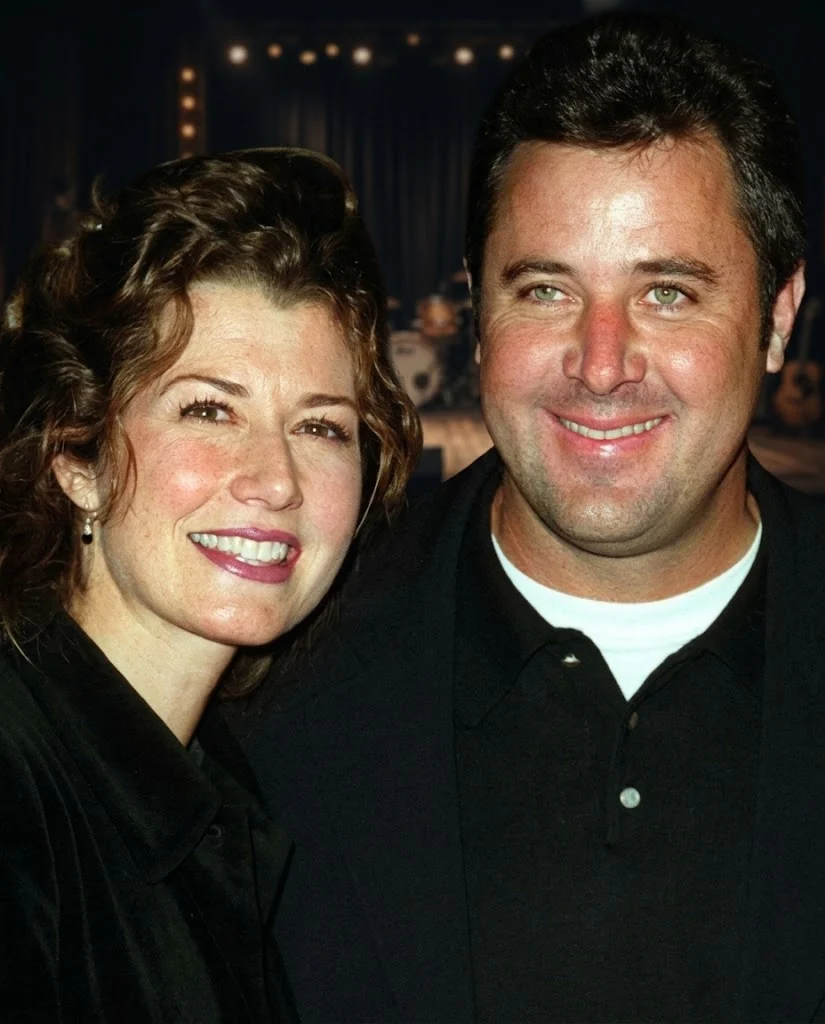
When Vince Gill stepped to the microphone to record “When My Amy Prays,” something extraordinary happened. His voice cracked. It trembled. And the entire room knew they were hearing something they could never recreate. This wasn’t a polished country ballad or a Hall of Fame performance. This was a man admitting he didn’t know how to pray.
On his 2019 album Okie, Gill stripped away the commercial gloss that had defined decades of hits. The project was stark, autobiographical, and unflinching. But no track cut deeper than the one he wrote about his wife, Christian music icon Amy Grant. Married since 2000, the couple had navigated fame and scrutiny together, yet this song exposed a divide that had never been spoken aloud.
Gill didn’t write about Grant’s sold-out arenas or her legendary status. He wrote about the quiet, daily grace he witnessed at home. He described himself as a man who felt out of place in church, unable to grasp the spiritual certainty that seemed to guide her every action. His admiration wasn’t for her public ministry—it was for how her beliefs translated into simple kindness, morning after morning.
“I don’t know how to talk to God,” he confessed in the song, and the honesty was almost unbearable.
In the studio, Gill refused to do what any seasoned vocalist would do. He didn’t run through multiple takes to perfect the track. He kept the first one—the take where his voice broke, where the vulnerability was raw and unpolished. The engineers knew they had captured something rare. They didn’t touch it. That trembling performance became the permanent record of his own inadequacy.
When Okie debuted, the song carried a heavy emotional weight. But its meaning changed entirely in June 2020, when Grant underwent sudden open-heart surgery to correct a rare cardiovascular condition. As she recovered at their Nashville home, the lyrics took on a new life. The man who had said he didn’t know how to pray had, in fact, written his own prayer—a permanent petition for her healing, preserved forever on vinyl.
The industry eventually recognized what the song truly was. At the 63rd Annual Grammy Awards in 2021, Gill won Best Country Solo Performance. Not for a stadium anthem. Not for his legendary guitar work. He won for a whispered confession, an imperfect vocal take that was left broken on purpose.
The song offered no theological answers)Skip. It didn’t resolve his doubts. It simply documented a husband standing in the background, leaning on the quiet grace of his wife when he had no words of his own. And in that silence, he found the most powerful thing he could ever say.