
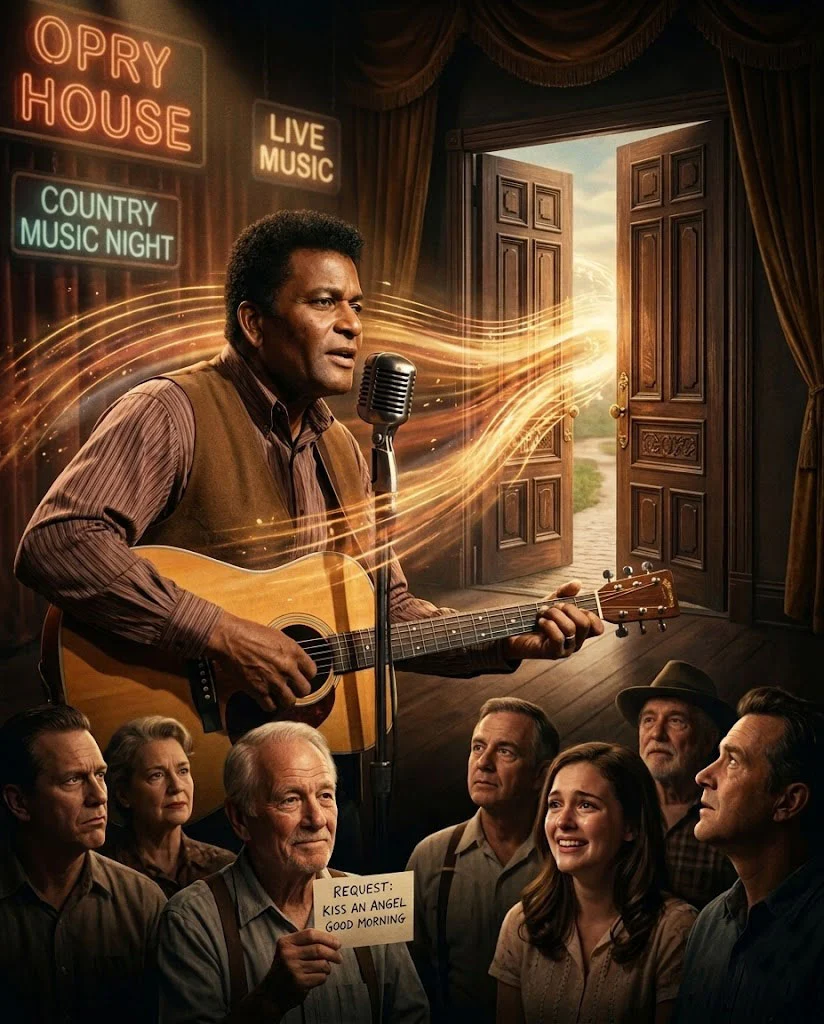
In the 1960s Deep South, a Black man walking into a country music venue wasn’t just unusual—it was a genuine threat to his safety. But Charley Pride didn’t protest, rage, or demand change. He simply stepped up to the microphone and sang. What happened next defied every expectation.
“I never wanted to be a trailblazer. I just wanted to sing. But I guess sometimes that’s the exact same thing.”
Before the massive arenas and Hall of Fame honors, Pride was a young man from Mississippi chasing a baseball dream on long bus rides in the Negro leagues. Yet country music was always humming in the background of his life—the soulful sounds of Hank Williams and Lefty Frizzell shaped his spirit.
The industry wasn’t built for someone like him. Nervous record executives feared radio station boycotts. Promoters trembled at how conservative rural audiences might react. Some insiders even urged him to sing Rhythm and Blues instead. Pride never argued with their small-mindedness.
When he recorded “Just Between You and Me,” something remarkable happened. Listeners across America heard only the voice—warm, steady, and unmistakably honest. By the time they realized who was singing, the music had already taken root in their hearts. The color of his skin simply ceased to matter.
He went on to command the charts with an astonishing 29 number-one hits and three Grammy Awards. Yet his quiet, dignified approach frustrated some. Civil rights activists wished he would speak louder about the racism he endured. Critics called his silence naive. But Pride understood a deeper truth about human nature.
If the music was pure and authentic enough, hate would eventually run out of excuses to exist. He spent 52 years navigating country music’s unforgiving terrain—facing locked doors, whispered doubts, and silent judgments. He never once punched back.
Instead, he kept earning standing ovations night after night, changing stubborn minds one gentle melody at a time. He did not leave behind bitter battles or shattered barriers. He left behind a timeless American catalog that forced an entire culture to pause and listen.
True revolution doesn’t always have to roar. Sometimes it just waits patiently for the music to begin.