
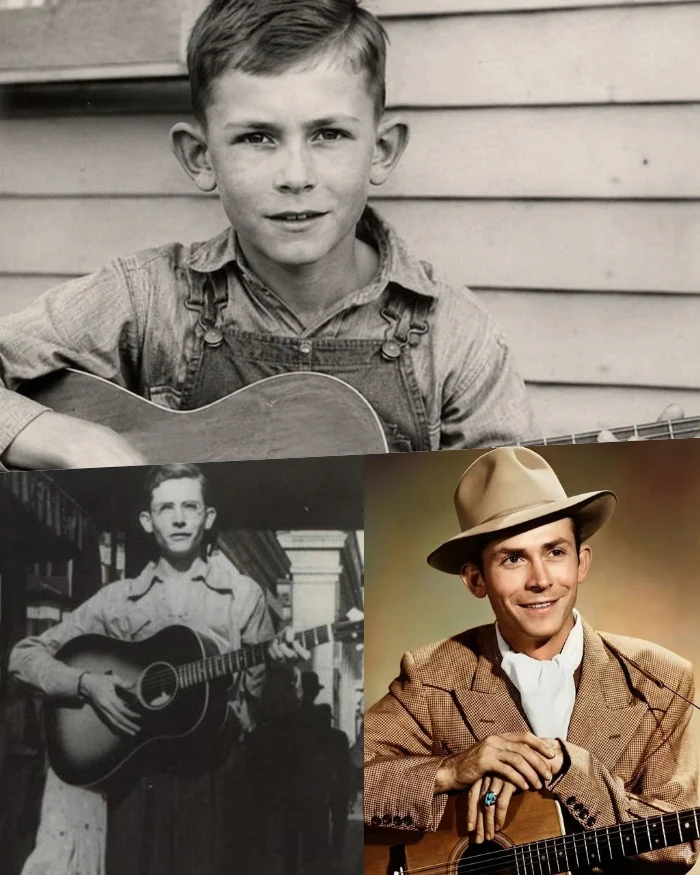
In the shadow of the Great Depression, a seven-year-old boy with a crooked spine walked the train tracks of Georgiana, Alabama, carrying a wooden shoeshine box. His name was Hiram King Williams, and his story is one of grit, pain, and the kind of resilience that turns hardship into art.
Born with spina bifida occulta, young Hiram lived with a constant, aching pain in his back. But he didn’t let that stop him. While other children played safely at home, he stood on dusty street corners, selling roasted peanuts and shining shoes for nickels and dimes. His hands were stained with black polish, and his heart carried the weight of his family’s survival.
His father, Lon, a World War I veteran, had been committed to a medical facility after a severe brain injury. His mother, Lillie, opened a boarding house to keep the family together, but the burden was heavy. So Hiram stepped up. He didn’t complain. He just worked.
But the streets offered him more than just a way to make ends meet. Amid the noise of the depot and the whistling trains, he discovered music. A traveling blues musician named Rufus “Tee Tot” Payne taught him guitar, showing him how to pour the raw, unvarnished reality of life into a melody. The lessons stuck. The sound was born.
That street-corner education gave him the confidence to perform on local WSFA radio, which eventually caught the attention of Nashville music publisher Fred Rose. When Williams finally stepped into a studio in December 1946, he didn’t just record songs. He recorded the sorrow of a lifetime.
His voice carried the ache of the spine, the grit of the streets, and the honesty of a man who knew exactly what it meant to struggle. That voice changed American music forever.