
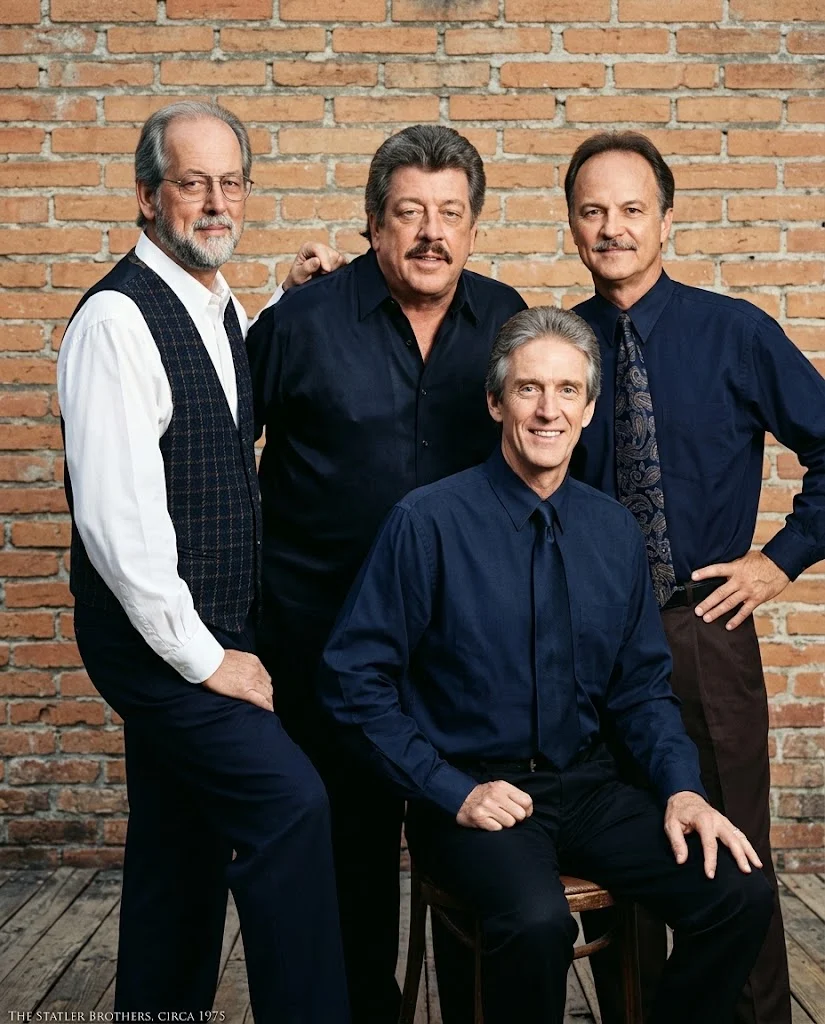
Nine golden trophies sit in the history books, yet the truest measure of The Statler Brothers is quieter than any award show applause. It lives in the moment four voices chose to blend instead of compete, and in the brave decision that could have ended everything before the world ever knew their name.
In 1972, Lew DeWitt, Don Reid, Phil Balsley, and Harold Reid stepped away from the safest spot a country act could occupy. For eight years they had opened for Johnny Cash, playing to guaranteed crowds under the protective shadow of a legend. Leaving that tour was a gamble with no promise of a soft landing. The quartet bet on the sound they had carried since singing in small Virginia churches, and they bet on one another.
The answer came the same year. At the Country Music Association Awards, The Statler Brothers walked onstage to accept their first Vocal Group of the Year trophy. It was not a fleeting spark. It was the start of a reign that would reshape the category.
Over the next decade they won CMA Vocal Group of the Year nine times. They held the honor consecutively from 1972 to 1977, then returned to win again in 1979, 1980, and 1984. The record became a gold standard and a blueprint for vocal groups that followed.
What made the run remarkable was not only the count. The Statler Brothers refused to chase passing Nashville trends. They built their identity on strict four-part gospel harmony and wrote enduring hits such as “The Class of ’57” and “I’ll Go to My Grave Loving You.” Their music carried the feeling of a Sunday morning service, a Saturday night memory, and the quiet dignity of small-town life.
They also refused to let fame pull them away from home. While Music Row glittered nearby, the men stayed rooted in Staunton, Virginia. They walked the same streets, greeted the same neighbors, and kept breathing the mountain air that had shaped their voices.
The nine trophies were never the product of egos fighting for the spotlight. They came from the rare willingness of four distinct singers to step back so the group could sound greater than any one member.
They proved that the most enduring legacy is built when no one is trying to sing the loudest.
Decades later, fans do not return to the records simply to count awards. They return because those four familiar voices still make a loud, crowded world feel quiet, familiar, and safe.