
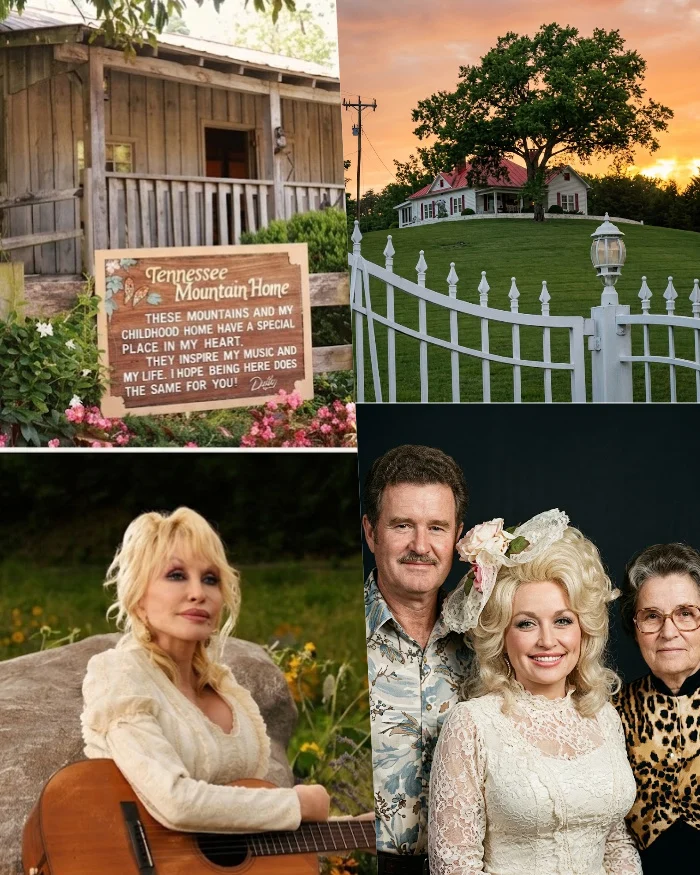
The first time Robert Lee Parton flipped a switch in the new Sevierville home and light filled the room, the past did not disappear. It simply lost its power to hurt. Dolly Parton had already worn rhinestones on national television, but the paycheck she remembered most was the one that turned a long awaited promise into a real house for her parents.
That house in Sevierville, Tennessee, was not just a purchase. It was a quiet answer to years of want in the Smoky Mountains. The family had known a lack so severe that it shaped every ordinary detail. When Dolly was born in a one-room cabin, Robert Lee Parton paid the delivery doctor with a sack of oatmeal because there was no cash.
Her father worked the dry Appalachian dirt until his body was exhausted. Her mother, Avie Lee, wore down physically after giving birth to twelve children by the age of thirty-five. The wooden cabin at Locust Ridge let winter winds push through the floorboards. Rags stuffed into gaps were a thin defense against the cold. An indoor tap with clean running water was a distant luxury.
Her roots were not a shameful past to escape. They were the engine of her unyielding drive.
The day after Dolly graduated from high school in 1964, she packed her few belongings and boarded a bus to Nashville. It was a huge risk for a teenager with no safety net, yet she carried the unspoken hope of a family of fourteen. For three years she worked the Music Row system by singing on demo tapes, writing songs for other artists, and knocking on publisher doors.
Her breakthrough came in 1967 when she earned a regular place on The Porter Wagoner Show, stepping in to replace Norma Jean. That weekly television work brought her first steady income. She knew at once where it should go. Before the solo stardom, before the theme park, and long before the international tours, she used those early earnings to buy her parents a proper modern home in Sevierville, Tennessee.
Inside that house, the family met everyday miracles. Clean water came from an indoor tap. Her father no longer had to stuff rags into the floor to stop freezing drafts. Even as Dolly added elaborate rhinestones, heavy makeup, and towering hair to her stage image, her mind stayed anchored to the wooden cabin at Locust Ridge. She treated it as the source of her drive rather than a past to run from.
The Sevierville house was her first way of repaying the two people who carried poverty so she could sing.
That home was only the start of a private lifelong commitment. Over the next several decades, as her entertainment empire spread across the globe, Dolly quietly helped her eleven brothers and sisters avoid the severe struggles their parents had faced. Away from flashbulbs and interview microphones, she funded college tuitions, paid mounting medical bills, and bankrolled early career starts.
She gave her siblings a financial foundation and a permanent protective shield. When some pursued music or business, she became the silent investor. She set up trusts, paid for surgeries, and employed family members within her production companies and at her properties. She never publicized these acts. To her they were not charity. They were familial duty.
The world saw a global superstar who built a billion dollar empire on charm, brilliant songwriting, and a larger than life image. The people closest to her saw something deeper. The fierce drive behind the relentless touring and recording came from caring for her own. She turned historic success into a lifeline for the people who once shared a single bed in the mountains.
The rhinestones and iconic wigs made her a country music legend. Yet her greatest legacy was built in the quiet days when she made sure her family would never feel the winter wind through their floorboards again.