
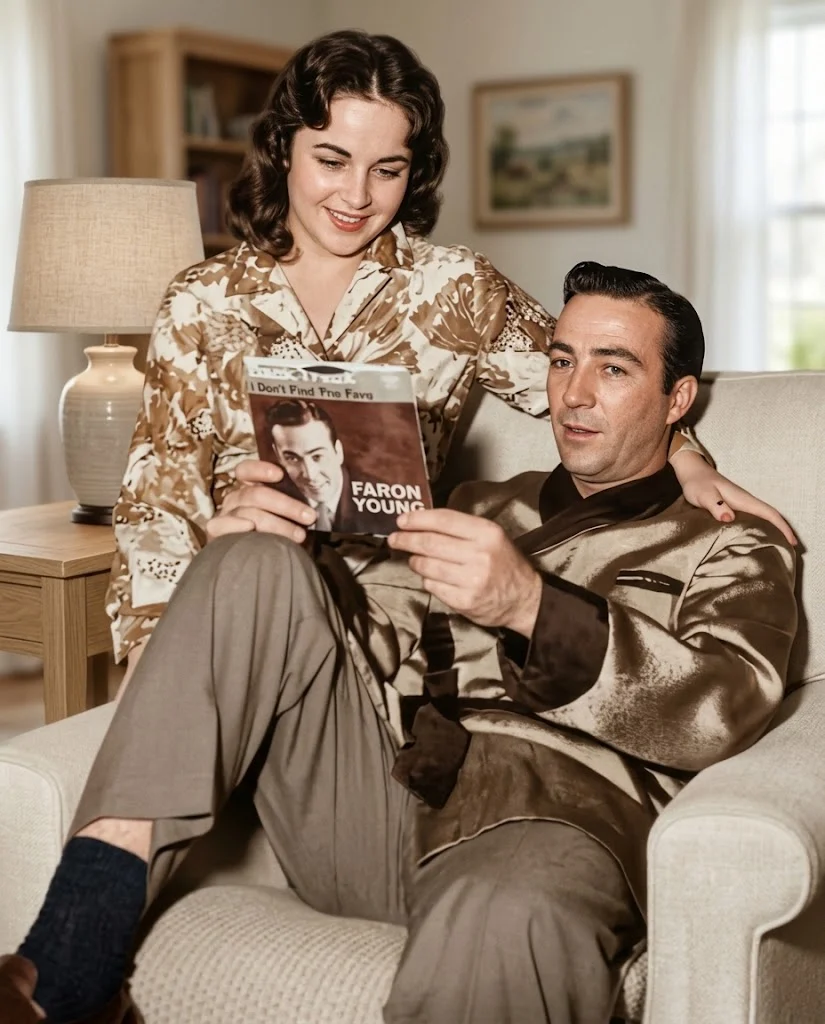
The most haunting sound in Faron Young’s Harbor Island home was not a song. It was the crack of a gunshot ripping through the kitchen ceiling in late 1984.
For millions of country fans, Young was the Young Sheriff, a smooth baritone in rhinestone suits who ruled Nashville radio during the 1950s and 1960s. He placed more than 80 singles on the Billboard charts and became a foundational force in traditional country music. He also co-founded Music City News in 1966, helping Nashville grow into a commercial powerhouse and changing how fans connected with the industry. Westerns, the Grand Ole Opry and packed shows all belonged to his larger-than-life world.
His signature song Hello Walls, written by a young Willie Nelson, told of a man left alone in a house and talking to the walls because no one else remained. Decades before his own final years, that ache of isolation seemed to echo through the music.
Behind the tailored suits and quick public wit, a heavier reality was taking hold. By the 1980s, hit records had slowed and country music had moved toward a new generation. As his chart dominance faded, severe alcoholism began quietly dismantling his private life.
The breaking point came at his Harbor Island home in Tennessee. During a devastating personal spiral, Young fired a gun into the kitchen ceiling. The physical scar on the house marked the end of any remaining safety for his family.
The bullet hole in the ceiling became the moment the music truly stopped at home.
In 1986, his wife Hilda filed for divorce after 32 years of marriage. Leaving was a painful choice for survival. The man who had built a career by connecting with millions of listeners found himself completely disconnected from the people who knew him best.
After the marriage ended, Young retreated into a deep and heavy isolation. He rejected outside help and pushed away close friends and longtime peers in Nashville. The quiet of an empty house replaced the roar of crowds and the legendary parties he once hosted.
Physical decline made everything worse. Emphysema and other persistent health battles slowly robbed him of breath and of his most prized instrument, his commanding voice. For a man whose identity was tied to holding an audience in his hand, the loss of vocal reliability was a crushing blow. The stage could no longer offer the validation it once had.
Unable to overcome severe physical pain, failing health and the deepening depression that consumed his later years, Faron Young died in December 1996 at age 64. The loud, vibrant and unapologetic career he built stood in stark contrast to the silence of his final chapter.
Four years after his death, the country music establishment gave him its highest institutional honor. In the fall of 2000, he was posthumously inducted into the Country Music Hall of Fame. His bronze plaque now hangs in the museum rotunda in downtown Nashville, securing his contributions to the business of country music.
That honor ensures his records will not be erased by time. Yet the deeper legacy of Faron Young remains a complex and quiet reminder of the man behind the microphone, a towering superstar who gave everything to the spotlight and found himself with nothing left when the applause faded.