
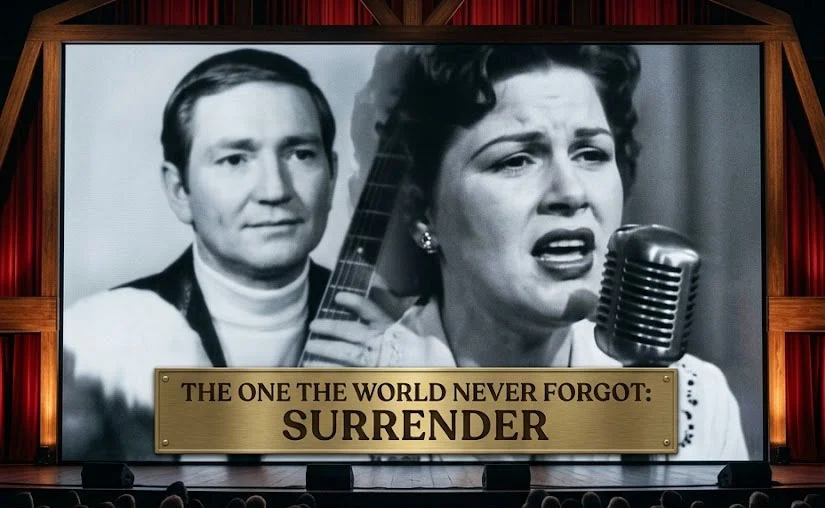
The room went quiet when Patsy Cline finally stepped toward the microphone. She had already built a towering reputation as the reigning queen of Nashville, a singer with soaring control and the power to command any crowd. Yet the song waiting for her felt wrong from the first note.
At Bradley Film and Recording Studios, a struggling songwriter named Willie Nelson had brought in a loose and unusual demo called Crazy. Patsy folded her arms and refused it. The melody wandered with a jazz-like ache that felt foreign to a traditional country singer. Its phrasing lingered behind the beat, almost as if the song itself was hesitating.
That’s not how I sing
Her producer Owen Bradley did not argue loudly. He simply guided her back toward the microphone. He was not asking for another polished hit. He was asking her to lower her guard and let the quiet sadness of the lyric finally speak.
Patsy knew exactly who she was behind a microphone. She knew how to project strength, shape a vowel, and fill a room with vocal force. Stepping away from that proven style felt like an unnecessary risk. She did not want to sound weak or uncertain.
But Owen heard something beneath her resistance. He knew that if she stopped trying to overpower the song, its fragile truth would rise to the surface.
Reluctantly, with doubt pressing on her chest, she stepped up to the metal stand. There was no certainty in the room. No guarantee that they were making a masterpiece. She approached the unfamiliar music like a proud woman trying to speak a delicate language she barely understood.
Then, in the heavy silence before the first verse, she gave up the fight.
Listen closely to the final recording. Every trembling breath matters. Every slight pause feels intentional. She did not merely sing the notes on the page. She inhabited the lonely center of them.
She didn’t just sing the notes. She lived them
She took a melody that had frightened her and turned it into an elegant quiet heartbreak. She found a delicate balance between profound sadness and absolute restraint.
That is why the record never faded from the radio. It was not born from an artist who knew every answer. It was born from a fiercely independent woman standing before something terrifying and choosing to trust it anyway.
Today it is impossible to separate the legend of Patsy Cline from the melancholic beauty of Crazy. The track she almost walked away from became the one that followed her into eternity.
Technical perfection is rarely what makes music immortal. Pure and unfiltered vulnerability does.
Sometimes the art that scares you most is the only thing that can tell the absolute truth