
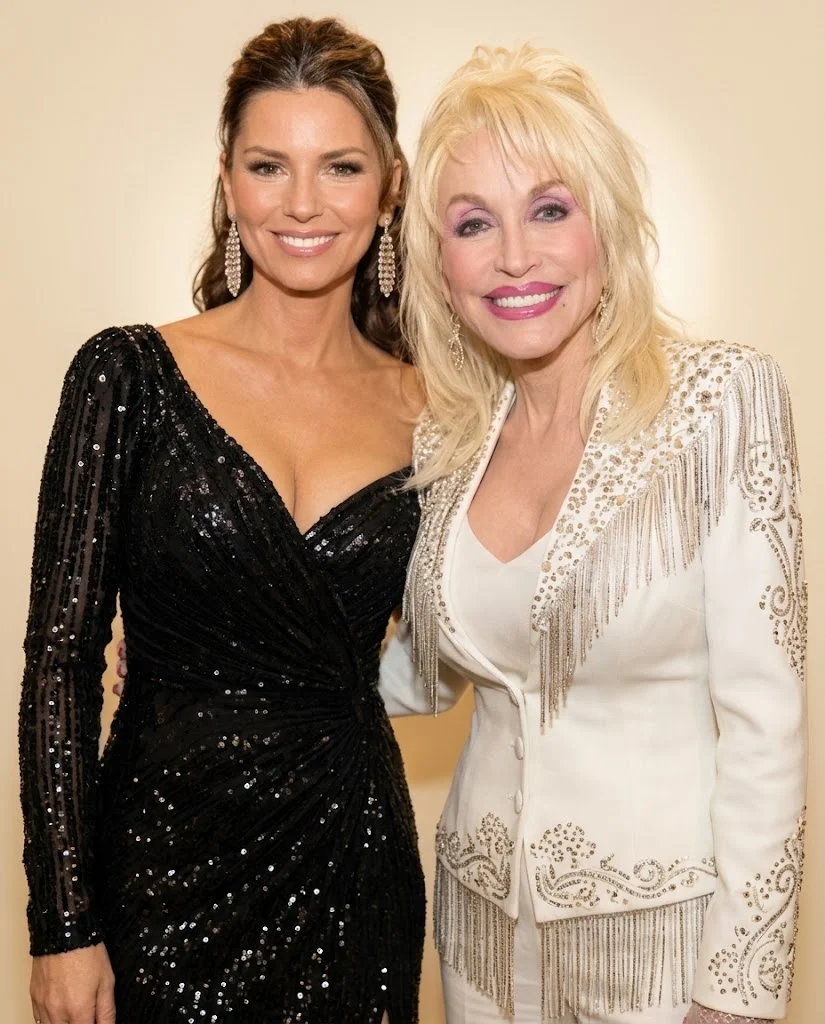
Cameras caught Dolly Parton on her feet in the front row, leading standing ovations as Shania Twain collected top honors in 1999. While Nashville debated whether Twain belonged, the most celebrated woman in country music history had already made her answer clear in public and in private.
When Twain released Come On Over in the autumn of 1997, the country music establishment did not know what to do with the earthquake that followed. The Canadian born singer blended arena rock drums, pop hooks, and high fashion visuals, shattering commercial expectations while igniting a fierce debate on Music Row.
Traditional gatekeepers argued that the music strayed too far from country roots. Critics questioned her bare midriff, polished music videos, and unapologetic self confidence, treating her international crossover as an intrusion into a conservative genre. Yet while some veterans chose silence or skepticism, Parton publicly stepped forward to defend the younger artist.
Parton understood the resistance better than anyone in Nashville. Three decades earlier, she had left the Great Smoky Mountains to build an empire on her own terms, fighting male dominated record labels to maintain ownership of her publishing and retain creative control over her image. Decades before Twain arrived from the cold mining town of Timmins, Ontario, Parton had faced the same whispers that her image was too bold for country radio.
When purists claimed Twain was diluting the genre, Parton reminded commentators that country music had always grown by widening its circle. She recognized the work ethic behind Twain rise, noting that writing her own material and demanding ambitious production was an act of artistic independence, not disrespect, and that country music was plenty big enough for electric guitars and unapologetic glamour.
The solidarity between the two women became impossible to ignore during the 1999 awards season. At both the Grammy Awards and the Country Music Association Awards, Parton led those ovations as Twain took home major honors. Behind the public praise lay quiet and personal exchanges that deepened their bond, as Parton reached out privately to encourage Twain and offered steady reassurance that staying true to her vision mattered far more than pleasing industry insiders who feared change.
For Twain, who had fought her way out of poverty in northern Ontario and faced relentless scrutiny from purists who called her an outsider, those private words and public gestures served as an essential shield. Having country music ultimate pioneer validate her songwriting gave her the space to own her historic momentum.
Come On Over went on to sell more than forty million copies worldwide, becoming the best selling studio album by a solo female artist in history. Its success proved that country songwriting could fill global stadiums without losing its narrative core.
True leadership means making the table larger, not competing for a single seat at it.
More importantly, Parton defense of Twain fundamentally shifted the culture of Nashville. Their alliance paved a clearer road for generations of female artists who followed, from Carrie Underwood and Taylor Swift to Kacey Musgraves. It established a lasting precedent that an artist could embrace glamour, pop sensibility, and fierce independence while remaining firmly anchored in country storytelling.
Decades after Come On Over changed the commercial ceiling for country music, the mutual admiration between Parton and Twain remains a defining chapter of mutual respect. The awards and record sales proved Twain commercial reach, but Parton unwavering support gave the moment its lasting grace. Tradition was never meant to be a wall that kept people out, it was built by those brave enough to open the door.