
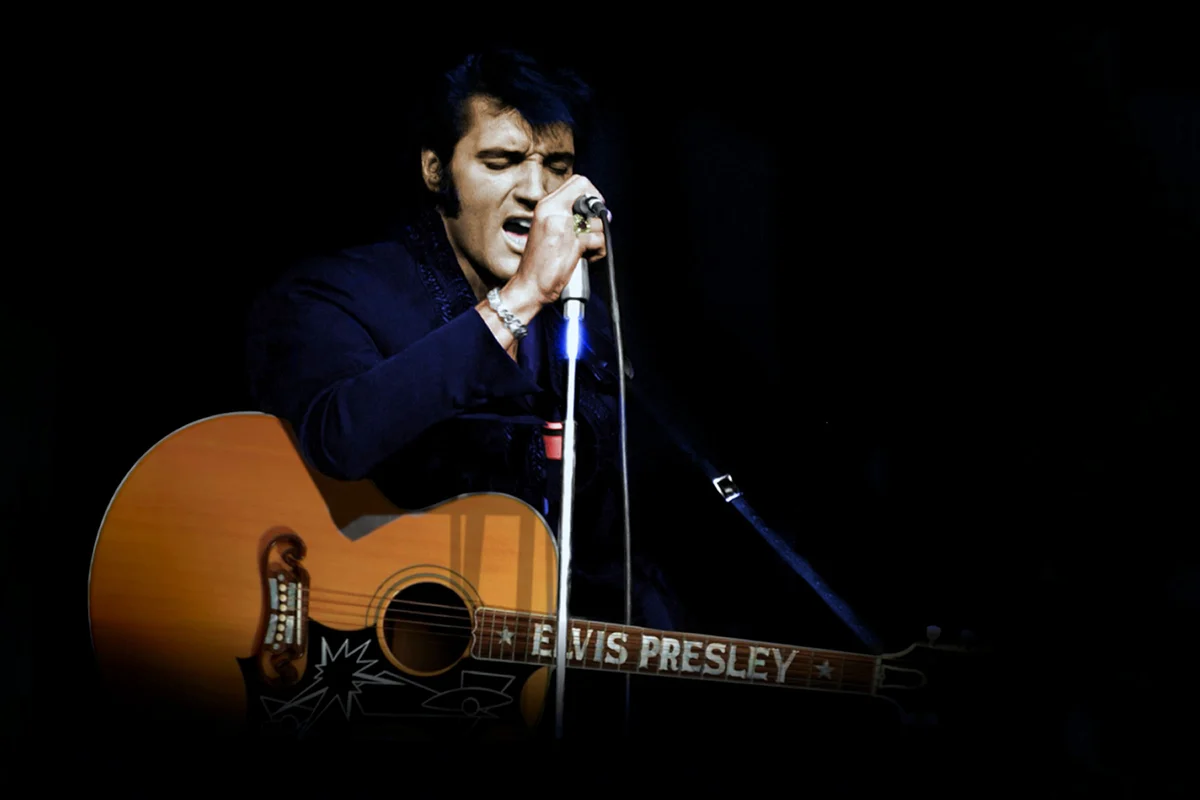
A boy is born into poverty and another child arrives under the same harsh conditions as the story ends. That unbroken cycle is the heartbreak at the center of In The Ghetto and in April 1969 Elvis Presley carried it to number three on the Billboard Hot 100 and to the top of charts around the world.
Introduction And Short Summary Of The Song
Released in April 1969 In The Ghetto marked one of the most socially conscious recordings of Presley and a turning point in his late career. Written by Mac Davis the ballad tells a tragic story of poverty and crime and the cycle of hardship in inner city America. With haunting lyrics and a restrained arrangement and a deeply emotional delivery the song tackled themes far removed from his earlier love songs and playful rock and roll hits. It proved that Presley could still deliver powerful and relevant music that resonated with changing times and demonstrated his ability to engage with pressing social issues through song.
Origins Of The Song
Mac Davis wrote In The Ghetto and later crafted several other hits for Presley including Memories and Don’t Cry Daddy. Inspired by his upbringing in a modest Texas neighborhood Davis wanted to write a song that highlighted the struggles of poverty and the vicious cycle it creates. The song was originally titled The Vicious Circle and was renamed In The Ghetto to better capture its setting and emotional focus.
When Presley heard the song during his 1969 sessions at American Sound Studio in Memphis he was immediately drawn to its message. The Memphis sessions produced by Chips Moman represented his return to serious recording after years dominated by lightweight movie soundtracks. Backed by the house band of the studio known as the Memphis Boys Presley recorded the track with a stripped down arrangement that emphasized its lyrical content.
The session took place in January 1969 alongside other career reviving tracks like Suspicious Minds and Don’t Cry Daddy. In The Ghetto stood out as a bold artistic statement and addressed real world issues at a time when the catalog of Presley had rarely ventured into overt social commentary.
Why Elvis Released In The Ghetto
By 1969 Presley needed to reinvent himself. The 1968 NBC television special known as the Comeback Special had reignited interest in his career but he needed material that would prove his relevance in the rapidly changing musical landscape of the late 1960s. With rock and soul artists increasingly addressing social and political issues his choice to release In The Ghetto signaled his willingness to engage with deeper themes.
The decision to release it as a single was also a statement against those who doubted his artistic depth. For years critics had dismissed him as trapped in Hollywood formulas. In The Ghetto showed that he could interpret material of substance with sincerity and gravitas. Commercially it was a wise move because the single became his first top ten hit in the United States in four years and reached number three on the Billboard Hot 100 and topped charts in several countries including the United Kingdom and Ireland and Norway. It helped cement his musical resurgence and paved the way for further successes in the late 1960s and early 1970s.
The Message Conveyed In In The Ghetto
The lyrics tell the story of a boy born into poverty in the ghetto of Chicago. As he grows up amid hunger and neglect and violence he becomes trapped in a cycle of crime that ultimately leads to his death. The narrative ends with another child being born under the same circumstances and the cycle beginning again.
A child born with no clear way out becomes trapped by the very world that failed him and the story starts all over again.
One notable characteristic of the performance is the use of dynamics. Presley begins softly and gradually builds intensity as the narrative unfolds before returning to a subdued tone at the conclusion. This arc mirrors the tragic rise and fall of the central character of the story and gives the performance a dramatic quality without excess. His restrained and heartfelt delivery reminded a changing country of the depth he had always possessed.
Cultural And Commercial Impact
In The Ghetto was a major success upon release and reached number three on the Billboard Hot 100 and number one in multiple countries. It sold over a million copies in the United States and further solidified the comeback of Presley after the success of his 1968 television special. Culturally the song marked a new phase in his career because by addressing social issues he aligned himself with the more serious direction of late 1960s music. While some critics questioned whether Presley who was often associated with entertainment rather than activism could credibly deliver such material most praised his sincerity and the power of his interpretation.
The song also broadened his audience. It appealed not only to his longtime fans but also to listeners who had previously overlooked him as a serious artist. For many it was proof that Presley could transcend the limitations of his film career and remain relevant in an era of profound cultural change.
He was no longer a movie star going through the motions because he had found his grit again.
Legacy Of In The Ghetto
Today In The Ghetto is considered one of the most significant recordings of Elvis Presley. It is frequently cited as a highlight of his late career and a testament to his ability to tackle weighty subjects with sincerity. The track is often included in compilations of his greatest hits and remains a staple on classic rock and oldies stations.
The legacy of the song also lies in its impact on his trajectory. Alongside Suspicious Minds it helped establish his late 1960s resurgence and proved he could adapt to the social consciousness of the era. It paved the way for other introspective tracks in his catalog including Don’t Cry Daddy and Kentucky Rain.
More broadly In The Ghetto stands as a reminder of his versatility. While he will always be remembered for his rock and roll swagger and romantic ballads this song demonstrates his ability to connect with audiences on issues of poverty and inequality and human struggle. More than five decades later it continues to resonate as both a social commentary and a moving work of art. Its themes remain relevant and his restrained and heartfelt delivery ensures that the song endures as one of his most powerful contributions to popular music.