
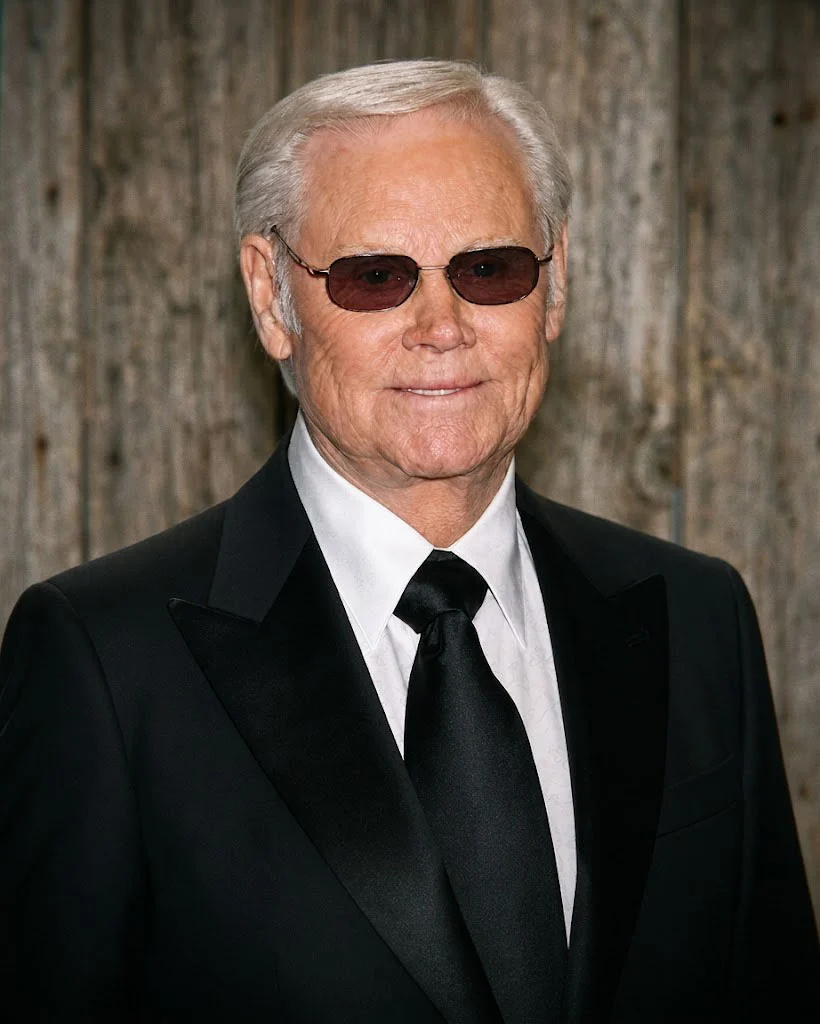
The room did not erupt. It fell still. A sober man in his seventies stood beneath the lights of the Grand Ole Opry and sang to people who had watched him fall apart, and for a long breath nobody cheered. They simply listened to a man who had survived himself.
That quiet moment had been fourteen years in the making. It began on March 6, 1999, when George Jones drove his Lexus SUV into a bridge railing near Nashville. He was 67 years old, and a vodka bottle lay on the floorboard beside the wreckage of the greatest voice in country music.
His story began in the piney woods of East Texas, in the Big Thicket, where music was not a dream but a way to stay safe beside a violent, drinking father. He learned to sing for his dinner and for his safety, and by the 1960s his voice had become the gold standard of the genre.
In a ten-year period, I think we all tried to sound like George Jones.
Waylon Jennings spoke those words, and they still capture how completely George had shaped the sound of country music.
But the gift carried a heavy tax. George disappeared into bottles of bourbon and bags of pills, and he missed enough shows to earn the nickname No Show Jones, a name he hated. He famously drove a riding lawnmower to the liquor store when his wife took his car keys, and the world watched a genius slowly dismantle himself.
Inside Vanderbilt University Medical Center, George lay under a tangle of tubes while Nancy, the woman who refused to leave his side, waited for him to wake up. When he finally opened his eyes, the world expected the old George, a request for a drink or an excuse for the crash. He offered neither. He made a vow.
The man who had spent sixty-seven years running finally decided to stand still.
He walked out of that hospital and never touched another drop. For the next fourteen years he proved that a legend could be more than his demons. The shows were no longer missed, and although his voice was weathered by time and trauma, it carried a new weight. He was not just singing about pain anymore. He was singing from the other side of it.
One song always loomed over him. He Stopped Loving Her Today was his masterpiece, a story of a man who only found peace in a casket. For years George had a complicated relationship with the track because he thought it was too morbid and too much like the life he was trapped in. But in his final years the meaning shifted. It was no longer about a literal death. It was about the moment he stopped loving the things that were killing him.
George Jones passed away in 2013, surrounded by the peace he had fought for since that Nashville bridge. He left behind the records and the wild stories of the lawnmower, but his real legacy was the quiet dignity of the last fourteen years. It was the sight of a man looking at his own wreckage and choosing to build something new. Sometimes the hardest song to sing is the one where you admit you were wrong, and George Jones sang that song every day until the end.