
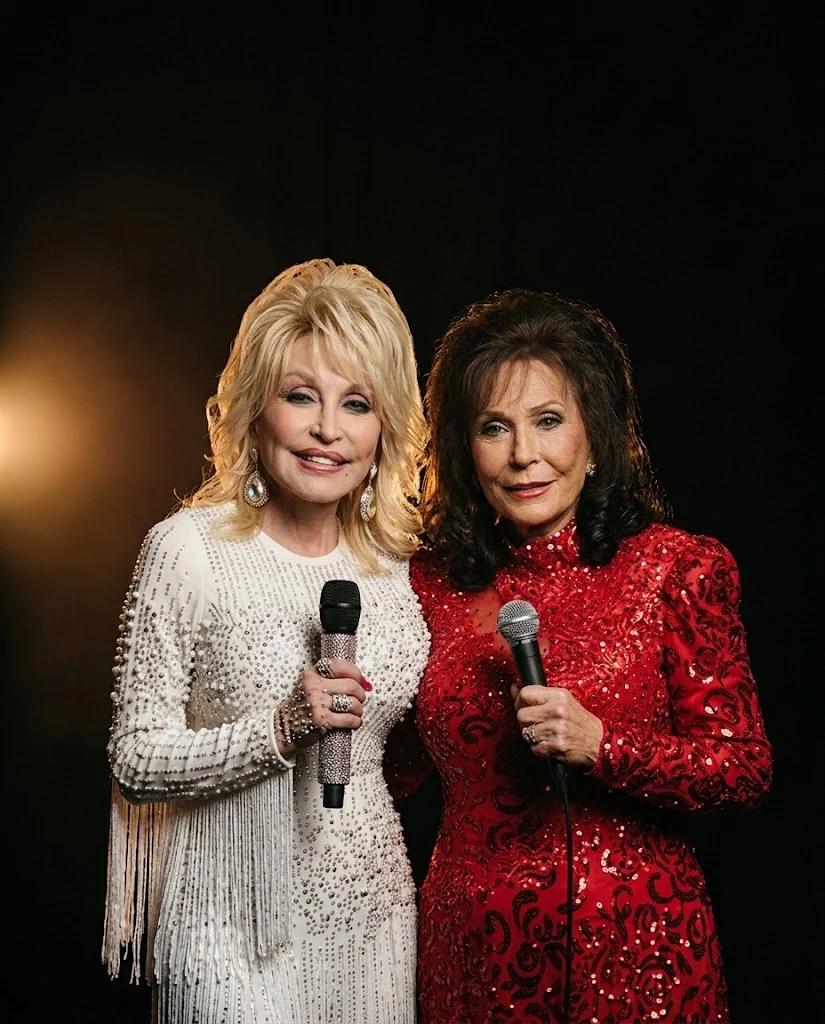
Three of country music’s fiercest survivors walked into a Nashville studio in 1993 with enough power to make the world listen. Dolly Parton Loretta Lynn and Tammy Wynette did not use that leverage to demand the loudest seat at the table. They turned the spotlight toward the women who had carried the genre through its hardest years.
The album they created together was Honky Tonk Angels. Its name came from a 1952 release by Kitty Wells, the first woman to top the country charts when industry leaders insisted female stars could not sell records.
Parton Lynn and Wynette wanted more than a polite tribute. They invited Wells into the studio when she was in her seventies and let her stand beside them as a living witness to the road she had opened.
The circle needed one more voice. Patsy Cline had died in a plane crash decades earlier, yet her influence still shaped every room she had left behind. The trio chose to sing “Lovesick Blues” with her, not around her.
Producers searched Decca Records archives and recovered the original analog session tapes from Cline’s 1960 recording. Engineers isolated her unaccompanied vocal stem from the historic three-track master and brought it back into the 1993 control room.
When that pure vocal filled the monitors, the living legends heard the woman who had fought the earliest and most isolating battles on Music Row
Parton Lynn and Wynette then overdubbed their own voices onto separate tracks. For a few minutes they shared the same audio space as Cline and as Wells, linking eras that had once been treated as rivals.
The final result brought five defining voices together across decades of American music. It stood as a physical record of women refusing to leave their predecessors behind and a reminder that the highest positions in the business can be used to raise others.