
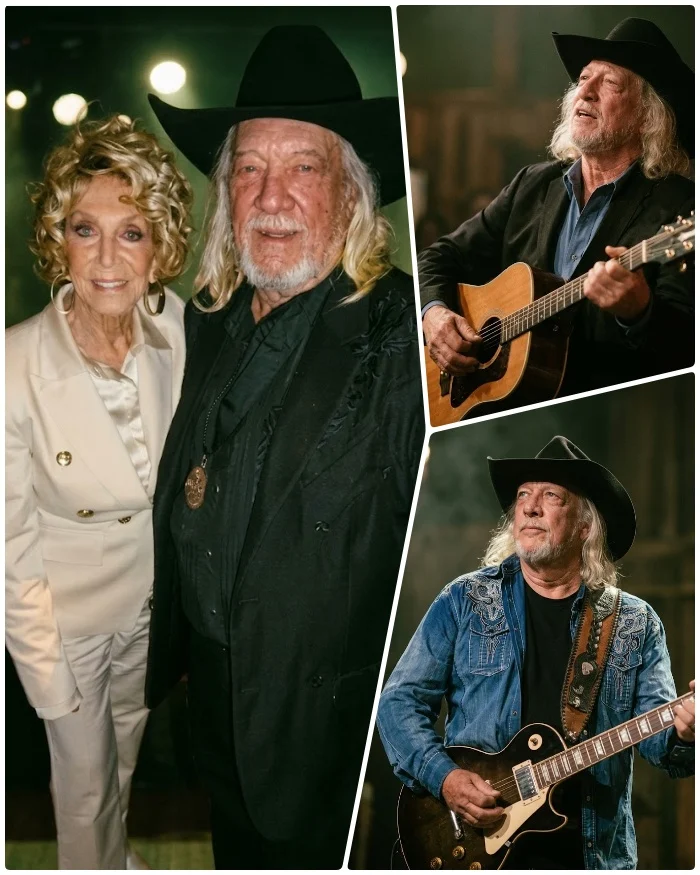
From a hospital bed in Charleston, West Virginia, on August 30, 2003, forty-eight-year-old country singer John Anderson asked his doctors twice to let him leave in time for his concert that night. His heart had just been through emergency surgery, yet his first instinct was still the stage.
Hours earlier, Anderson had checked into a Charleston hotel ahead of his headlining set at the Sternwheel Regatta festival. Severe chest pains changed everything and sent him to Charleston Area Medical Center, where physicians found a blocked coronary artery after a mild heart attack. They performed an urgent angioplasty and inserted a stent to restore his blood flow.
Festival director M. Sharon King reported that week that Anderson had never missed a scheduled date in his career. She said he tried twice to talk the hospital staff into letting him make the stage, and both times his doctors refused to sign the release.
That refusal did not come from a lack of dedication. For more than twenty-five years, Anderson had carried one of the heaviest road schedules in country music. After moving from Apopka, Florida, to Nashville in the early 1970s, he worked daytime construction jobs, including helping frame the roof of the Grand Ole Opry House, before breaking through on Warner Bros. Records. Through the 1980s and 1990s, he lived on the highway, playing hundreds of shows a year.
Even after his 1983 CMA Single of the Year Swingin and his 1992 double-platinum comeback album Seminole Wind made him a theater and festival headliner, he kept the work ethic of an older honky-tonk generation. Late-night meals after curtain call and overnight drives between state fairs and municipal auditoriums had steadily worn down his health.
While Nashville publicists initially told reporters that Anderson might return to his tour bus within ten days, a long-distance call from his home fifty-six miles east of Nashville changed the plan. His wife, Jamie Anderson, whom he had married in 1983, and their two daughters urged him to step off the road and come home to Smithville, Tennessee.
Anderson canceled his remaining autumn concert dates and returned to the DeKalb County farm where he and Jamie had lived since the 1980s. With the tour bus parked, he traded hundreds of annual one-nighters for slow afternoons walking with his wife and daughters near Center Hill Lake and tending to his land.
Back in Smithville, Jamie helped him overhaul his daily habits and his approach to work. Instead of booking endless coast-to-coast bus runs, Anderson began spacing out his appearances and reserving much of his year for quiet mornings on the water and community life in a small Tennessee town where local police officers had grown up knowing him as a neighbor.
That measured pace sustained him when another medical crisis arrived fourteen years later. In August 2017, Anderson canceled a festival appearance in Albertville, Alabama, while under the care of Nashville specialists. He spent much of 2017 and 2018 recovering at home from a benign tumor and severe inner-ear damage that temporarily took away his ability to hear musical pitch.
Once again, his farm in Smithville served as his recovery ward. Under the treatment of Vanderbilt Health otolaryngologist Dr. David Haynes, Anderson regained his hearing note by note on his acoustic guitar at home. He later returned to Nashville to play a benefit concert for the clinic after seeing elderly patients on walkers and young parents carrying children through the hospital waiting room.
The quiet years in DeKalb County also shaped his final chapter in the recording studio. Partnering with producer Dan Auerbach and songwriter David Ferguson, Anderson recorded his 2020 album Years, a reflection on time, survival, and family life that came directly out of his second recovery.
In the seasons that followed, he took the stage on his own terms, often playing between eleven and nineteen select concerts a year, including stripped-down acoustic dates where his voice carried the room without a full road band.
That gentler calendar allowed him to stand on stage at the Country Music Hall of Fame Medallion Ceremony on October 20, 2024.
He had the good judgment and luck not to run over the edge of the cliff.
Four days before his passing on October 21, 2026, at age seventy-one, Anderson attended the 2026 Medallion Ceremony in Nashville as a Hall of Fame member. He then returned one last time to the Smithville home where Jamie and his daughters had brought him back from a Charleston hospital room twenty-three years earlier.