
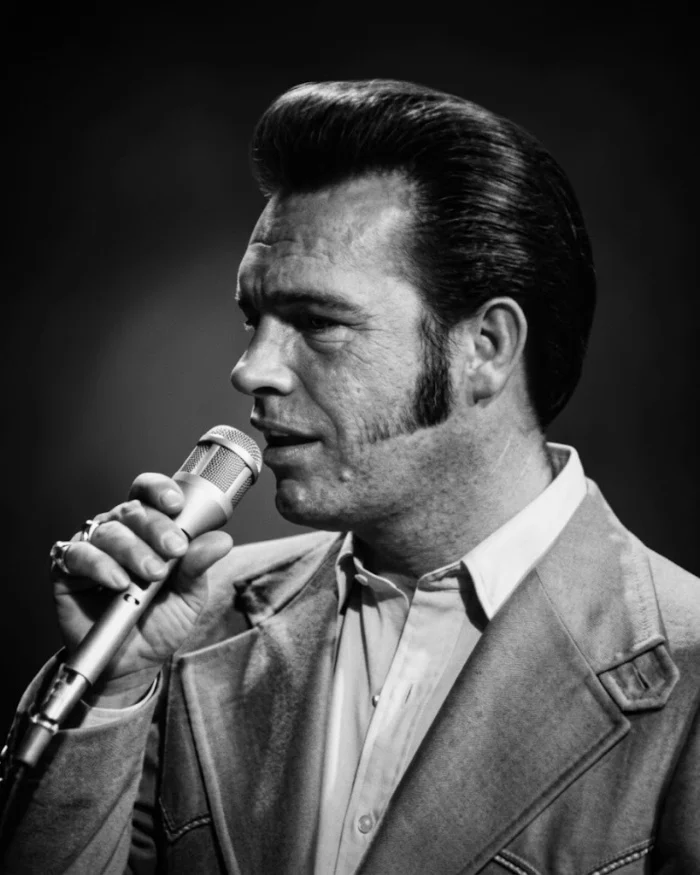
The man who later stood under the bright lights of the Grand Ole Opry once tore his hands open on rusted wreckage in East Texas. Gary Gene Watson was born into crushing rural poverty in 1943, and his teenage years were not filled with classrooms or easy play. He scavenged scrap metal from abandoned lots and junkyards, trading safety for cuts, shattered glass, and the grim need to bring home a few coins.
That brutal work could have broken him. Instead it became a strange and demanding school. While dismantling ruined cars, Watson studied engines, auto bodies, and the hidden logic of machines. The same scrap heaps that scarred his skin taught him a trade that would later feed his family and carry him toward Houston.
Seeking a steadier income than seasonal labor or metal scavenging could provide, he moved to Houston in the early 1960s. He used his self taught skills to become an auto body mechanic and painter. His days became a grind of dented fenders, primer, and harsh chemical fumes inside sweltering garages. For a young man raised with nothing, a guaranteed weekly paycheck felt like a fortress.
Still needing extra dollars to support his growing family, Watson formed Gene Watson and The Other Four and began moonlighting in dimly lit honky tonks. He secured a long residency at Houston’s Dynasty Club. After finishing a shift at the body shop, he would wash grease from his hands with industrial soap and stand behind a microphone until two in the morning.
He did not see himself as a rising star. He saw himself as a mechanic holding a second job. Yet local club crowds quickly sensed a once in a generation vocal instrument. When he delivered a traditional ballad, the deep and resonant sorrow in his voice sounded less like rehearsed technique and more like lived exhaustion.
His undeniable command of traditional country eventually drew the attention of local record executives. He began recording regional singles for small independent labels such as Wide World and Resco. He pressed small batches of 45s that gradually gained traction on local Texas radio stations. That localized momentum eventually caught the ear of major industry players and led to a Capitol Records contract.
Even with a major label deal, Watson remained deeply skeptical of the music industry. Having survived crushing poverty, he viewed entertainment as a fragile gamble compared to the absolute certainty of fixing a wrecked car. For a long time, he famously refused to quit his day job. He kept his heavy toolboxes and continued to repair auto bodies in Houston even as his voice started broadcasting across national radio networks.
The balancing act finally became impossible in 1975. Watson released a steamy and atmospheric track titled Love in the Hot Afternoon, and the song struck a massive nerve with the American public. It rocketed up the Billboard country singles chart and peaked at Number 3.
At 31 years old, the man who had spent his life pulling value out of scrap heaps was suddenly responsible for one of the biggest hits in the nation. The sheer demand for his live performances forced him to put down his sanding block and step onto the stage full time. He followed that breakthrough with a decades long career, building an enduring catalog with classics such as Paper Rosie and Farewell Party.
Despite the legendary status he eventually achieved in Nashville, Watson never adopted the posturing of a celebrity. The man standing under the bright lights of the Grand Ole Opry possessed the exact same quiet endurance as the teenager navigating the Texas junkyard. His authenticity was forged entirely in the wreckage, and his voice carried that truth to the world.
He did not learn pain from a songbook, he learned it from the scrap heap and sang it back with a voice no studio could fake.