
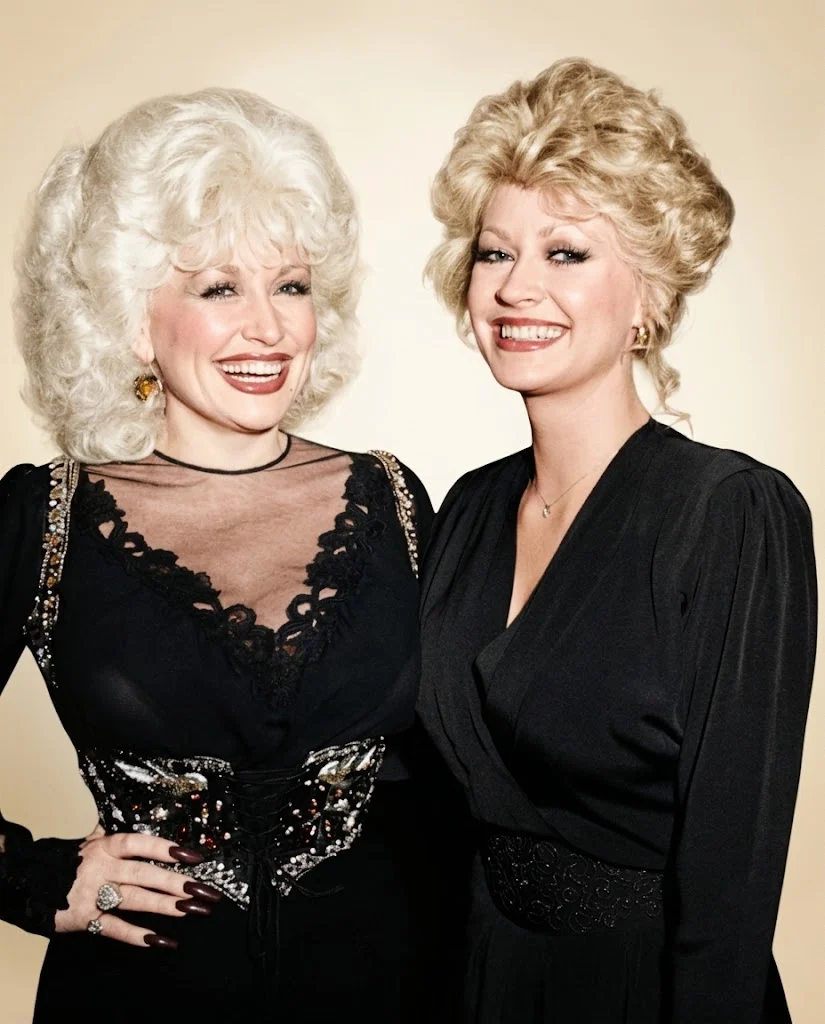
Rachel Dennison faced a moment many performers would avoid. She stepped into a television role built around her older sister Dolly Parton and invited constant comparison before a national audience could even hear her first line.
The year was 1982. ABC had turned the huge 1980 film 9 to 5 into a weekly sitcom. The network had already made bold casting moves. Rita Moreno took over Lily Tomlin’s character. Valerie Curtin stepped into Jane Fonda’s role. Still the hardest chair was Doralee Rhodes because Dolly had poured her voice and Appalachian charm into the part.
Dolly declined the demanding weekly schedule. She did not simply walk away. She gave the producers a different solution. Rachel Dennison the youngest of the twelve Parton children from Sevier County Tennessee could audition for the role.
Rachel was not chasing Hollywood fame. She had been working on tour with Dolly singing backup and handling makeup. Moving to a Los Angeles soundstage meant leaving a familiar road life for a studio comedy machine. She had no formal acting training and knew reporters would measure every moment against the film version.
She learned the rigid rhythm of multi-camera television. She hit marks. She found her light. She waited for studio audience laughs while working beside experienced performers. The producers soon saw something casting directors cannot manufacture. Rachel carried the same bright smile and natural warmth that made Doralee feel real.
Rachel brought Tennessee warmth instead of a studio imitation
The sitcom debuted in spring 1982. Rachel leaned into her own family rhythm rather than copying Dolly note for note. Her Tennessee inflection and easy comedic timing helped her hold her place in the ensemble. ABC carried the show before it found a longer life in first-run syndication.
By the time the sitcom wrapped in 1988 Rachel had filmed 85 episodes across five seasons. The role once considered impossible became a steady television career. She outlasted the loudest comparisons and made Doralee her own.
For Dolly the decision reflected a lifelong instinct. She used her Hollywood leverage to protect and lift her siblings. Giving Rachel the audition was a powerful endorsement. Keeping the role for years was Rachel’s own achievement.
After 9 to 5 ended Rachel stepped away from the Hollywood grind. She returned to her roots and focused on her marriage to Richard Dennison and her first love of music. She later performed at Dollywood and appeared onstage with family members over the years.
Rachel’s casting remains a remarkable piece of entertainment history. The network needed a specific authenticity. It found that quality in the youngest daughter of a Smoky Mountain family who carried her name with undeniable grace.