
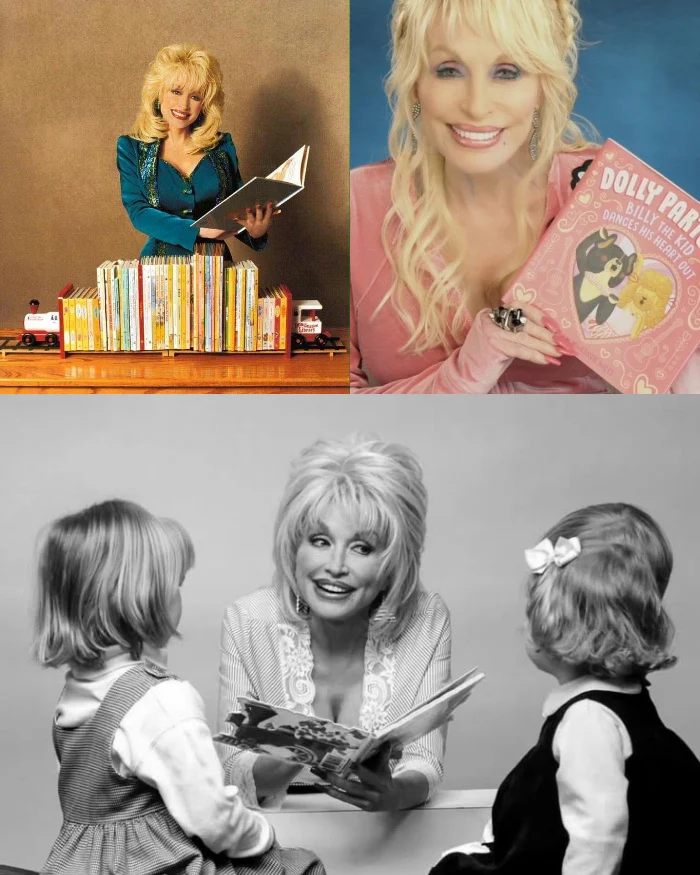
Robert Lee Parton once held his daughter’s reading program above every trophy she had ever brought home. That quiet confession reveals the heart of the story far better than any chart record or celebrity headline could.
Dolly Parton became one of the most powerful voices in music history. She turned words into wealth, fame, and cultural memory. Yet the project she loved most was not built for audiences. It was built for her father.
He worked in the Smoky Mountains, supported a family of twelve children, and understood life through labor, patience, and common sense. He could not read or write. In a world that often measures people by letters and certificates, that gap stayed with him like a shadow.
His daughter saw the shadow clearly. She also saw the man beneath it. She called him the smartest person she ever knew, and she refused to let that brilliance remain invisible.
In 1995, she created the Imagination Library in Sevier County, Tennessee. The idea was humble and direct. Every child in her rural hometown, regardless of family income, would receive one high-quality book in the mail each month. The books would arrive from birth until age five.
Every child in her hometown would hold a book, and every envelope would carry a child’s name.
Robert lived until 2000. He saw the first five years of the program take root. He watched local children pull colorful books from their mailboxes. He saw families changed by the simple arrival of stories.
Before he died, he told Dolly that the reading program meant more to him than any music award she had ever won. That praise from a man who had worked so hard and asked for so little became the foundation of a larger mission.
The Imagination Library did not stay local. It grew across borders and eventually reached five countries, including the United States, Canada, the United Kingdom, Australia, and the Republic of Ireland. It mailed hundreds of millions of books, with more than 200 million gifted worldwide.
That kind of reach demanded a serious operational engine. The Dollywood Foundation developed a cooperative model that absorbed administrative overhead, negotiated wholesale book prices, coordinated with publishing houses, and managed central records. Local community partners then funded the direct cost of books and postage for their own areas.
The program also built partnerships with national postal services. Today, the system processes, packages, and ships over two million books every month. The machinery is enormous, but the purpose remains intimate.
Behind the logistics and the global scale, the scene has not changed much since the first rural mailboxes opened. A young child walks to the door. A mailbox swings. A new story appears.
Every book that lands in a mailbox is still a daughter’s letter to her father.
Dolly Parton’s most enduring achievement may not be a song at all. It may be a promise kept to a man who could not write his own name.