
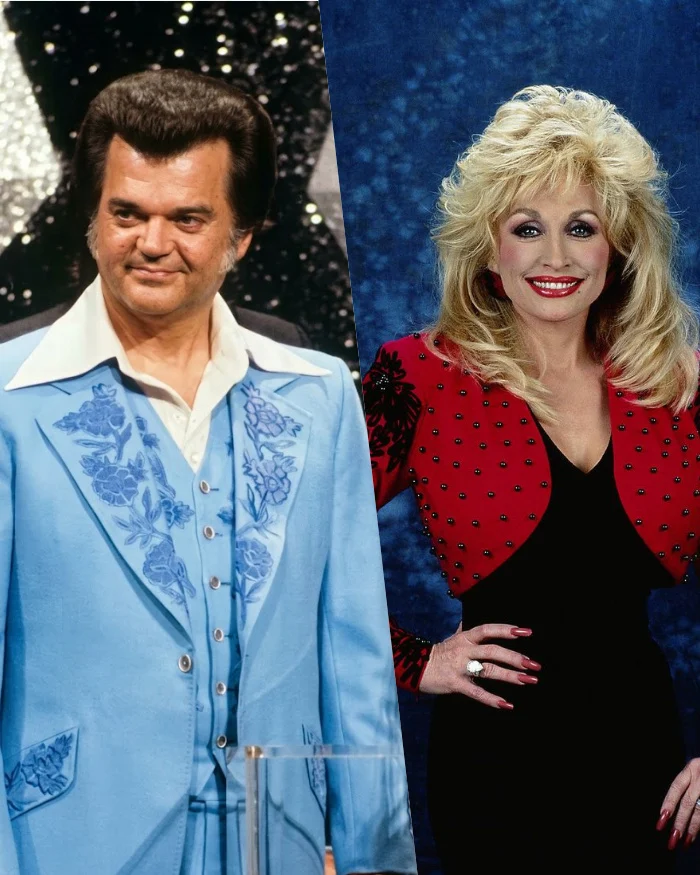
A ghost duet now lets Dolly Parton and Conway Twitty sing together half a century after Nashville kept them apart.
During the golden heat of the 1970s country explosion, Twitty and Parton ruled the airwaves with rival brilliance. They worked only miles apart in Music City, Twitty recording at Bradley’s Barn and Parton cutting tracks inside RCA Studio B. Their names climbed the Billboard charts again and again, yet their voices never met on one microphone.
The silence between them was not artistic. It was corporate. Twitty belonged to MCA Records, while Parton belonged to RCA Victor. Those labels guarded their stars with iron contracts, and a shared session would have required painful publishing clearances, conflicting release plans, and royalty splits that executives preferred to avoid.
Their careers also pulled them in separate directions. Twitty was deep in his legendary duet run with Loretta Lynn, while Parton spent years inside the demanding creative and television world of Porter Wagoner. Touring schedules and album cycles kept both artists racing on parallel tracks, never crossing in the studio.
Decades later, fans and digital archivists refused to let that blank space remain empty. Modern audio engineers began isolating vocal stems from old analog tapes and vinyl masters. Spectral de-mixing and source-separation tools can map frequency patterns and transient signatures, then lift a lead vocal from rhythm guitars, steel notes, and backing harmonies.
Once those raw vocal strands are separated, engineers align pitch, tempo, and stereo placement so the voices can sit together in a new mix. The result sounds uncanny, like a session that history somehow misplaced.
When Twitty’s bruised baritone meets Parton’s bright storytelling soprano, the music feels both miraculous and mournful.
Beyond the technology, the two icons carried a quiet mutual respect. They crossed paths at award banquets and festivals, understanding the brutal discipline required to build entertainment empires from working-class hardship. They sang about rural heartbreak, pride, and survival in the same emotional language, even while contracts kept them in separate rooms.
This digital reunion does not rewrite the past. It exposes what the industry sacrificed for control. The duet arrives late, not as flesh and blood, but as a haunting proof of what could have been.