
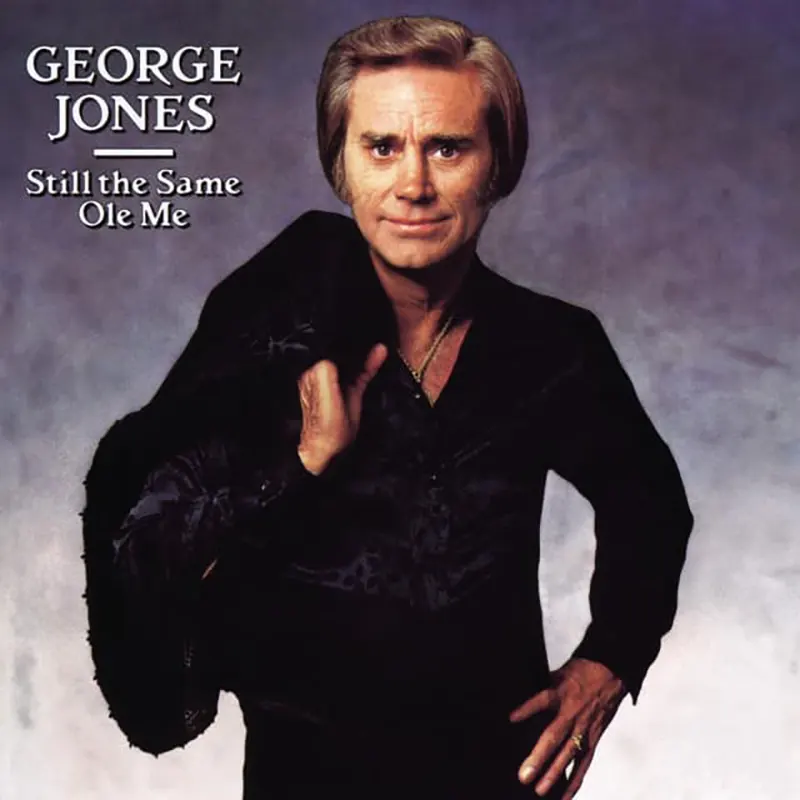
George Jones makes You’re Still On My Mind sound less like a country song and more like a quiet confession. The heartbreak does not arrive with thunder. It arrives with a jukebox, a nearly empty glass, and the stubborn feeling that a person can leave a life without leaving a memory.
Some songs do not describe heartbreak. They become the place where heartbreak keeps living.
You’re Still On My Mind carries a simple and cruel truth. The body can move into another town, another morning, another routine, while the heart keeps waiting in the same dim room.
George Jones was made for that kind of ache. He could sing the word still as if it carried years. Not loud. Not theatrical. Just heavy enough to make time feel honest.
He did not keep memory at a poetic distance. He brought it close to the kitchen table, the truck cab, the late radio, and the passenger seat that remains empty while the mind keeps filling it.
The song is not about the first cut of goodbye. It is about what remains after the world expects a person to recover.
Friends stop asking. Seasons change. Laughter returns. Then one familiar melody, one scent, or one ordinary silence betrays all the progress a mouth has been claiming.
The jukebox is playing a honky tonk song
That line becomes the doorway. A man sits among people having fun while his pockets are empty and his last drink is nearly gone. The bottle becomes evidence. The broken heart becomes company. The name becomes a guest no one invited.
An empty bottle, a broken heart, and you’re still on my mind
George Jones never sounds like a man winning against sorrow. He sounds like a man telling the truth because pretending has become too tiring. That is why the song does not need a big scene. The scene is already inside the listener.
A glass left untouched. A cigarette burning too long. A phone number remembered by hands that should have forgotten.
There is no easy rescue in this kind of music. There is only recognition. For many listeners, that made George Jones feel less like a performer and more like a witness. He seemed to know the exact shape of the ache nobody wanted to explain, the love that ended publicly but kept continuing in private.
Memory does not ask permission.
It appears while someone is working, driving, laughing, or trying to sleep. It turns ordinary silence into proof that a person is still there, not in the room, but in the mind that cannot put them down.
George Jones made that ache sound almost holy. Not because pain was beautiful, but because honesty had dignity. He gave dignity to the person who was not over it yet, the one who kept living, kept smiling, kept answering I’m fine while carrying a name no one else could see.
You’re Still On My Mind aches because it understands that love does not always leave when love is over. Sometimes it stays behind like smoke in the curtains. Sometimes it waits in the first note of an old song. Sometimes it becomes the quiet companion of a person trying to survive one more night without saying the name out loud.
George Jones died in 2013, but his voice still knows how to find those rooms. It comes through an old speaker and makes the past feel close enough to touch.
Then You’re Still On My Mind stops being a title. It becomes the sentence someone has been avoiding, the confession under the breath, and the proof that time can soften many things, but not every memory agrees to leave.