
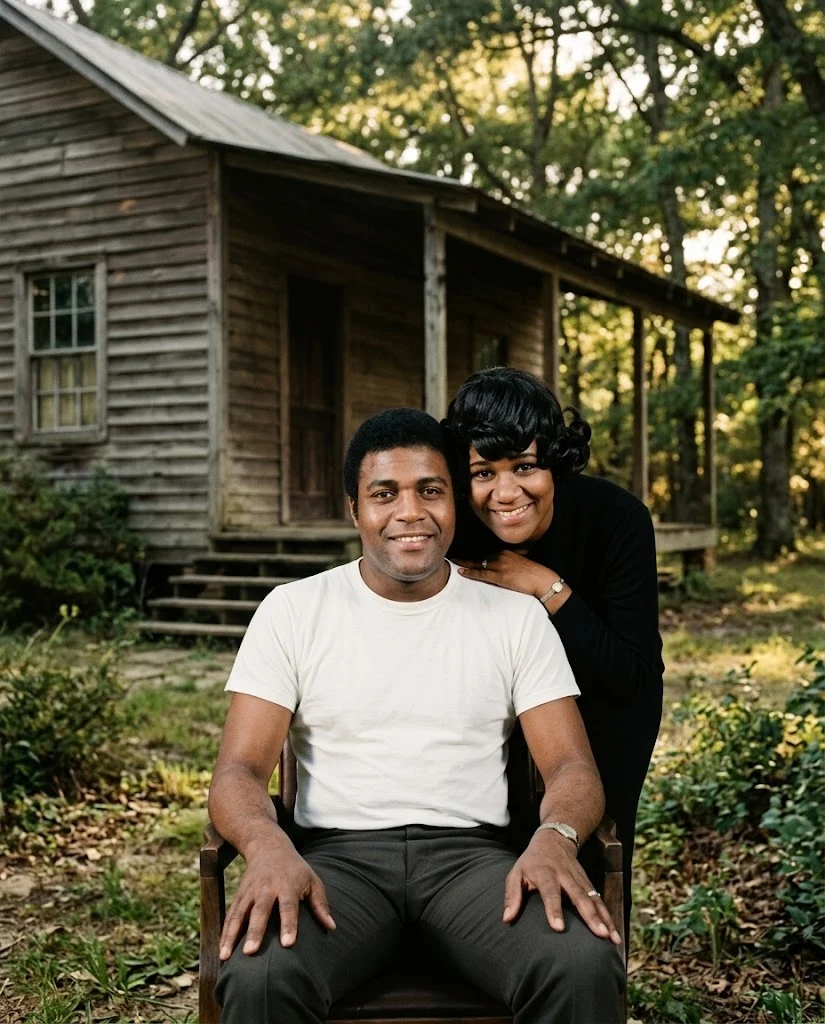
The last time Charley Pride stood before a roaring Nashville crowd in November 2020, he had just accepted a Lifetime Achievement honor at the Country Music Association Awards. His wife Ebony Rozene Cohran watched from the audience with the quiet courage of a woman who had carried his life for sixty-four years. That gentle performance would become a farewell, and weeks later her voice became the last comfort he held onto in a Dallas hospital isolation room.
Long before the thirty-six number-one hits, the platinum records, and the Country Music Hall of Fame, Charley was a struggling pitcher in the Negro American League. Rozene was an ambitious cosmetologist in Memphis in 1956 when she chose a man with a major-league dream but no guarantee of steady pay.
She believed in him before the world heard his smooth baritone. The couple built a private fortress around a public pioneer as he crossed one of the deepest color barriers in American music.
She chose the man long before the world recognized the voice
When Charley traded his baseball glove for a guitar in the 1960s, Nashville’s segregated honky-tonks could have broken him. His early singles were sent to radio stations without his photograph so program directors would judge the music instead of his race. Yet the silence from white crowds in Southern clubs was heavy, and Rozene stepped in as his fiercest protector.
She took control of his finances and business affairs, guarding him from a system that was just learning how to handle his rapid rise. The industry saw a calm, smiling star, while she absorbed the fear, pressure, and exhaustion behind the curtain.
Their marriage also faced an invisible battle. In 1968, as his career exploded, Charley was diagnosed with manic depression, now known as bipolar disorder. The illness brought frantic insomnia, severe mood swings, and emotional crashes that threatened everything they had built.
Rozene became the anchor that kept him standing. She learned the warning signs, managed his medical care, and shielded him from the relentless Nashville press. When his highs threatened to pull him away, she grounded him. When his lows darkened, she held him.
She allowed the public to keep their beloved image of a smiling, steady country gentleman
Charley Pride died on December 12, 2020, from complications of the coronavirus disease. The history books will remember the voice that changed country music forever. But the real foundation was the strength of the woman who chose him when he had nothing, protected him when the nation watched, and loved him until the very end.