
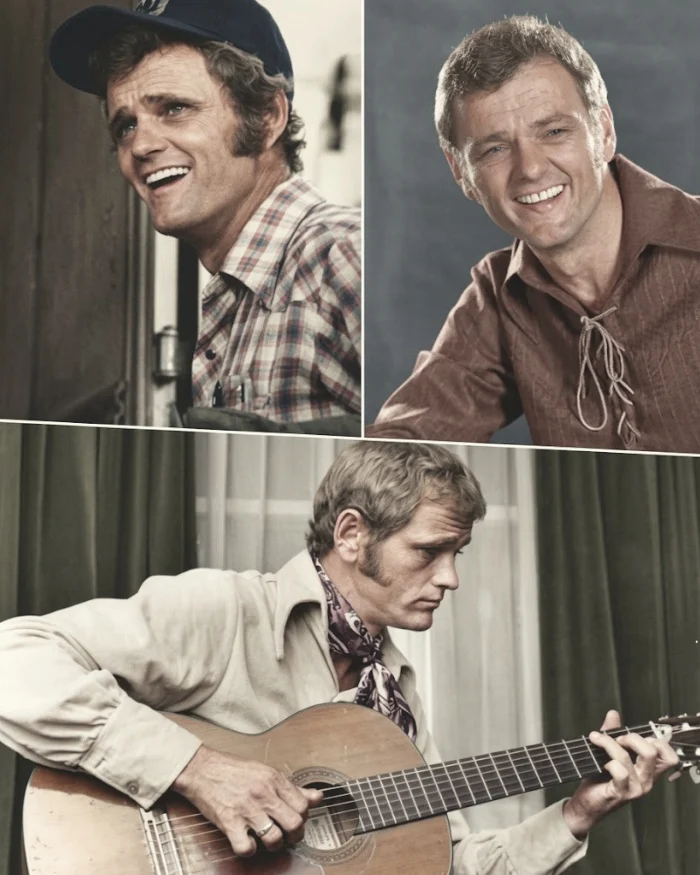
It was a sweltering July day in 1959, and inside a modest Georgia church, a twenty-two-year-old guitarist with nothing but raw talent and an acoustic guitar married an eighteen-year-old singer who saw his future before anyone else did. Jerry Reed and Priscilla Mitchell had no money, no fame, and no guarantees—only a shared belief in each other. That quiet ceremony, unmarked by reporters or limousines, became the foundation of a love story that would outlast the spotlight, the music industry, and even death itself.
Their beginnings were anything but glamorous. With Reed drafted into the U.S. Army, the newlyweds navigated long separations and tight budgets. Priscilla held down the fort in Georgia, managing expenses on military allowances and occasional local singing gigs. When Reed returned, they packed their dreams and moved to the outskirts of Nashville, carrying a discipline forged by necessity.
As Reed’s career exploded—from session guitar wizard to country chart-topper and Hollywood star in Smokey and the Bandit—the couple stubbornly refused to let fame invade their home. They didn’t chase celebrity addresses; they built a life on a quiet acreage in Brentwood, Tennessee. There, they raised their daughters, Charlotte and Seidina, in a world where Reed’s guitar sat casually by the sofa, not displayed as a trophy. He made it a rule to fly home after recording sessions and film shoots, opting for a good night’s sleep in his own bed over backstage parties.
Priscilla, who had her own Number 1 hit with “Yes, Mr. Peters” in 1965, knew the business inside out. But she chose to step off the road and become the anchor of their household—managing schedules, finances, and the family’s private world. Her quiet strength was the bulwark that held everything together, especially during Reed’s darkest years.
In the late 1970s and 1980s, the relentless pressure of touring, TV appearances, and film commitments took a toll. Reed struggled with alcohol and exhaustion, but Priscilla stood firm. She offered accountability and unwavering love, helping him reclaim his sobriety and rebuild his health.
“She was my rock,” Reed once said. “When everything else was chaos, she was the calm.”
Their daughters grew up surrounded by music, but it was never a business—it was a language. Seidina, inheriting her parents’ musical ear, often sang harmonies on her father’s later projects in his home studio. Visitors to their Brentwood home found a place filled with Southern cooking, hunting dogs, and a couple whose love still sparkled with the familiarity of their early Atlanta days.
Through every chapter—from obscure radio sessions to national television—their partnership endured for forty-nine years, until Reed’s passing from emphysema in August 2008 at age seventy-one.
Decades later, the true measure of Jerry Reed’s remarkable life isn’t found in gold records or Hollywood credits. It lives in the memory of a living room in Tennessee, where the girl who believed in him before the world ever listened was still sitting right by his side.