
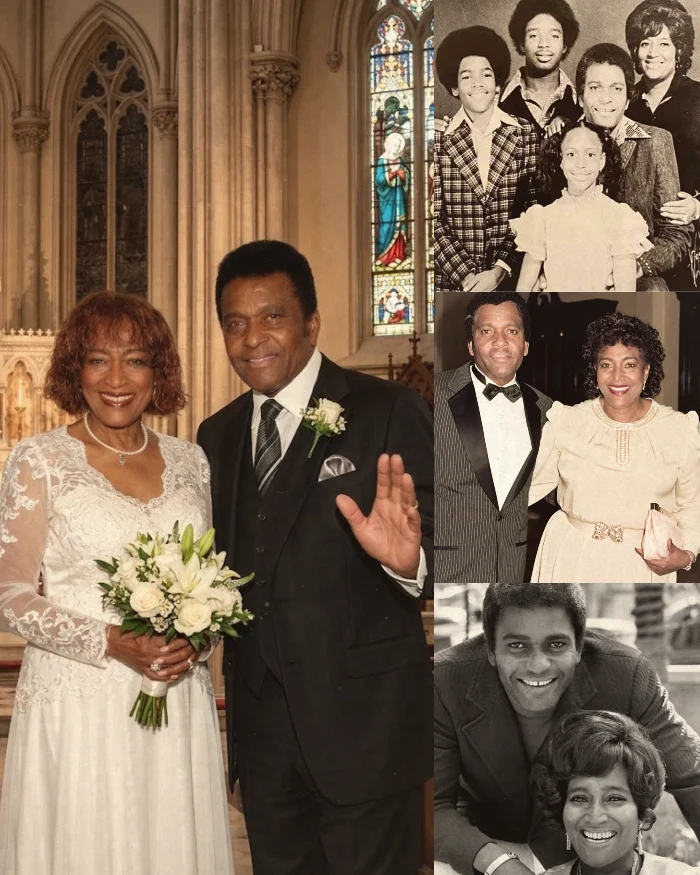
The bus carried him back to duty almost before the ink on the wedding registry dried. Charley Pride and Rozene Cohran did not need a grand hall or a long engagement to make a promise that would hold through service, separation, struggle, and fame.
On December 28, 1956, the twenty-two-year-old soldier used a brief Christmas furlough from Fort Chaffee, Arkansas, to marry Rozene in Hernando, Mississippi.
There were no floral arches, no banquet tables, and no cameras waiting at the door. Pride wore his winter military uniform and counted the hours before his leave expired. They spoke vows before a justice of the peace, signed the registry, and stepped into married life on borrowed time.
They had met in Memphis, where Rozene worked as a cosmetologist and Pride pitched for the Memphis Red Sox in the Negro American League. He had fought back from an arm injury, won fourteen games, and earned a place on the 1956 All-Star roster. When Rozene seemed slow to respond to his interest, Pride left a phonograph record for her, and the small gesture opened a door.
Then the draft notice arrived. The army interrupted his baseball path and sent him into basic training. Rather than wait through uncertainty, they chose marriage.
They chose not to wait
The wedding lasted only long enough to become a memory. Pride boarded a bus back to Fort Chaffee, and Rozene returned to her salon chair. For fourteen months, their marriage lived in postal envelopes, brief payphone calls, and the quiet discipline of absence.
When the army discharged Pride in early 1958, the couple reunited and faced the hard question of how to make a living. Pride returned to the mound for the Red Sox, but his arm did not regain its early velocity. He carried an acoustic guitar between games and entered Memphis recording rooms, including Sun Studio, to cut unreleased demonstration tracks.
Baseball and early auditions did not bring steady income. As the Negro League wound down, Pride sought a trade that could support a growing household.
In 1960, he moved Rozene and their young family northwest to Helena, Montana, after an offer to play semi-pro ball for the East Helena Smelterites. The salary was modest, so Pride took an eight-hour shift at the local Asarco lead smelting plant. He worked in heavy safety gear around molten metal, then pitched local games or picked country tunes at the Montana Bar.
Rozene managed the household finances through those cold winters. She balanced smelting paychecks and tracked expenses while Pride chased music after dark.
In 1962, country stars Red Foley and Red Sovine heard Pride perform in Helena and urged him to head south to Nashville for an audition.
That advice helped lead to RCA Victor producer Chet Atkins signing Pride in 1965. Early releases avoided promotional photographs, letting his baritone voice meet listeners before the industry could force racial expectations into the foreground.
As barriers rose, Rozene remained his steady partner. She managed business affairs through lean roads, relentless touring, and historic triumphs.
The hurried winter wedding became the anchor of a sixty-four-year marriage. What began in haste did not need luxury to endure.
Their lifelong commitment never needed luxury to endure