
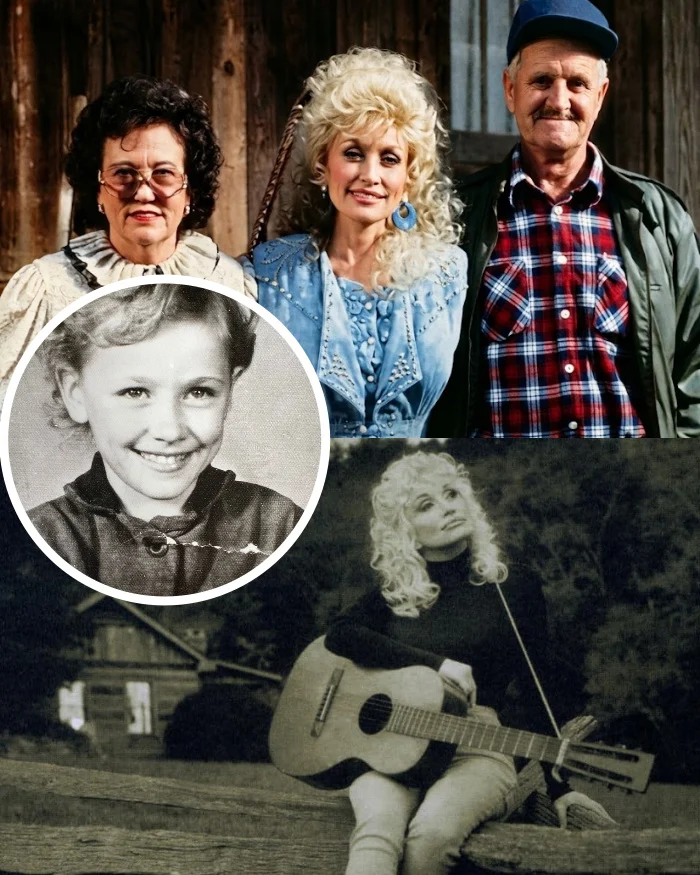
The bus seats were hard, the night was long, and the destination was a tiny tin-roofed studio in Louisiana. But for thirteen-year-old Dolly Parton, that thirty-hour ride in 1959 was the beginning of everything.
Growing up in a one-room cabin in Locust Ridge, Tennessee, without electricity or indoor plumbing, young Dolly had nothing but her voice and the unwavering belief of her uncle, Bill Owens. He saw a future for her that stretched far beyond the Smoky Mountains, and he was determined to make it real.
Together, they scraped together every spare coin they could find and boarded a Trailways bus in Knoxville. The journey south was grueling, with Dolly sleeping sitting upright, her head resting on a cloth sack holding her few stage clothes. They were headed to Goldband Records in Lake Charles, Louisiana, run by producer Eddie Shuler.
When they arrived, the cramped studio under a weathered tin roof felt like the center of the universe to a girl who had never known such a room. Shuler listened, recognized her raw talent, and put her behind the microphone. With local session players, they cut several tracks, including ‘Puppy Love,’ a song she had co-written with her uncle about the innocent ache of young love.
The session was far from glamorous. It was hot, unairconditioned, and required multiple takes as Dolly learned to control her breath and pitch. But Shuler expertly blended her mountain twang with a lively rockabilly rhythm, capturing an authentic sound that reflected both her youth and her discipline.
When the seven-inch 45-RPM vinyl was finally pressed, Dolly held the warm, fresh plastic against her chest. Feeling the grooves with her fingertips, she held the physical proof that her voice could travel beyond her childhood porch. That single didn’t top the charts, but it became her first calling card, eventually leading to her Grand Ole Opry debut later that year.
Standing by her side through it all was Uncle Bill, the mentor who gave her her first guitar, co-wrote her earliest songs, and believed in her before anyone else. His guidance on that dusty highway gave her the footing she needed.
Decades later, her rise to legendary status was built not on stadium lights, but on a thirty-hour bus ride and a humble recording session that proved a mountain girl with a dream could make the world listen.