
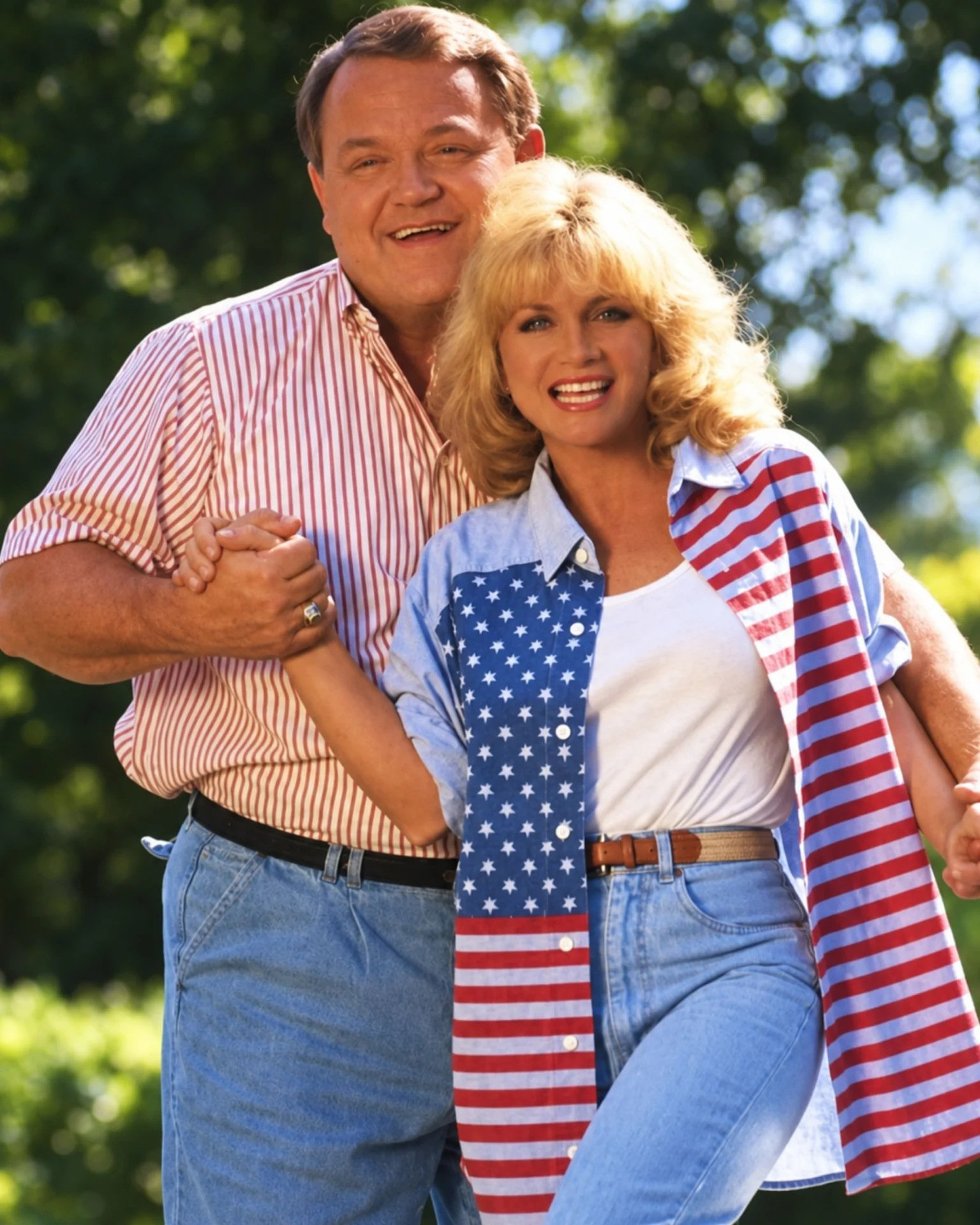
The most important seat in Barbara Mandrell’s life was nowhere near the spotlight.
It waited in the balcony of Nashville’s Ryman Auditorium where she watched performers work the stage below and felt a truth she could no longer push aside.
She had been doing versions of that work since childhood. This time she was only part of the audience.
“Daddy, I can do that. I want to get back in music if you will manage me.”
Her father Irby answered without hesitation.
“I would bet my last penny on you.”
A Childhood Already Spent On Stage
Barbara was born on Christmas Day in 1948 into a home where music was both joy and discipline.
Her mother Mary was a pianist and teacher who taught her to read musical notation before she could read ordinary words. Her father sang and played guitar and later ran a music store.
By eleven Barbara was already a professional steel guitarist performing in Las Vegas with Joe Maphis.
She later appeared on Town Hall Party and joined package tours featuring Johnny Cash, Patsy Cline and George Jones.
With the Mandrell Family Band she played military bases across the United States and Asia while still trying to live the life of a schoolgirl who toured.
The Marriage That Took Her Away From Music
The family band also brought Ken Dudney into her life as its drummer.
They married in 1967 shortly before Barbara finished high school.
Worn down by years of travel she left professional music to become a Navy wife and build a life with Ken after he became a carrier pilot.
When Ken was deployed Barbara stayed with her parents who had moved to Tennessee.
Irby took her to the Ryman Auditorium to watch a taping of The Porter Wagoner Show before the Grand Ole Opry and they sat together in the balcony.
From there she watched the stage she had once expected to leave behind forever.
The Return Her Father Believed In First
Ken eventually joined her in Nashville.
Within weeks several record companies showed interest and Barbara signed with Columbia in 1969.
Irby became her manager and their partnership carried her from her first chart records to the highest level of country television.
She joined the Grand Ole Opry in 1972 and later became the first performer to win the CMA’s Entertainer of the Year award in consecutive years.
A Final Goodbye On Her Own Terms
Barbara retired for good in 1997 and closed her career with a final concert at the Grand Ole Opry House.
She was forty-eight years old and apart from that brief early break she had worked in music since childhood.
This time she sold most of her instruments because she did not want to be tempted to return.
She kept an engraved Dobro from her parents and the four-neck steel guitar tied to the start of everything along with her bar and picks.
That steel guitar eventually entered the collection of the Country Music Hall of Fame.
In 2009 Barbara joined it there as an inductee.
The first time she left music a view from the balcony pulled her back toward the stage.
The second time she knew exactly what she was putting down and she left with nothing more to prove.
Listen to the music at the end of this article.