
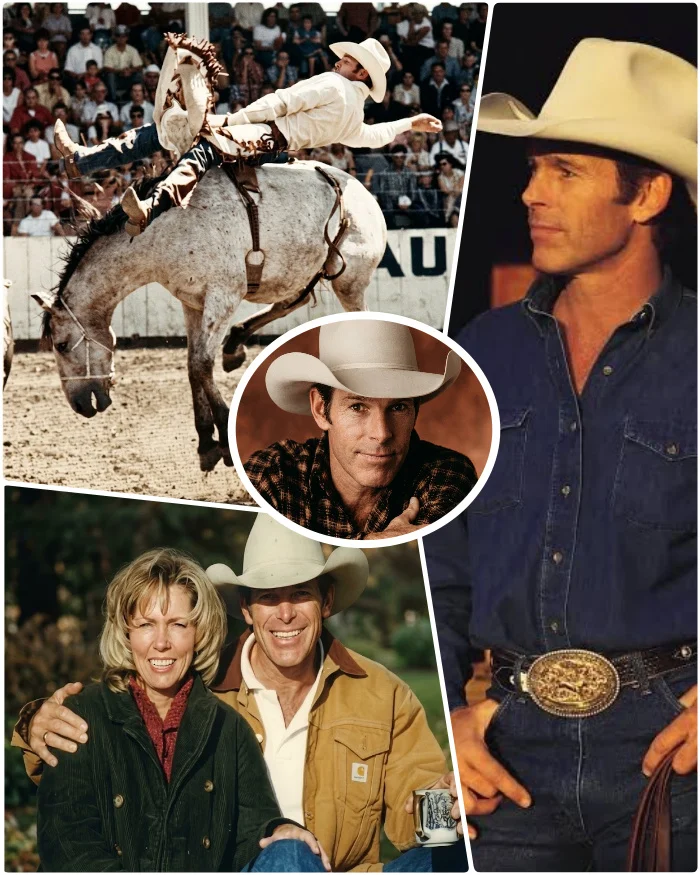
When officials handed Chris LeDoux the gold world champion belt buckle in Oklahoma City in December 1976 the victory belonged as much to his wife as it did to him. Peggy Rhoads had taped his broken bones in cheap motel rooms and kept him on the road through a brutal summer when thousands of highway miles produced only $250 in total prize money.
Chris married Peggy on January 4 1972 when he was twenty three years old and brought her straight onto the professional rodeo highway. Instead of asking him to quit the arena for a steady paycheck when money ran thin Peggy climbed into their old truck and stayed right beside him across state lines.
He had won the Intercollegiate National Bareback Riding Championship during his junior year at Eastern New Mexico University before turning professional in 1970. Bareback bronc riding offered no guaranteed salary and no health insurance and cowboys paid their own entry fees and fuel and lodging just for a chance to wedge one gloved hand into a leather rigging and stay aboard a violent bucking horse for eight seconds.
That trade left Chris with a broken collarbone and torn ligaments and a dislocated knee and repeated concussions during the early years of his career and marriage. The untamed horses were powerful enough to dislocate joints and throw him to the dirt and the injuries left him battered and ready to hang up his riding glove.
Peggy took over the daily maintenance required to keep him competing. Between state lines and county fairgrounds she turned roadside motel rooms and truck cabs into makeshift treatment spaces by pressing ice against his bruises and bandaging his open scrapes and taping up his broken collarbone and massaging his swollen riding hand so he could grip the rigging and make the whistle the next afternoon.
She never asked him to become someone else to survive because she climbed into the truck and helped him survive as the cowboy he already was.
To help pay for gas and food and rodeo entry fees without burdening his young family Chris picked up his acoustic guitar during the long drives between rodeos. He wrote directly about bucking chutes and highway mileage and sore bones and the real cowboy life he knew firsthand.
In 1972 he partnered with his father retired Air Force Major Al LeDoux and his mother Bonnie to form an independent family label called American Cowboy Songs. Whenever a break in the rodeo schedule allowed he drove to a small basement studio in Sheridan Wyoming or down to Nashville to cut tracks such as Bareback Jack and an early 1975 version of Amarillo by Morning.
With no Nashville distribution deal behind him Chris stacked boxes of eight track cartridges and cassette tapes inside the trunk of his car. He sold them behind the arenas and at western wear stores and through mail order lists managed by his parents while he and Peggy began raising the family that would grow to five children named Clay and Ned and Will and Beau and Cindy.
Those trunk sales kept gas in the tank long enough for him to qualify for the 1976 National Finals Rodeo in Oklahoma City. That December after years of riding through taped up injuries and empty pockets he outscored the field and won the Professional Rodeo Cowboys Association World Bareback Riding Championship. The gold buckle gave his music instant authority among fellow riders and ranch families because it proved the voice on the cassettes had lived every bruised mile he sang about.
Chris stayed on the professional circuit for four more seasons before retiring from bareback riding in 1980 to settle with Peggy and their children on a ranch in Kaycee Wyoming. Even after hanging up his riding glove he refused to give up the independent business model that had carried his family through their leanest rodeo summers.
Backed by his band Western Underground he began booking concerts at fairgrounds and honky tonks and rodeo arenas while continuing to record and release albums on his own through the 1980s. Without a major label or national radio promotion his family mail order operation and live shows moved twenty two self released albums and sold more than 250000 cassettes across the American West.
The recordings that reached the nation were the exact highway songs first sold from a car trunk while Peggy kept ice and athletic tape waiting in the next motel room.
Then in the spring of 1989 Oklahoma newcomer Garth Brooks released his debut single and paid tribute to a worn out Chris LeDoux cassette tape on the dashboard of a truck. Overnight country radio listeners across the United States began calling record stores and asking where they could buy the music of the Wyoming bronc rider.
That sudden national spotlight led Chris to sign with Liberty and Capitol Records in 1991 and brought him a gold album and a top ten country hit the following year on the duet Whatcha Gonna Do with a Cowboy. Major label executives later reissued his entire twenty two album independent catalog on compact disc for retail stores nationwide but the heart of the story never changed. It remained a husband riding through pain and a devoted wife keeping him whole enough to chase the next eight seconds.