
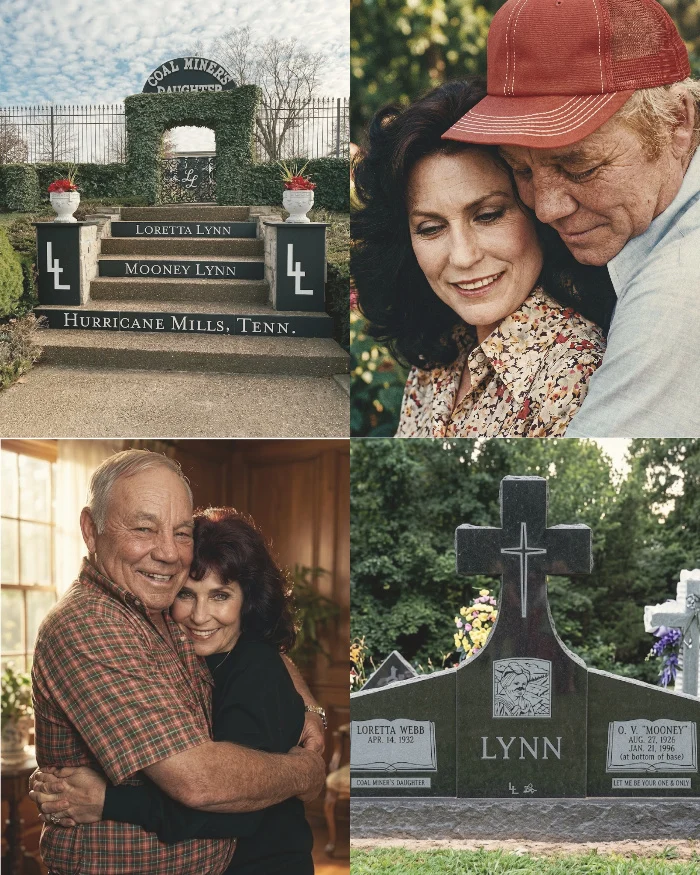
The hush at a Nashville graveside told the story that no arena spotlight ever could. Dolly Parton was laid to rest beside her husband Carl Dean after a lifetime of sharing her voice with the world and guarding a love that belonged only to them.
Following her passing in August 2026 at age 80, her family honored her personal wishes by keeping the service small and deeply private. There were no arena crowds and no broadcast crews, only close family and longtime friends who knew the couple away from the stage lights.
Carl had passed away earlier, in March 2025, leaving Dolly to navigate her final months without the quiet presence that had anchored her since she was eighteen. At the cemetery, relatives placed a modest arrangement of native wildflowers from the Great Smoky Mountains across the shared plot. On the simple stone marker, their names sit side by side without industry honors or lists of gold records, noting only the dates of two people who built a home together and kept it protected for more than half a century.
Their bond began in the summer of 1964 outside the Wishy Washy Laundromat in Nashville, on the very afternoon Dolly arrived in town with a cardboard suitcase of songs. She was eighteen. Carl was an asphalt contractor who pulled up in a white pickup truck, spoke directly to her with an easy smile, and invited her to sit on the porch of his parents’ house while her clothes dried.
Two years later, Monument Records executives warned Dolly that getting married would derail her momentum in the country music industry. The couple chose not to argue. On May 30, 1966, Memorial Day, they drove across the state line into Ringgold, Georgia, where marriage licenses were issued without the mandatory waiting period or public attention of Nashville. Dolly wore a simple white dress sewn by her mother, Avie Lee, who stood beside the pastor’s wife as one of their only witnesses inside the small Baptist church.
The commercial world expanded rapidly around Dolly, but Carl established his boundaries early. After accompanying her to an industry awards banquet in the late 1960s, he sat through the speeches, unbuttoned his tuxedo afterward, and told her plainly that while he supported her completely, he never wanted to attend another industry event. He kept that promise across the decades that followed.
He supported her completely, yet he never wanted another industry event.
Instead of living in a gated celebrity enclave, the couple settled at Willow Lake Farm, a quiet property in Brentwood, Tennessee. Carl continued running his paving business, working on tractors and mowing pastures without drawing attention to his surname.
When tour dates and television tapings ended, their retreat was never a luxury resort or private island. Their sanctuary was a small camper van. They regularly pulled out of their Williamson County driveway without an itinerary, driving winding back roads through Tennessee, Kentucky, and Georgia. Carl handled the driving while Dolly sat beside him in simple cotton clothes without makeup or stage wigs. They stopped at small-town drive-ins for fried chicken and roadside bakeries for doughnuts, moving quietly through communities where few people expected to see an international star.
Inside their home, their affection showed up in daily habits rather than public gestures. Carl became known for hiding handwritten notes in unexpected spots around the house, underneath coffee cups, inside kitchen drawers, or tucked deep into Dolly’s tour luggage so she would find them in hotel rooms thousands of miles away.
Their domestic peace also relied on a practical approach to disagreement. Across decades under the same roof, neither ever resorted to screaming matches. When everyday tensions rose, Carl would walk out to the barn to repair farm machinery, and Dolly would sit at her piano, allowing tempers to cool before they sat down at the kitchen table to talk things through.
They weathered personal heartaches with that same quiet resolve. After health complications required Dolly to undergo a partial hysterectomy in her thirties, the reality of not having biological children was settled. Rather than letting the house feel empty, they opened their doors to Dolly’s younger siblings, nieces, and nephews, turning the farm into a steady refuge for family members pursuing education or work in town.
In May 2016, marking fifty years of marriage, the couple finally held the ceremony they had given up as young newlyweds. They renewed their vows on the grounds of their Brentwood home, with Dolly wearing an off-white gown and Carl in a sharp suit. Rather than keeping the proceeds from the official anniversary photos, they directed every dollar to children’s literacy and health charities.
For generations of listeners, Dolly Parton remains a sparkling presence under arena spotlights. Yet the private life that sustained that journey never belonged to Music Row, thriving instead behind a closed gate where an asphalt contractor simply loved his wife.