
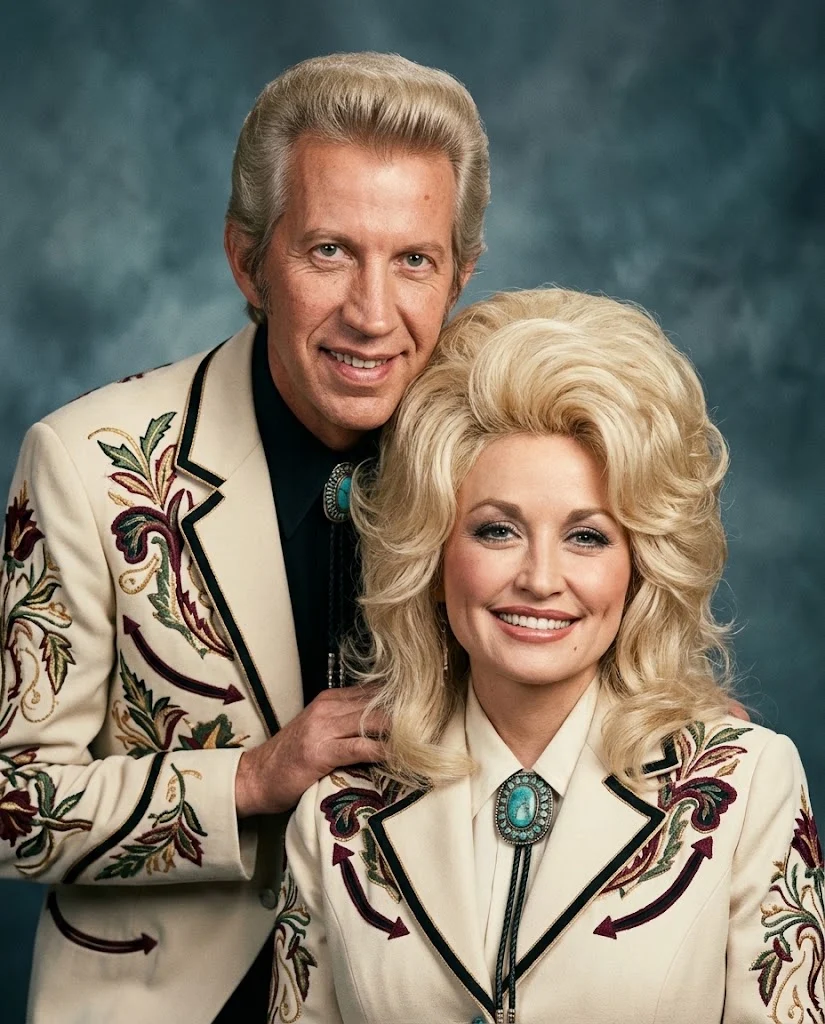
In his final hours, she made sure the man who introduced her to the world did not have to leave it alone. Dolly Parton had bought her professional freedom with a massive check and decades of silence, yet she returned to the bedside of Porter Wagoner to offer a final and mutual forgiveness that no contract could dictate.
She used a simple acoustic guitar to peacefully resign from her television partnership, but her actual freedom eventually cost her a million dollars and decades of silence. In 1973, Parton sat inside a Nashville office and played a newly written farewell ballad for Wagoner, hoping the melody would convince him to let her leave his syndicated television show. The private performance of I Will Always Love You initially broke through his anger, allowing her to officially launch an independent solo career with his blessing. But the quiet and emotional resolution in that room did not survive the complicated business of country music.
Between 1967 and 1974, Parton and Wagoner had operated as an unstoppable television and recording duo. He had introduced the fiercely talented young songwriter to millions of living rooms, and together they built a highly lucrative empire defined by undeniable vocal chemistry and a relentless string of chart topping hits. Wagoner viewed her departure not just as a standard career transition, but as a deep personal betrayal that fractured his operation.
Six years after she walked out of the studio, the professional rift escalated into a hostile financial dispute. In 1979, Wagoner filed a massive lawsuit against his former duet partner, demanding three million dollars. He argued that he had personally built the financial and promotional foundation for her name, insisting he was legally entitled to a permanent cut of her rapidly expanding solo career.
The filing threatened to turn one of the most celebrated on stage partnerships in American music into a bitter and highly publicized courtroom battle. The industry braced for a prolonged fight that would inevitably drag their shared history through the press. Instead of mounting an aggressive legal counterattack, Parton made a defining and unprecedented choice.
She opted to settle the dispute entirely out of court, eventually writing her former mentor a check for one million dollars to permanently close the case. In the late 1970s, it was an astronomical sum for a country artist, especially one who was in the middle of funding her crossover into the pop mainstream.
Absorbing the heavy financial loss was simply the ultimate price of absolute independence.
The massive payout drew a definitive and non negotiable boundary. She paid the settlement in installments over time, choosing to endure the economic strain rather than allowing anyone else to hold a legal claim over her voice, her image, or her future.
The transaction secured her freedom, but it completely severed their communication. The two artists who had once dominated the country charts in glittering rhinestone suits entered a cold and heavy silence that would last for over three decades. While Parton ascended to global pop superstardom and Wagoner maintained his status as a patriarch of the Grand Ole Opry, the deep estrangement defined their legacy.
That massive distance finally evaporated in the fall of 2007, driven by the heavy reality of a terminal diagnosis. Wagoner, suffering from rapidly advancing lung cancer, was moved into a Nashville hospice facility. When Parton learned his physical condition was failing, she completely cleared her demanding schedule. Acting on a sudden and undeniable instinct, she drove directly to his bedside just hours before he passed away on October 28.
Inside that quiet medical room, the million dollar lawsuits, the bruised egos, and the decades of industry gossip no longer mattered. Parton sat beside the man who had given her a first national stage, holding his hand as they spent his final hours praying, talking, and completely letting go of the bitterness they had carried for a lifetime.
She had originally bought her professional freedom with a massive check, refusing to be managed or controlled. The business of country music almost permanently destroyed their shared history, yet in his final hours she returned with forgiveness.