
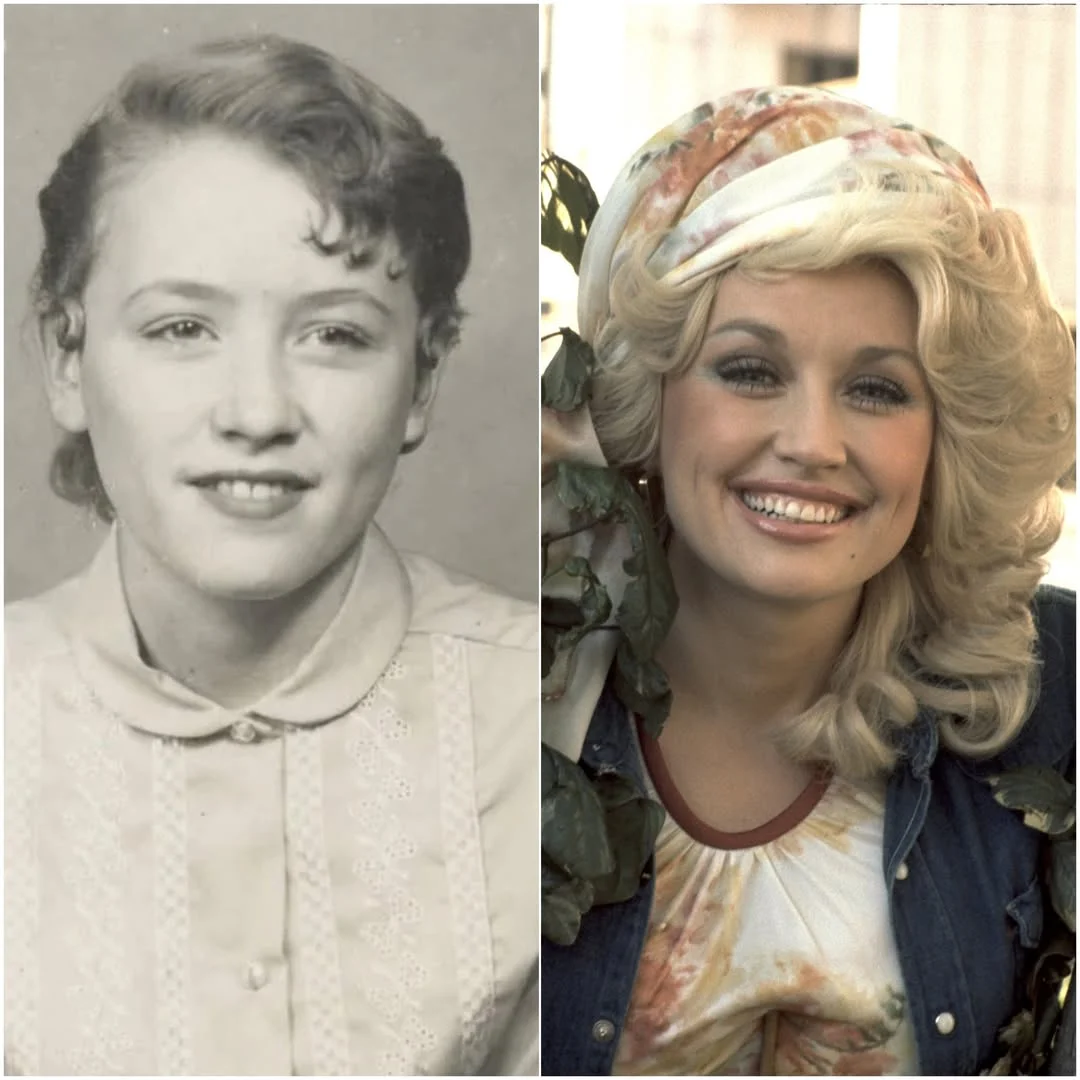
Before the rhinestones, before the Grammys, and before the laughter echoed around the world, a little girl in a Smoky Mountain cabin learned how love could survive poverty.
On January 19, 1946, Dolly Parton entered the world in a one-room cabin in the ridges of East Tennessee. The home had no electricity and no running water, and the winter wind could slip through the roof while the children huddled together for warmth.
She was the fourth of twelve children. The family slept four to a bed, bathed in a cold creek, and wore clothes stitched from feed sacks by her mother, Avie Lee. The patchwork coat made from those scraps would later become a symbol of country music history.
The day after her high school graduation in 1964, she packed a cardboard suitcase, took her guitar, and left the mountains for Nashville.
Decades later, the girl from the cabin had written thousands of songs, including “Jolene” and “I Will Always Love You.” She earned eleven Grammy Awards, Hall of Fame honors, and a place in the imagination of fans around the globe.
She built an empire wrapped in rhinestones, towering hair, and a larger-than-life persona that made her one of the most recognizable figures in American culture.
Yet the deepest part of her story was not recorded in a studio or performed on a stadium stage. Dolly remembered her father, Robert Lee, who worked tobacco fields from dawn until dark and never learned to read or write.
Before he died, her father lived long enough to hear children call his daughter the “Book Lady.”
In 1995, she launched the Imagination Library to give books to children in her home county. The idea grew into a global program that mailed more than 200 million free books to children around the world, offering young readers the chance to learn, dream, and grow.
When wildfires swept through Gatlinburg in November 2016, thousands of structures burned and families woke up in ash. Dolly acted within forty-eight hours by creating the My People Fund.
The fund promised $1,000 a month for six months to every family who lost a primary residence. As donations poured in from across the country, the final assistance was quietly raised from $1,000 to $5,000, giving nearly nine hundred families a total of $10,000 each.
After the six months ended, she directed another $3 million to long-term recovery teams, making sure the community would not be abandoned when the cameras left.
Her quiet instinct to help others continued in 2020, when she gave $1 million to Vanderbilt University Medical Center. The contribution supported early research that helped lead to a life-saving global vaccine during the pandemic.
Dolly never hid the dirt roads that raised her. She wore her childhood poverty like a badge of honor and used fame to build safety nets for strangers.
The girl who once wore a coat made of rags turned glitter, melody, and memory into shelter for anyone who needed a hand up.