
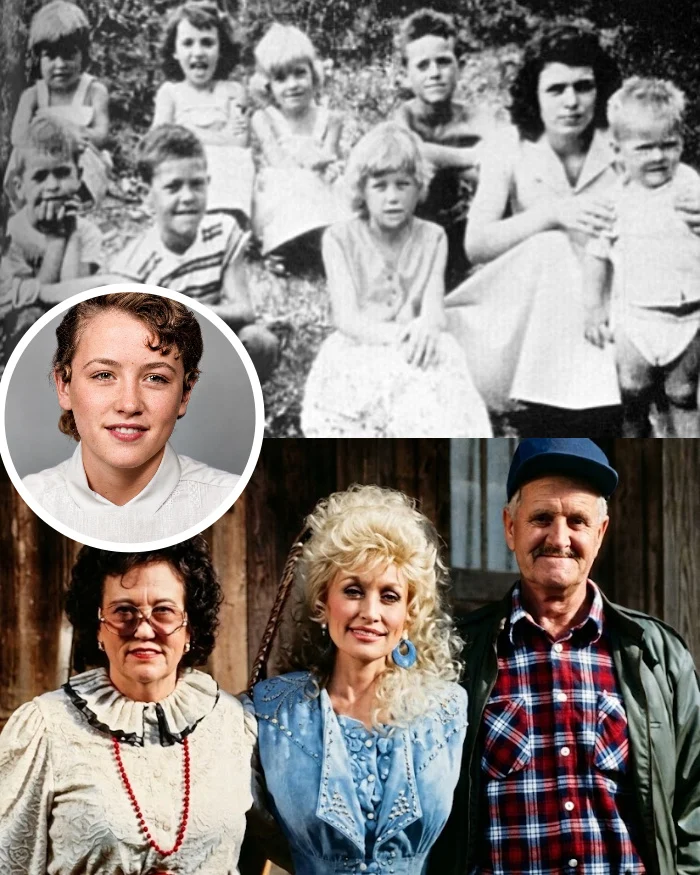
A paper grocery bag held the whole future of a girl from Locust Ridge and that tiny bundle carried Dolly Parton from one cramped cabin to country music history
Before the rhinestones and the theme park lights, her world was a tiny unpainted room near the Little Pigeon River in Tennessee. She was the fourth of twelve children born to Robert Lee and Avie Lee Parton. Her father was a sharecropper and he paid the doctor who delivered her with a sack of cornmeal.
The home had no running water and no electricity and no indoor plumbing. Fourteen people lived in that tight space. Old catalogs and newspapers lined the walls to stop the bitter Appalachian drafts from creeping through the floorboards in winter.
Every day demanded exhausting labor from both parents. The cramped walls did not break the family. They forged a bond shaped by shared stories, church hymns, and the warmth of bodies huddled together against the cold.
Young Dolly found a larger stage in the surrounding hills of the Great Smoky Mountains. She learned music on a makeshift instrument built from a broken mandolin and two heavy bass strings. She dreamed of crowds far beyond the tree line.
As a teenager she sang on local television and radio programs in Knoxville. Her ambition grew faster than the mountains could contain it.
The morning after her high school graduation in 1964 she packed a few clothes into a paper grocery bag. She boarded a bus to Nashville and left Sevier County with a single focus on making a living through country music.
Arriving with almost nothing, she carried a voice shaped by front porch harmonies and a mind sharpened by survival. That upbringing soon became business strength.
She protected her songwriting early and established her own publishing company with her uncle Bill Owens. She understood that owning her catalog was the path to a secure future.
When Elvis Presley wanted to record one of her signature ballads his management demanded half of the publishing rights as a condition. The young woman from Locust Ridge walked away from the deal. She refused to surrender the catalog that would anchor a multi million dollar empire.
Decades later she did not erase her difficult beginnings. When she opened Dollywood in Pigeon Forge she made her history take center stage. She spent her own money to build an exact full scale replica of the rough wooden cabin where she was raised.
Her brother Bobby handled the construction and ensured every detail mirrored the original home down to the tin roof and modest porch. Inside the replica visitors can see authentic family heirlooms including the original pie safe her mother used to feed the huge family.
The cabin is not a symbol of hardship and it is not a fabricated attraction. It honors the endurance of a mother who raised a dozen children and a father who worked the fields to keep a roof over their heads.
The replica now sits among roller coasters and theaters and reminds millions of fans that the most massive dreams can take root in the most isolated unforgiving soil.
The girl who left home with a grocery bag eventually bought the mountain. She also made sure the world remembered exactly where her journey began.