
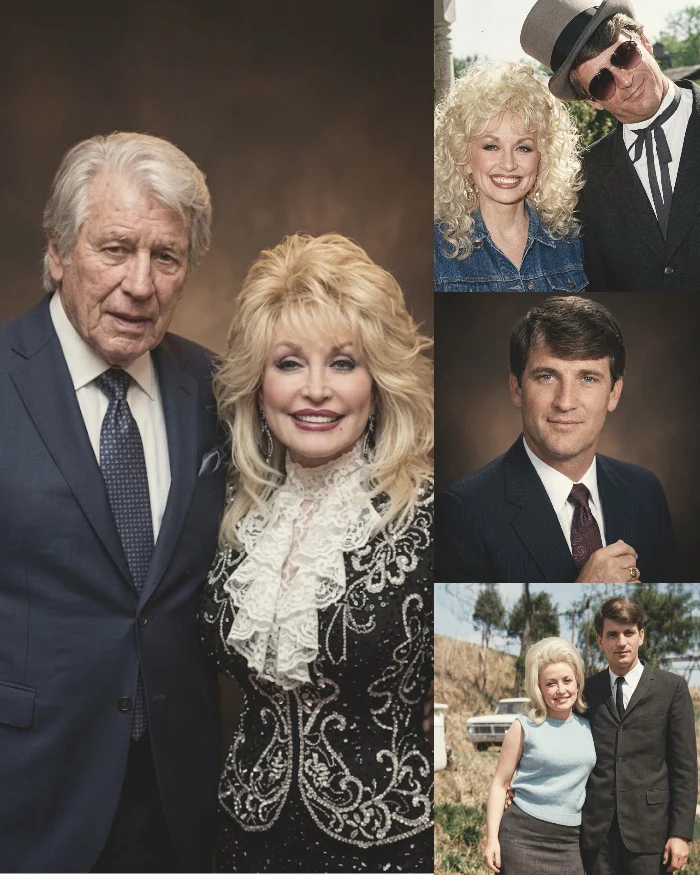
For Dolly Parton, the silence after Carl Dean’s death felt louder than any applause she had ever heard.
Carl died on March 3, 2025, in Nashville at eighty-two, ending a marriage that had held quietly for fifty-eight years.
A handwritten message posted in March 2025 across her official channels gave the public a direct glimpse into her grief.
Within days, letters, flowers, and notes from fans and fellow artists piled up at Dollywood and her Nashville offices.
Dolly stayed inside the home they had shared since 1966, stepped away from public commitments, and faced a sudden emptiness in the rooms that once carried his steady presence.
Instead of a polished statement from publicists, she wrote to the world with her own hand.
She said the kindness pouring in around her felt like a warm quilt wrapped around her soul during the coldest days.
She had grown up in a small cabin in the Great Smoky Mountains region of Sevier County, Tennessee, where patched blankets sewn by her mother, Avie Lee, were essential against harsh winters.
That image reached back to the hills where she was born and to the simple comfort of neighborly care.
The world saw a global star, but the message came from a grieving widow from the mountains.
Dolly’s words were plainspoken and intimate, and they carried no industry gloss.
They showed how a woman used to stadiums and rhinestones returned to the language of home when the man who knew her before fame became absent.
Carl had spent decades stepping away from red carpets and cameras so Dolly could give her life to audiences everywhere.
His absence changed everything overnight, yet the public sympathy she received became a thread of comfort in a season of loss.
Their story had begun on Dolly’s first day in Nashville in the summer of 1964.
She was eighteen and washing clothes at the Wishy Washy Laundromat on 16th Avenue South.
Carl was twenty-one and drove by in a white Chevrolet pickup.
He stopped, walked up, and asked about her songs and her dreams.
While others on Music Row focused on her looks, Carl showed a plain and steady curiosity about the person behind the guitar.
Two years later, on May 30, 1966, the pair crossed into Ringgold, Georgia, and married in secret.
Monument Records executives had warned Dolly that a public marriage might hurt her appeal to male buyers, so only her mother and the minister, Rev. Don Duvall, witnessed the ceremony at a local Baptist church.
That same year, Carl agreed to wear a tuxedo for a formal BMI awards banquet celebrating her early songwriting success.
On the drive back to Nashville, after hours of flashbulbs and forced networking, he made a lifelong vow.
He told Dolly he loved her and would support her career, but he said he would never enter another music industry event.
He kept that promise across the next six decades.
While Dolly became a global entertainment force, Carl ran his own asphalt paving company in Nashville.
He operated road graders, drove work trucks, and refused interviews, photo spreads, and award shows.
At their Willow Lake farm in Brentwood, domestic life stayed far from show business.
Dolly left towering wigs and sparkling costumes in backstage trunks and cooked skillet cornbread and chicken and dumplings.
Carl tended the land, read military history books, and mowed pasture grass on his tractor.
When they traveled, they avoided commercial airlines and private jets.
They packed a modest RV camper and drove back roads through Kentucky and Georgia.
They stopped at roadside picnic areas and drive-through diners, where no one expected to see an international icon eating lunch in an ordinary van.
That private shelter became even more important as Carl’s health declined in his later years.
When age and medical complications limited his mobility, Dolly reshaped her recording and filming plans to stay within driving distance of Brentwood.
She turned down international touring offers so she could oversee his care at home.
After his death, the thousands of letters stacked at Dollywood proved how deeply their shared life had touched others.
The public had always known Dolly Parton as a luminous performer, but inside the gates of Willow Lake she remained the young mountain girl anchored by the asphalt paver who had asked for her name outside a laundromat.
Her message was not a press release.
It was a widow’s thank you, stitched from grief and gratitude, and wrapped around the world like a quilt.