
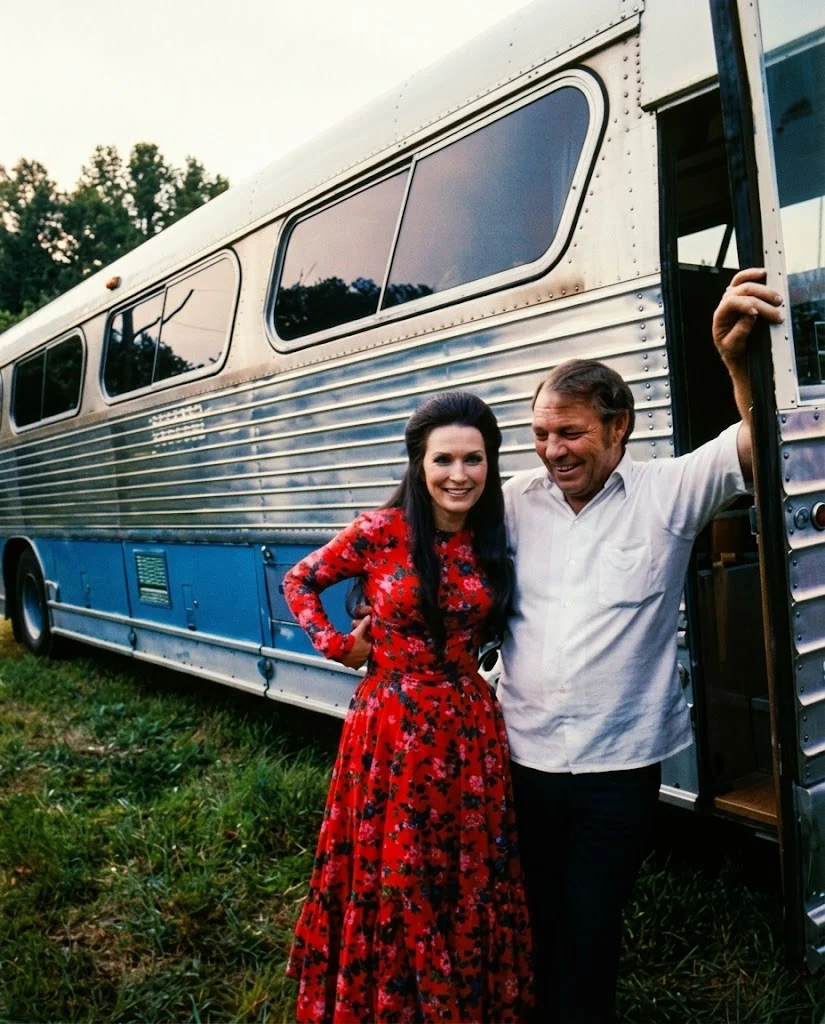
Before Loretta Lynn ever wore the crown of country music she had a stage that smelled of gasoline and cheap sandwiches.
Her first audience was not a packed hall but a radio station clerk who almost never saw her face. In 1960 Nashville had no appetite for a shy mother of four carrying a heavy Kentucky mountain accent. Yet Oliver “Doolittle” Lynn heard something unbreakable in the voice that once sang lullabies to their children. He put a $17 Harmony guitar in her hands, nudged her onto small Washington stages, and turned a dusty 1955 Ford into the only machine that could launch her dream.
To push “I’m a Honky Tonk Girl” onto the airwaves the couple took a three month cross country pilgrimage. They slept in the front seat. They ate bologna and cheese sandwiches because gas money mattered more than taste. Doo mailed thousands of records ahead of them then walked into stations with the confidence of a man who had already decided the DJ would listen. For Loretta, who feared crowds, he became the shield standing between her voice and a world that had not yet learned to welcome her.
“The same man who hurt her most became the humble promoter who waited for a radio needle to drop on her record.”
That relentless road did work. The single climbed the charts and pulled the country music capital toward her. But the triumph rested on a painful paradox. The husband who built her beginning also made her home life heavy with drinking, rough temper, and chronic betrayal. On the highway they shared one mission. Behind closed doors they lived in a battleground.
Loretta did not hide that friction behind a polished studio image. She turned it into songs that refused to apologize. When Doo stayed out all night she wrote about wives who would not accept drunken late apologies. When other women chased him she wrote sharp anthems that warned them to back away from her home. She was not singing passive heartbreak. She was drawing firm boundaries and turning private pain into public strength.
Women across rural America heard themselves in those records. They bought her music because her voice was clear and because her words named the lives they had been taught to keep quiet. Loretta became a fearless spokesperson for working class housewives who felt unseen. Country radio had treated domestic topics as taboo, yet she carried them into the open with courage. Throughout it all Doo stood backstage knowing the anthems topping the Billboard charts came from his own flaws.
Their bond stayed complicated until his death in 1996. They remained married for nearly fifty years, tied by history that outsiders could only glimpse. Loretta admitted that without Doo’s first push the world might never have learned her name. He bought the guitar. He drove the car through the night. He made her stand before a microphone when stage fright nearly froze her.
She owed him her beginning. She earned her legend by refusing to stay silent about the cost of that life. He built the stage, and Loretta Lynn decided what the truth would sound like.