
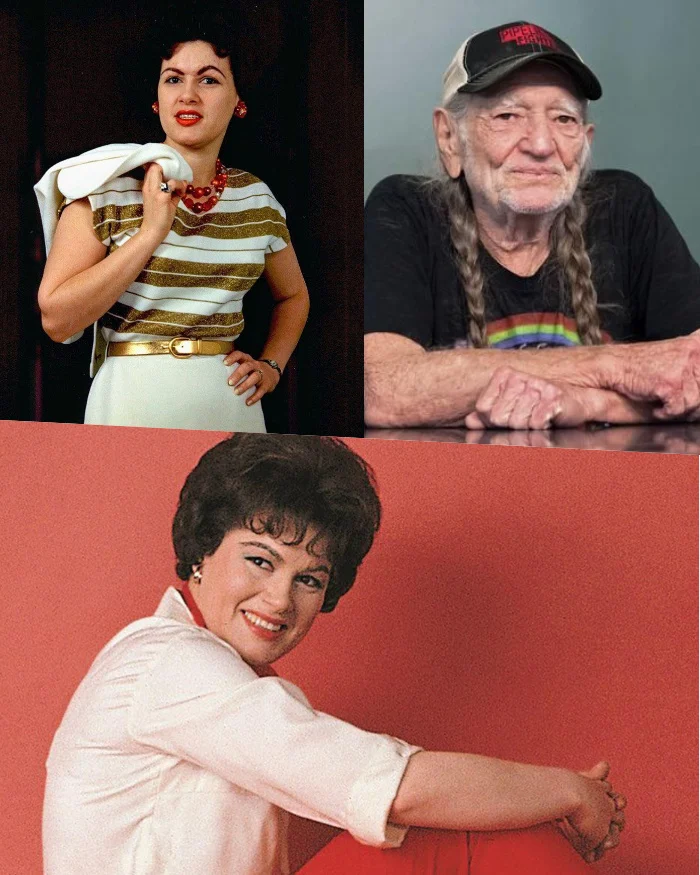
She stood on crutches, her body a map of healing fractures, yet her voice would soon carve a permanent place in music history. On October 14, 1961, Patsy Cline limped into Nashville’s Quonset Hut studio, her ribs still shattered from a near-fatal car crash, and delivered a performance that defied her own brokenness.
The song she was about to sing was one she had initially dismissed. It was a quirky demo titled “Stupid,” written by a penniless, unknown songwriter named Willie Nelson. Cline struggled with Nelson’s unusual, behind-the-beat phrasing, a style that felt impossible to mimic. But her frustration was compounded by a crushing physical reality: a June head-on collision had left her with a dislocated hip, a deep forehead laceration, and multiple broken ribs. Every breath was a battle.
Her first attempt to record the vocal in mid-August had ended in defeat. The sharp ache in her chest made it impossible to draw enough air for the high notes. Producer Owen Bradley had the studio musicians, including pianist Floyd Cramer and bassist Bob Moore, lay down the instrumental track without her, waiting for the day she could return.
That day came in October. Bradley had reshaped the arrangement, slowing the tempo and smoothing the rough edges, transforming the awkward demo into a mournful ballad. Cline, still wracked with pain, finally stopped fighting the song. Instead, she leaned into her exhaustion, letting the physical agony infuse every note.
“Every breath hurt, but that pain became the soul of the performance.”
She sang “Crazy” in a single, flawless take. The result was a sobbing, intimate vocal that captured raw vulnerability. It was a miraculous collision: a wounded artist desperate for relevance and a struggling songwriter who just needed someone to listen. The song’s success changed both their lives forever, cementing Cline as a crossover star and proving Nelson’s genius.
Cline died tragically in a plane crash at age 30, just a year and a half later. But the echo of that one perfect take persists, playing on jukeboxes across America—a quiet testament to the day she turned her suffering into immortal art.