
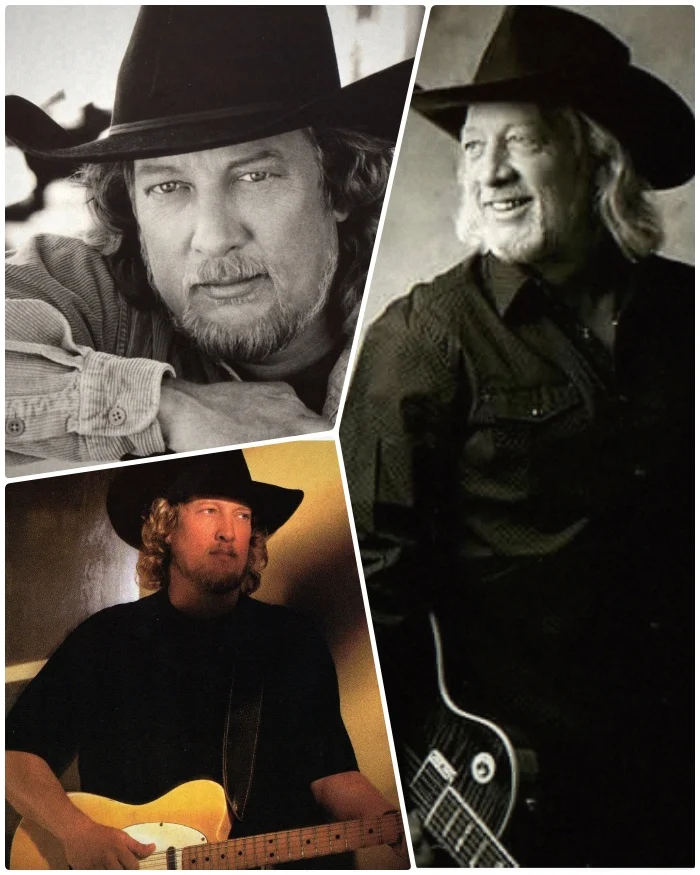
By late 1986, the thunder that once shook sold-out arenas for John Anderson had thinned to an aching hush in smaller clubs and dance halls and county fairgrounds. Empty seats told a story no chart could soften, and the Florida-born honky-tonk singer who had owned country radio only three years earlier suddenly found himself standing outside the very industry he had helped rebuild.
That fall felt almost impossible in the autumn of 1983. His quirky rhythm-driven hit Swingin’, written with Lionel Delmore, had become the biggest-selling country single in the history of Warner Bros. Records. The song earned the Country Music Association Single of the Year honor while Anderson himself carried home the CMA Horizon Award, a double triumph that crowned him as the voice of a new traditional movement.
For Anderson, Warner Bros. had never been just a label. He had arrived in Nashville in the early 1970s, working construction jobs that included hauling roofing tar on the unfinished Grand Ole Opry House. When the company signed him in 1977 for a modest advance, its Nashville office became the professional family that finally gave a struggling singer his break.
Working closely with longtime producer Norro Wilson between 1980 and 1983, he helped spark the neotraditional revival with 1959 and I’m Just an Old Chunk of Coal and chart-toppers such as Wild and Blue and Black Sheep. His raw bent-note phrasing and steel-soaked sound felt honest and rooted, and for a brief shining moment, it felt unstoppable.
Yet success opened a door Anderson could not control. He had inadvertently cleared a path for a younger wave of traditionalists, including George Strait and Randy Travis and Dwight Yoakam, and radio programmers soon pivoted toward those fresher faces. As tastes shifted in the mid-1980s toward slicker pop-leaning production, the ground beneath his feet began to move.
Between 1984 and 1986, Anderson answered with three albums in quick succession, Eye of a Hurricane in 1984 and Tokyo, Oklahoma in 1985 and Countrified in 1986. Critics praised their loyalty to Lefty Frizzell-style phrasing and their uncompromising honky-tonk heart. When voices along Music Row urged him to smooth out his delivery to fit radio trends, he refused to change the sound that defined him.
The refusal cost him commercially. None of the singles from those three records, including She Sure Got Away with My Heart and Down in Tennessee, reached the Billboard Top 5. Instead they peaked in the teens or twenties, a slow slide that mirrored the shrinking crowds on the road.
Offstage, the grind was breaking him down. Playing more than 250 concerts a year left him physically exhausted, and the hard-living habits of life on a tour bus strained his focus in the studio and his life at home. By late 1986, after nine years of foundational records, Warner Bros. quietly declined to renew his deal, leaving the 32-year-old star to rebuild from the outside.
The wilderness years that followed tested every part of him. From 1987 through 1990, he moved first to MCA Records for Blue Skies Again in 1987 and 10 in 1988, then to Jimmy Bowen’s short-lived Universal Records for Too Tough to Tame in 1990. Corporate restructuring and thin promotional support left singles such as Somewhere Between Ragged and Right and If It Were Up to Me stalled far down the charts, and several recordings were shelved entirely.
As industry phone calls stopped coming, Anderson leaned on the one anchor that never wavered. His wife Jamie, whom he had married in 1983, stood beside him as they retreated to their farm in Smithville, Tennessee, a quiet life that steadied him and cleared his head for what would come next.
That quiet perseverance finally found its reward in 1991. Former Muscle Shoals drummer and producer James Stroud signed Anderson to the newly formed RCA-distributed label BNA Entertainment. Instead of asking him to sing differently, Stroud wrapped his unmistakable voice in crisp punchy acoustic and electric instrumentation, letting the old honky-tonk soul shine through a fresh modern frame.
The result was the double-platinum album Seminole Wind. In March 1992, Straight Tequila Night carried him back to No. 1, followed by the title track and Money in the Bank, a comeback that felt less like reinvention and more like vindication.
Looking back decades later as a 2024 Country Music Hall of Fame inductee, Anderson has never hidden how steep that drop felt when the 1980s turned cold. The lean years between deals tested everything he had built, yet they also proved why his voice endured when trends faded.
Nashville labels could drop John Anderson from their rosters in the late 1980s. They could never take the country out of the way he sang.