
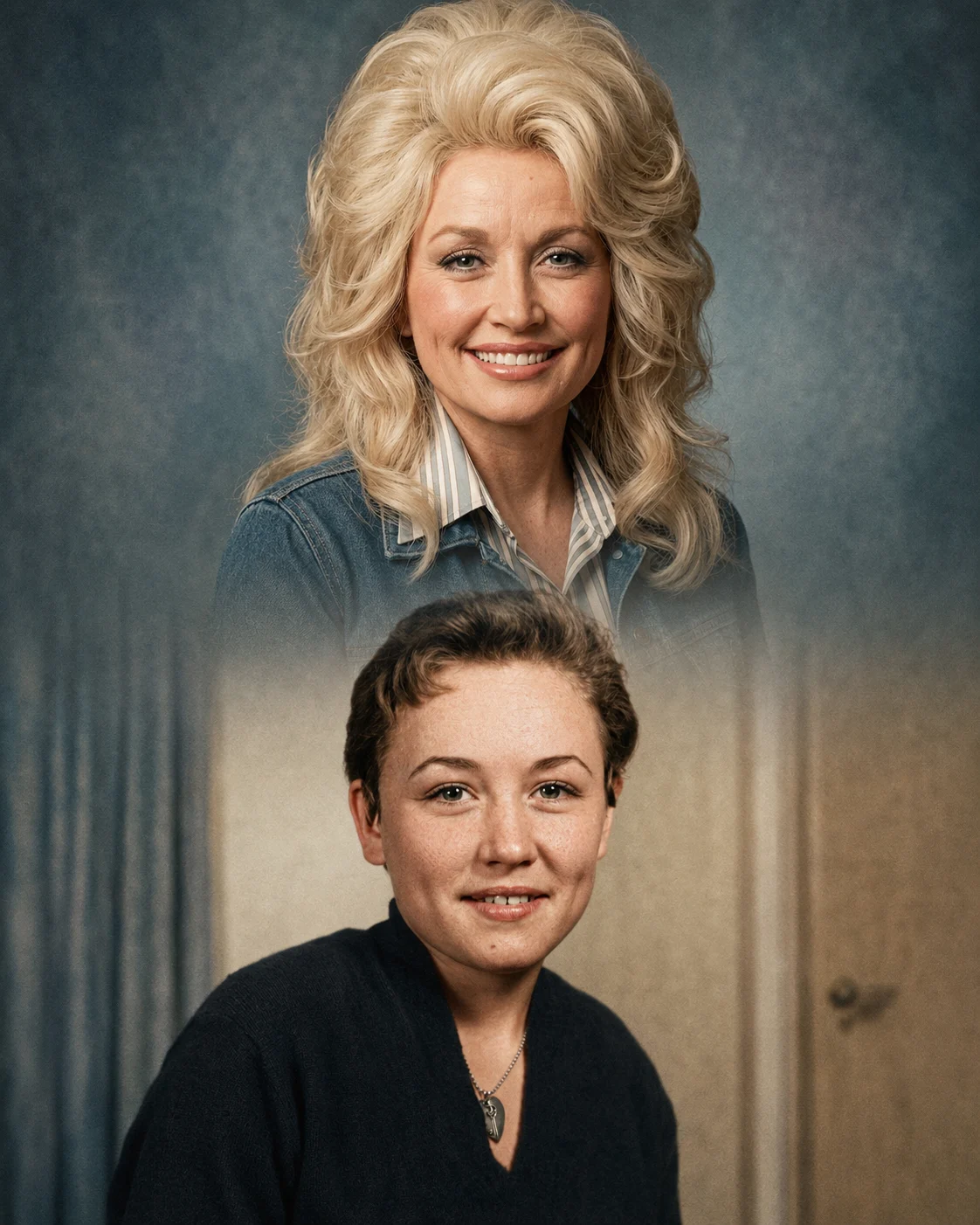
Long before rhinestones and sold-out stadiums, a ten-year-old girl with a tin-can microphone on a dirt porch was quietly building an empire out of pure necessity.
In the isolated Locust Ridge community of Sevier County, Tennessee, Dolly Parton shared a drafty one-room wooden cabin with eleven siblings. No electricity. No running water. No hope of buying an instrument. But she had a voice that cut through the mountain air like a knife.
Her uncle, Bill Owens, heard it—a piercing clarity that didn’t belong in a valley. So he drove her down rugged roads to Knoxville, determined to get her in front of Cas Walker, a supermarket magnate who ran a massive local radio and television show. Walker, a no-nonsense businessman, gave the ten-year-old a permanent spot on the Cas Walker Farm and Home Hour.
“Singing was no longer a game. It was a survival tool.”
Every day, she stood under bright studio lights, projecting polished charm to thousands of East Tennessee listeners. Every night, she returned to a dark, unheated cabin where the family still huddled for warmth. The paycheck went straight into the calloused hands of her sharecropper father, Robert Lee Parton—money that kept twelve children fed through brutal Appalachian winters.
That early exposure to live broadcasting’s unforgiving demands forged a fiercely independent business mind. But Uncle Bill aimed higher. In 1959, he arranged a grueling bus trip to Lake Charles, Louisiana. Inside a concrete block building, far from Nashville’s polish, thirteen-year-old Dolly walked into Goldband Records and cut her first single, “Puppy Love.”
That session proved she was a legitimate artist, not a novelty act. Five years later, the day after high school graduation, she packed one suitcase and moved to Nashville for good. Eventually, she would control one of the most powerful publishing catalogs in music history.
But her unmatched business acumen wasn’t learned in a boardroom. It was forged on a dirt porch, where a little girl discovered that a voice could do more than entertain—it could keep a family alive.