
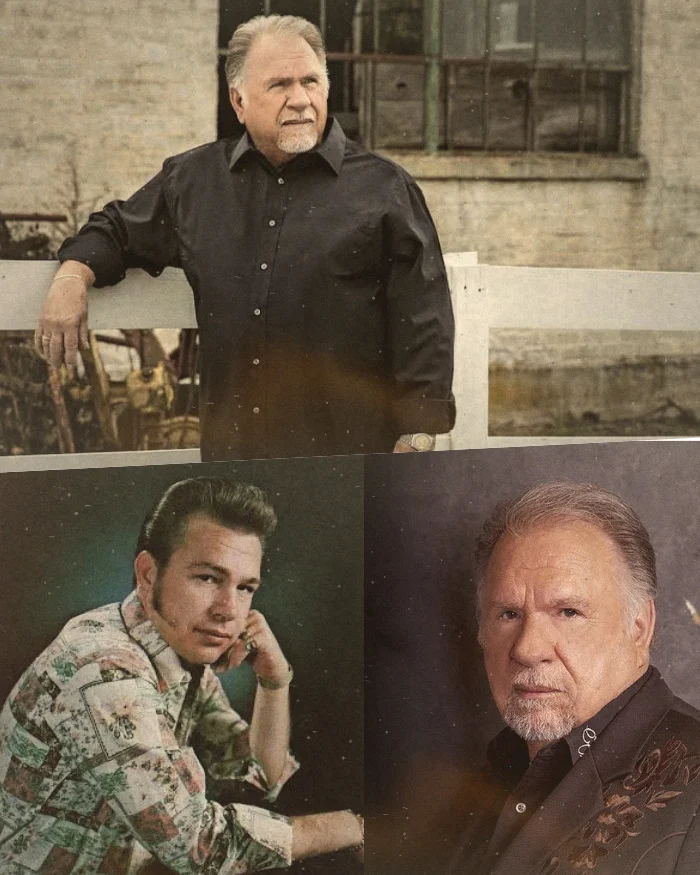
🎶 The voice that would later fill country radio did not begin in a studio. It began in the Texas dirt, where a six-year-old Gene Watson dragged cotton sacks heavier than his small body and learned hunger before he learned homework.
Born in Palestine and raised in Paris, Texas, he grew up inside a family that moved often to survive farm labor and sawmill work. In the rural South of the 1940s, a child in the field was not a helper. He was an essential worker keeping the family from going hungry.
His hands grew calloused and often bled from sharp dry bolls. By late afternoon, the sack he pulled could weigh more than he did. He learned to push through aching muscles quietly, watching parents and siblings sweat through the same heavy heat.
The only relief came from melodies sung across the rows. Those spontaneous songs became his first real education. The fields taught him endurance, and the music taught him how pain could still carry beauty.
“That voice was never taught in a studio. It was paid for in the Texas heat long before he ever held a microphone.”
Yet the road from the harvest to the microphone did not run straight to Nashville. It detoured through the garages of Houston. In the early 1960s, Watson left the fields behind to become a professional auto body mechanic. He specialized in custom paint and collision repair, spending days sanding fenders and mixing automotive lacquer.
Music was not a career plan at first. It was a practical way to bring in extra dollars when the garage paycheck fell short. During evenings, he washed grease from his hands and took the stage at local Houston honky-tonks like the Dynasty.
He did not chase record executives or shop demo tapes to major labels. He simply sang hardcore country standards for working-class crowds. Watson viewed nightly gigs as a second job, a reliable trade no different than pulling dents from a damaged Chevrolet.
His perspective shifted when local businessmen noticed the sheer power of his delivery. Watson possessed a flawless multi-octave range that needed no vocal warm-ups and rarely wavered in pitch. Russ Reeder, a local record distributor, eventually convinced the mechanic to step into a professional studio. Reeder managed him and pushed him toward original material instead of jukebox favorites alone.
The defining turn came in 1975. Watson recorded “Love in the Hot Afternoon,” an atmospheric and slightly edgy country ballad that gained traction in Texas. Capitol Records bought the master and released it nationally. The track climbed into the top five of the country charts, turning a Houston body shop worker into a major-label recording artist.
Despite the sudden attention, Watson remained deeply pragmatic. He kept his day job at the body shop for nearly another year. He had seen too many crop failures and lean seasons to trust a fickle industry. Only when touring demands made daytime hours impossible did he finally pack up his spray guns and commit entirely to the stage.
By 1979, he released the song that would permanently cement his legacy. “Farewell Party” became a masterclass in country vocal performance, demanding immense range that few singers could attempt live. Watson delivered it effortlessly night after night. He followed it with definitive hits, including the chart-topping “Fourteen Carat Mind,” and navigated the pop-leaning era of 1980s country without abandoning his traditional sound.
Today, he stands as one of the most respected traditionalists in country music history. Peers often call him a singer’s singer. He built a career that survived changing trends by relying on the unadorned truth of his delivery. The industry eventually provided stability he spent his youth searching for, but the voice that earned it was shaped by Texas dirt and Houston garages.