
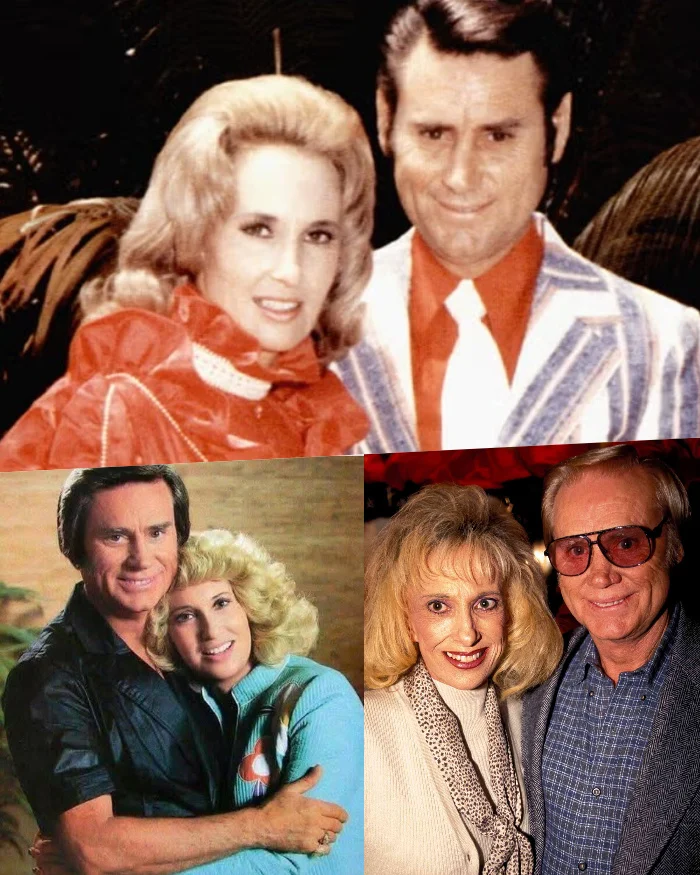
George Jones sat outside Tammy Wynette’s Nashville home in the dark and could not bring himself to walk up the drive.
He never opened the car door. He never knocked. He only watched the warm glow from the windows and then turned around for the long road back to Alabama.
That quiet ritual followed the end of a marriage that country music had treated as a golden partnership. In March 1975 the six-year union closed in a Tennessee courtroom. Wynette kept the Old Stagecoach mansion on Franklin Road. Jones moved south to Florence, Alabama.
The distance did not calm the ache. During the months after the decree he would drive two hundred miles through the night and pull over across from her gate. The engine idled low. The cab became a hiding place for grief.
His private collapse grew louder than the highway. Jones sank into severe alcohol and substance abuse. Missed dates piled up and the industry gave him the painful label “No Show Jones”.
Still the music contract pulled them back together. Both singers remained signed to Epic Records under producer Billy Sherrill and he required them to work together again. Only months after the divorce made headlines Sherrill brought them to Columbia Recording Studio B on Music Row.
The tracking room carried a heavy silence. Jones and Wynette rarely spoke between takes. Sherrill kept the work moving with strict efficiency and placed them on opposite sides of acoustic baffles. Their vocal tracks stayed separate.
When the red recording light turned on the distance vanished. They harmonized on heartbreak songs that mirrored their own wreckage. The 1976 landmark “Golden Ring” became their most painful triumph and a number one hit on the Billboard country chart.
They sang like two people who still understood each other even while living apart.
Their professional bond continued through the late 1970s and into 1980. They created emotionally resonant duets while leading separate lives.
Jones later found stability through his fourth marriage to Nancy Sepulvado. He overcame addiction and remained one of the greatest country vocalists until his death in 2013. Wynette built an enduring solo career as the First Lady of Country Music until her passing in 1998.
He could command a stadium but felt helpless outside the gate of his former life.
Those dark drives from Florence to Franklin Road revealed a man who poured his helplessness into song. The records still carry the weight of an artist singing toward the only person in the room he could never have back.