
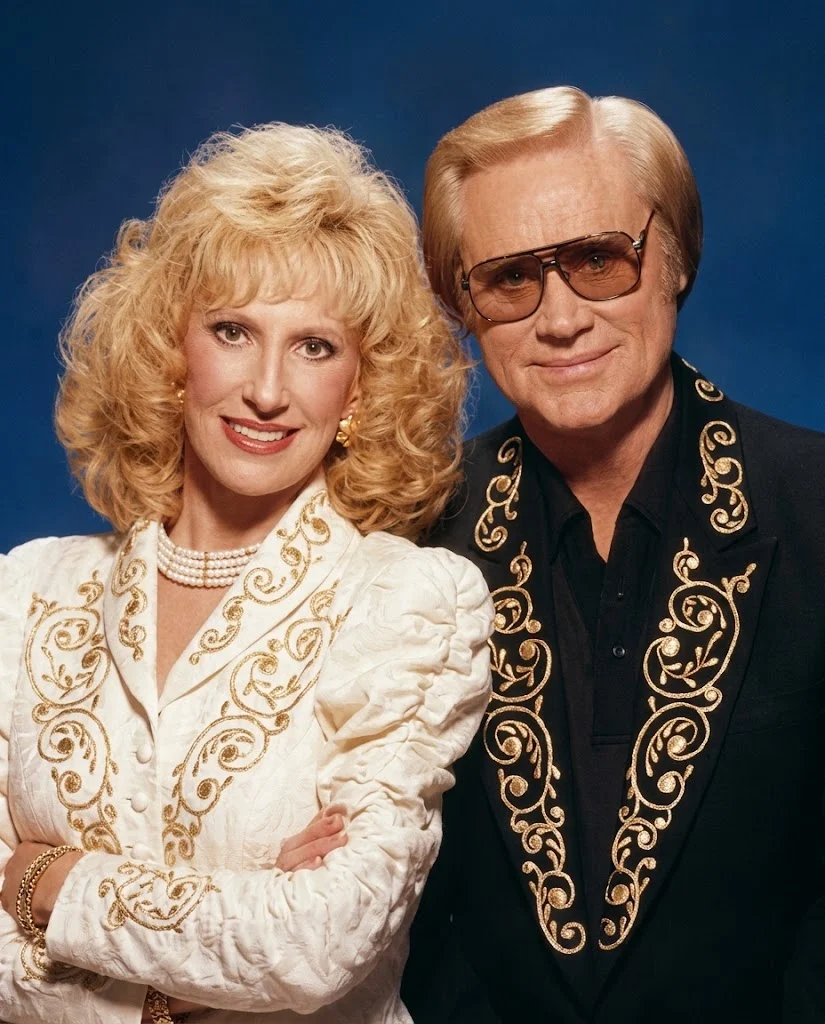
It was 1976, and the most famous couple in country music stood facing each other in a Nashville recording booth, not as husband and wife, but as two broken souls about to turn their very real pain into a chart-topping anthem. Just months after finalizing a bitter divorce, George Jones and Tammy Wynette were handed “Golden Ring,” a song that eerily mirrored their own collapse—a tale of a pawn shop wedding band that travels from hope to heartbreak and back again.
“They didn’t need to act. The cracks in Jones’s voice and Wynette’s signature delivery were the direct result of the household they had just dismantled.”
The year 1975 had been a nightmare. George Jones’s battles with alcoholism and paranoia had turned their home into a place of terror, forcing Wynette to flee into the night with their infant daughter to escape his unpredictability. She filed for divorce, ending a marriage that had produced some of country music’s greatest duets. But the legal paperwork couldn’t sever their contract with Epic Records—or their shared history.
Producer Billy Sherrill knew the stakes. He brought them together for “Golden Ring,” written by Bobby Braddock and Rafe Van Hoy, and created a strictly disciplined, unsentimental atmosphere. No arguments, no lingering resentments—just a job to do. Sherrill treated them as elite vocalists, not a broken couple, forcing them to channel their grief into the microphone rather than at each other.
The result was devastatingly authentic. When Jones sang of the ring’s journey, his baritone cracked with real pain; when Wynette delivered her lines, her signature tear was no performance. They weren’t recording a song—they were conducting a public autopsy of their own relationship, and the raw emotion bled through every note.
“Golden Ring” soared to number one on the Billboard Hot Country Singles chart in August 1976, proving their commercial magic was separate from their marital status. But that triumph came at a cost: the legally separated couple had to share stages night after night, performing the details of their real-life failure for cheering crowds. For years, they stood under arena lights, singing about a love they couldn’t salvage, while maintaining fierce professionalism.
The divorce decree may have legally separated their lives, but the vocal tracks they cut with their wounds still open bound them together forever. Sherrill’s quiet mastery of that intense 1976 session remains the unseen foundation of a record that turned heartbreak into immortality—and proved that sometimes, the most honest art is born from the deepest pain.