
Long before the world knew her name, a seven-year-old girl in the Great Smoky Mountains pressed her small, bleeding fingertips against two heavy bass strings and coaxed music from a broken mandolin that no one else wanted.
In the early 1950s, Dolly Parton was growing up in Locust Ridge, a rural community tucked deep into Sevier County, Tennessee. As one of twelve children sharing a modest mountain cabin, she lived in a home where a store-bought instrument was simply out of reach.
When she discovered an abandoned mandolin with no strings at all, she refused to see it as trash. She salvaged two thick bass strings and fitted them onto the tiny wooden body, turning a discarded object into her very first instrument.
The strings were far too heavy for a child’s hands and far too thick for ordinary chords. They bruised and blistered her fingertips as she pressed them against the wooden neck, but the pain never dimmed her determination to sing.
She did not wait for a perfect instrument. She invented a way to make an imperfect one sing.
Because she could not wrap her small hands around traditional chord shapes, she created her own open-tuning system. By tuning the instrument to an open chord, she could ring out full harmonies by barring a single finger straight across the frets.
She carried that homemade creation outside to stacks of firewood and front porches, singing out across the ridges and hollows to farm animals and the surrounding hills. The mountains became her first audience and her first stage.
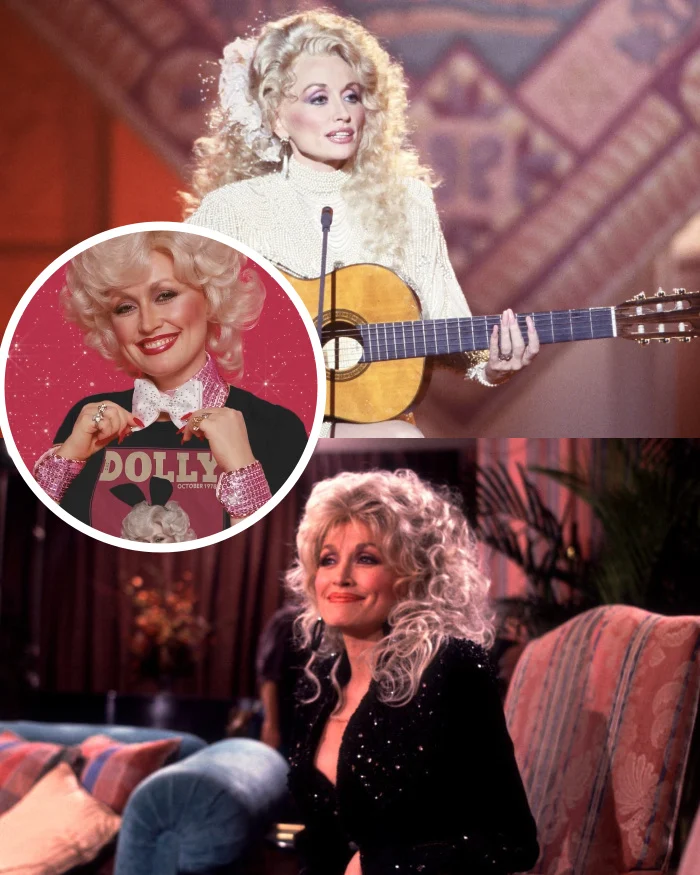
Her maternal uncle, Bill Owens, saw the devotion in her sore hands and recognized her gift early. When she turned eight, he bought her a small-bodied acoustic guitar and began taking her to local radio stations and regional television programs in Knoxville.
Even with a proper guitar in her arms, Parton kept the distinct open-tuning approach she had invented as a child. It let her play rhythmically and cleanly across the fretboard and it stayed with her throughout her professional career.
That same technique later gave her the freedom to perform intricate rhythm patterns on stage without changing standard finger positions, even while wearing her signature long acrylic nails. It became an essential part of her sound during recording sessions at RCA Studio B in Nashville.
By the late 1960s, she had joined Porter Wagoner’s syndicated television show, bringing her distinct mountain rhythm style to national television screens. Her playing provided the underlying rhythmic foundation for early career milestones, including “Coat of Many Colors” and “Jolene”.
Over the decades, a simple childhood solution transformed into a defining musical trademark. What began as a mountain child trying to make two heavy strings ring out across the hollow helped shape a catalog of songs that defined American country music.