
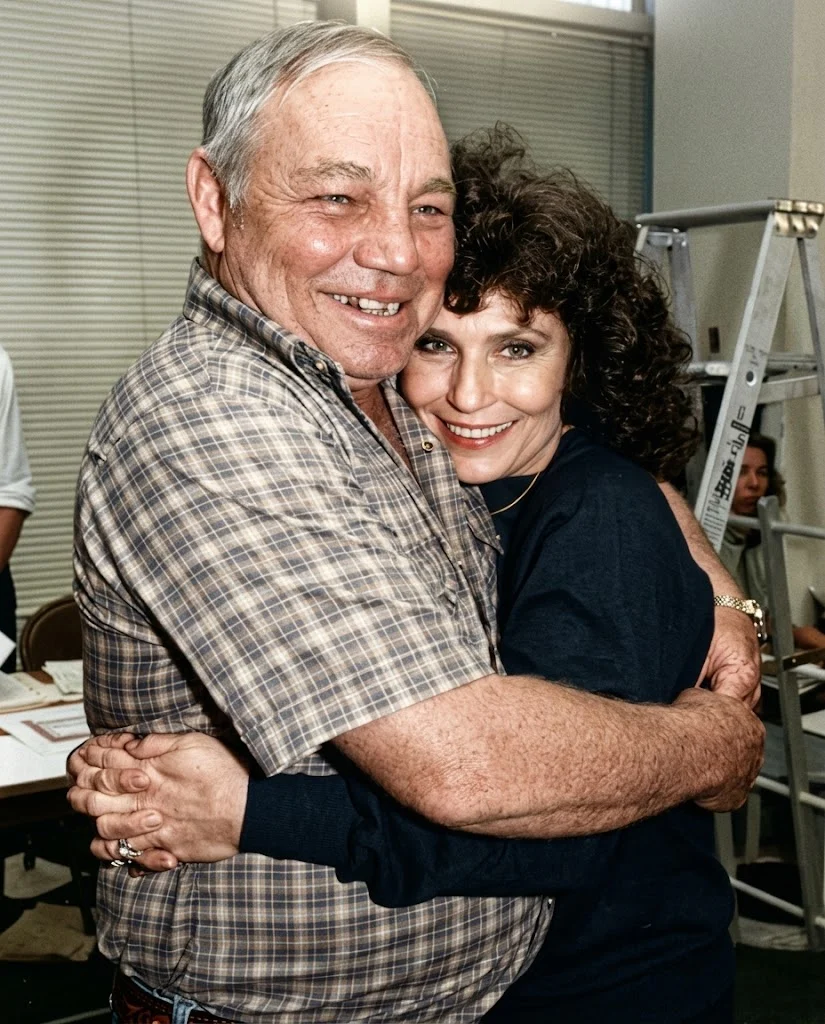
The sound of a cheap guitar string cutting through a tired kitchen became the beginning of one of country music’s greatest stories.
In 1953, Doolittle “Doo” Lynn and his wife Loretta Lynn were barely holding life together in Custer, Washington, a hard working logging town. They had four children, thin pockets, and endless chores. Then, on their anniversary, Doo made a choice that seemed reckless to a family living paycheck to paycheck. He ordered a $17 Harmony guitar from a Sears Roebuck catalog.
Doo had listened to Loretta sing lullabies over crying babies and the clatter of daily work. He believed her voice carried a truth he could not find on the radio. Seventeen dollars was a small fortune, and the guitar was cheap, but he bet on her anyway.
Her voice was truer than anyone on the radio.
Loretta sat in that cramped kitchen and taught herself chords from an old instructional book. Metal strings cut her fingers, calluses hardened her hands, and still she kept playing. The housewife who had been exhausted by motherhood found a first stage in the place where her life had felt most confined.
From those rough early notes came “I’m a Honky Tonk Girl”, her debut song. Doo did more than give her the guitar. He pushed his painfully shy wife onto local barroom stages and made her speak through song to rough loggers and tavern crowds.
The road to Nashville was not a lucky break. It was a grueling campaign. Doo and Loretta pressed copies of her first record and drove across the country. They slept in their car, ate cold sandwiches, and walked into small radio stations to hand her vinyl to disc jockeys one by one.
The country music world began to listen, but the highway took a toll. Rising fame meant long absences from their children, care left with relatives, and pressure on a marriage already marked by fierce arguments and painful betrayals.
Yet the paradox of Doolittle Lynn remains. The man who caused many of Loretta’s deepest wounds was also the man who saw a legend in a tired rural mother.
That $17 catalog guitar became the tool Loretta used to break her silence and give voice to millions of working-class women. Her story grew into “Coal Miner’s Daughter”, a vivid portrait of poverty, pride, hard labor, and family love rooted in Butcher Holler, Kentucky.
Well, I was born a coal miner’s daughter, in a cabin on a hill in Butcher Holler.
What began as bleeding fingers in a tiny Washington home became an American country music legacy.