
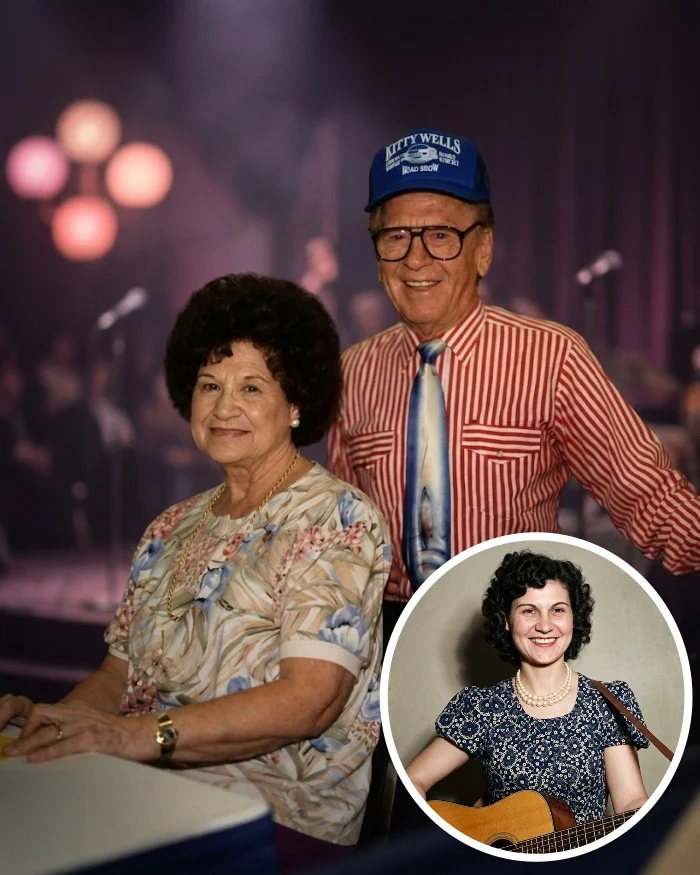
The microphone was just a paycheck for thirty-two-year-old mother of three Kitty Wells on May 30, 1952, when she walked into a Nashville studio expecting it to be her final goodbye to the music business.
Dropped by RCA Victor and ready to embrace a quiet domestic life, Wells accepted a Decca Records session offered by producer Paul Cohen simply because the union scale fee of $125 meant immediate groceries and clothing for her family.
Standing before the microphone under the guidance of producer Owen Bradley, she delivered J.D. Miller’s sharp response to Hank Thompson’s hit, singing with the unvarnished and hymn-steeped voice of an Appalachian working mother who refused to let men place the blame for broken homes solely on women.
It wasn’t God who made honky tonk angels, as you said in the words of your song
Conservative broadcasting institutions moved swiftly to suppress her groundbreaking single, with NBC placing the song on a restricted list and the Grand Ole Opry banning her from performing it on their historic stage due to strict network standards regarding marital infidelity.
Instead of fading away, the institutional blackout ignited an unprecedented grassroots phenomenon as working-class listeners flooded diners and roadside truck stops to feed nickels into jukeboxes across the country.
By August of 1952, the unstoppable public demand surged past 800,000 copies sold, propelling Kitty Wells to the No. 1 spot on the Billboard country chart as the first solo female artist in history to achieve the milestone.
The massive commercial triumph ultimately forced the reluctant Grand Ole Opry to lift its barriers, welcoming Wells onto the Ryman Auditorium stage where her simple gingham dress and steadfast voice permanently opened the doors for every woman in country music who followed.