
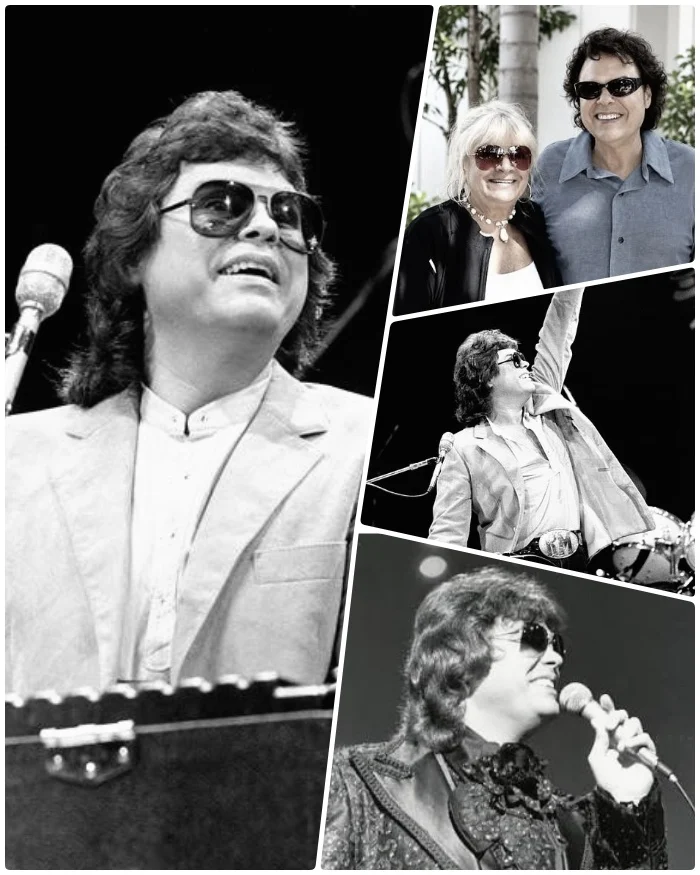
In the fall of 1974, less than two years after leaving California with almost nothing to his name, Ronnie Milsap stood on a grand stage while Jerry Reed handed him the Country Music Association award for Male Vocalist of the Year.
It was a breathtaking turnaround for a blind musician from Robbinsville, North Carolina, who had been schooled in classical piano and had spent long years chasing rhythm and blues and pop records without ever finding a lasting audience.
Only a short time before that shining night, Milsap had been grinding through Los Angeles nightclubs, including the Whisky a Go Go on the Sunset Strip, and quietly fearing that his soulful style sat too far outside country music for Nashville to embrace him.
Even a glittering credit as the pianist on Elvis Presley’s 1970 hit “Kentucky Rain” had not changed his own fortunes, and his 1971 Warner Bros. album had faded away without finding listeners.
Then one evening in Los Angeles, Charley Pride sat among the crowd, heard the warmth and soul pouring from Milsap’s voice, and told him that his future waited in Tennessee.
One generous word from Charley Pride and one fearless push from Joyce changed the direction of a lifetime.
Ronnie hesitated because he did not want to surrender steady club pay for an uncertain dream, but his wife Joyce would not let him stay small. She had long been his partner in navigating everyday life, and she saw a country future for him before he dared to believe in it himself.
Convinced that he was wasting a rare talent in small rooms, she urged him to gamble everything on Nashville, and in December 1972 the couple left California with no recording contract, no guaranteed work, and very little money in the bank.
Their early days in Tennessee came down to paying the bills one night at a time, yet within weeks Milsap was playing the ninth floor of a Nashville motor inn where Music Row executives liked to gather after dark.
That foothold was the King of the Road Motor Inn, a hotel just east of downtown Nashville owned by singer Roger Miller, where Milsap and his band became the regular house act in the ninth-floor showroom high above the city skyline.
Because the lounge was a favorite evening stop for songwriters and label leaders, every performance became a nightly audition, and soon music publisher Tom Collins and Pride’s manager Jack D. Johnson climbed to the ninth floor to hear the newcomer for themselves.
Johnson acted swiftly on Pride’s recommendation, and on January 3, 1973, barely weeks after the Milsaps had arrived in town, he officially signed Ronnie as a management client and joined forces with Collins to cut his first Nashville country sides.
Those early recordings soon reached Jerry Bradley at RCA Records, who was convinced at once that Milsap could sing country with natural warmth. Bradley signed him to RCA Victor in the spring of 1973 and announced plans to press 40,000 copies of his first release, a number that left Milsap worried the label would never sell that many records after years of watching his singles disappear on small rhythm and blues and pop runs.
In June 1973, RCA issued “(All Together Now) Let’s Fall Apart” with the Dan Penn and Leroy Daniels song “I Hate You” on the flip side, and country radio disc jockeys embraced “I Hate You” so warmly that it soared into the Billboard country Top 10 that summer.
By September 1973, RCA had released his first album for the label, Where My Heart Is, produced by Johnson and Collins, and it climbed to number five on the country album chart.
Pride then backed his early advice in an even larger way, and in 1974 he took Milsap on tour as his opening act, lifting a man who had recently played motel lounges onto stages before packed arenas across the country.
That same year Milsap earned his first number one country hit with “Pure Love,” written by a young Eddie Rabbitt, and within months he followed it with two more chart-toppers, “Please Don’t Tell Me How the Story Ends” and “(I’d Be) A Legend in My Time.”
Through the decades at RCA that followed, Joyce remained his closest adviser and helped him review the songs pitched to him, and the partnership grew into multiple Grammy Awards and thirty-five number one RCA singles.
All of it traces back to a rented room in 1972, a ninth-floor hotel lounge, Charley Pride’s generosity, and a wife who believed in the road ahead before her husband could.